The knock at the door startled me hard enough that I nearly dropped my coffee mug.
Three sharp knocks.
Firm.
Official.
For a second, I froze in the middle of my kitchen, heart suddenly pounding against my ribs as dozens of irrational fears flashed through my mind. Bad news. An accident. A mistake. Nobody visits unexpectedly anymore unless something has gone wrong.
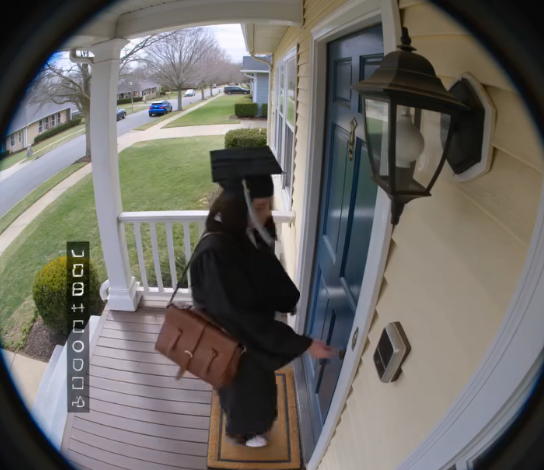
When I opened the door, two police officers stood quietly on the porch beneath the pale afternoon light.
Neither looked aggressive.
Neither looked urgent.
Still, the sight of uniforms outside my apartment made my stomach tighten instantly.
“Miss Reed?” the older officer asked gently.
“Yes?”
He glanced briefly at the small notepad in his hand before looking back at me.
“We’re here to conduct a welfare check. Your family hasn’t been able to reach you and they’re concerned.”
For a moment, I honestly didn’t know how to respond.
A welfare check.
The words sounded surreal coming from him.
Concerned?
After everything?
After years of unanswered calls unless someone needed money, advice, emotional labor, or rescue from a crisis they created themselves?
The irony nearly made me laugh.
Not because it was funny—
because it hurt.
I stared at the officers trying to organize the storm of emotions rising unexpectedly inside me. Confusion. Exhaustion. Anger. Sadness. And somewhere beneath all of it, a small wounded part of me that still reacted instinctively whenever my family seemed to notice I existed.
“I’m okay,” I said finally, though my voice came out quieter than intended. “I just needed some space.”
The younger officer shifted slightly while the older one nodded with surprising understanding.
“That happens more often than you’d think,” he said gently. “Your mother sounded pretty worried.”
Of course she did.
I could already picture the scene perfectly:
my unanswered calls escalating from annoyance to outrage to panic once everyone realized I truly meant silence this time. They probably sat around discussing me not as a person, but as a disruption to the family system. The dependable daughter had stopped answering. The fixer had disappeared. The emotional support line had suddenly gone offline.
And now strangers in uniform stood at my door because absence was the only thing that finally made them notice my presence mattered.
The realization hollowed me out a little.
“Do you want us to pass along a message?” the officer asked carefully.
That simple question almost broke me.
Because how do you summarize decades of emotional exhaustion to two strangers standing politely on your porch?
How do you explain what it feels like to spend your entire life being valuable mainly when you are useful?
I wanted to tell them everything suddenly.
How every family gathering quietly revolved around everyone else’s crises while my own struggles became background noise.
How my achievements were acknowledged briefly before conversations shifted immediately toward somebody else’s problems.
How I became “the strong one” so early in life that nobody noticed strength slowly turning into isolation.
I wanted to explain that disappearing wasn’t punishment.
It was survival.
But the words tangled inside me because some pains are too layered to explain quickly without sounding cruel or dramatic.
So instead I just said:
“Please tell them I’m safe. And that I’ll reach out when I’m ready.”
The officers exchanged a brief glance before nodding.
“We can do that.”
The older one hesitated slightly before adding:
“Take care of yourself, Miss Reed.”
Something about the sincerity in his voice caught me off guard. Maybe because it sounded more genuine than many conversations I’d had with my own relatives lately.
I thanked them quietly and closed the door behind me.
The soft click of the lock echoed through the apartment with surprising finality.
Then silence returned.
Heavy.
Still.
Honest.
I leaned against the door and closed my eyes.
The entire interaction lasted less than five minutes, yet somehow it unearthed years of buried emotion all at once. Resentment surfaced first, sharp and immediate. Then grief. Then guilt for even feeling resentful at all. Families have a way of teaching you to question your own pain until you no longer trust your emotional instincts completely.
But underneath everything else, there was another feeling too.
Relief.
Not because the police came.
Because for the first time in my life, I had not immediately abandoned my own boundaries just to make everyone else comfortable again.
That realization felt strangely unfamiliar.
I walked slowly back into the kitchen where the smell of coffee still lingered warmly in the air. Afternoon sunlight spilled across the counter in soft golden rectangles while traffic hummed faintly outside the apartment windows. The world continued moving normally despite the emotional earthquake happening quietly inside me.
I poured fresh coffee into my mug and carried it toward the armchair beside the window.
Outside, life unfolded with almost offensive ordinariness.
Joggers passed wearing headphones.
A father pushed a stroller across the intersection.
Two teenagers laughed while sharing fries on a bench.
Nobody knew my entire understanding of myself was shifting slightly with every passing minute.
And maybe that was comforting somehow.
I sat there for a long time holding the warm mug between both hands, staring out at strangers living lives completely untouched by my family drama. For years, nearly every decision I made revolved around other people’s expectations. What they needed. What they wanted. What kept peace. What prevented disappointment.
Somewhere along the way, I stopped asking myself a terrifyingly important question:
What do I actually need?
The silence inside the apartment forced me to confront that question honestly for the first time.
And the answer came slowly.
I needed rest.
I needed distance from people who only noticed my absence once my usefulness disappeared. I needed relationships where love did not feel transactional. I needed room to exist as a whole person rather than a role permanently assigned to me by family habit.
Most of all, I needed permission—from myself—to stop apologizing for protecting my peace.
My therapist used to say something I resisted hearing for years:
“Sometimes distance is not cruelty. Sometimes distance is treatment.”
I finally understood what she meant.
Not every relationship survives closeness.
Not every family dynamic deserves unlimited access to you simply because blood exists.
That truth felt painful.
But also liberating.
I reached for my phone slowly and opened a blank document.
At first, I wasn’t sure what I intended to write. But once my fingers touched the keyboard, the words came faster than I could organize them.
I wrote about exhaustion.
About boundaries.
About no longer confusing self-sacrifice with love.
I wrote promises to myself:
to stop shrinking my feelings to protect other people’s comfort,
to stop answering every crisis immediately,
to stop believing my worth depended entirely on what I could provide.
The document slowly became less a journal entry and more a declaration.
Not angry.
Not bitter.
Clear.
For the first time, I was building a future centered around emotional honesty instead of obligation.
Outside the window, evening slowly began lowering itself across the city. The sky softened into shades of amber and pink while apartment lights flickered awake one by one across distant buildings.
And sitting there alone beside cooling coffee and unfinished thoughts, I felt something unfamiliar settle gently inside my chest.
Lightness.
Not complete healing.
Not certainty.
Just space.
Space to breathe.
Space to think.
Space to become someone beyond the identity my family assigned me years ago.
Tomorrow would still be complicated. There would be uncomfortable conversations eventually. Tears probably. Guilt definitely. Maybe anger too.
But for once, the future no longer felt like something happening to me.
It felt like something I might finally shape myself.
And as darkness settled quietly beyond the glass, I realized something almost startling in its simplicity:
being seen by others matters far less than finally seeing yourself clearly.
That was the beginning.
Not of revenge.
Not of estrangement.
Of freedom.