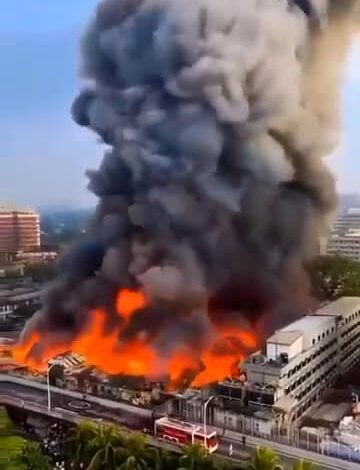
In the aftermath of the devastating 7.7-magnitude earthquake that struck near the China–Myanmar border, communities across the affected region continue to confront the immense challenges left behind by one of the area’s most powerful natural disasters in recent years.
Entire neighborhoods that once bustled with daily activity have been transformed into scenes of emergency response and recovery. Damaged buildings, temporary shelters, and rescue equipment now dominate many areas as authorities work to determine the full extent of the destruction. Families remain anxious as they search for information about missing loved ones, while local officials continue gathering data on casualties, injuries, and property damage.
Emergency response teams from both China and Myanmar mobilized rapidly following the earthquake. Search-and-rescue crews have been working around the clock in affected communities, navigating unstable structures, debris-filled streets, and difficult terrain in an effort to locate survivors and assist those in need. Medical teams have established emergency treatment centers, while engineers assess the safety of roads, bridges, hospitals, schools, and other critical infrastructure.
The recovery effort has been complicated by the region’s geography. Many of the hardest-hit communities are located in mountainous and remote areas where access is already limited under normal conditions. Damaged roads and disrupted communication networks have made relief operations even more challenging, forcing emergency agencies to develop alternative methods for reaching isolated populations.
Humanitarian organizations have begun coordinating large-scale relief efforts aimed at addressing immediate needs. Shipments of food, clean drinking water, medical supplies, blankets, and temporary shelter materials are being directed toward affected communities. Relief workers are also focusing on vulnerable groups, including children, elderly residents, and individuals displaced by the disaster.
Restoring transportation routes remains one of the highest priorities for authorities. Reopening roads and repairing damaged infrastructure are essential for ensuring that aid reaches remote communities efficiently. Communication networks are also being repaired to reconnect families and improve coordination among emergency response agencies.
Despite the widespread devastation, stories of resilience and hope continue to emerge from the disaster zone. Rescue workers have reported several successful recoveries of survivors trapped beneath collapsed structures. Families separated during the earthquake have been reunited after hours—or in some cases days—of uncertainty. Utility crews have also begun restoring electricity, water service, and telecommunications in some of the affected areas.
These encouraging developments provide moments of relief amid the ongoing hardship faced by thousands of residents. Communities throughout the region have demonstrated remarkable determination, with neighbors helping one another clear debris, share resources, and support those who have lost homes or loved ones.
For many families, however, the challenges are only beginning. The earthquake has left significant damage to homes, businesses, schools, and public facilities. Countless residents now face the difficult task of rebuilding their lives while coping with emotional trauma and financial uncertainty.
Experts warn that full recovery will likely take months and, in some heavily damaged areas, several years. Reconstruction efforts will require substantial investment, careful planning, and ongoing cooperation between governments, humanitarian organizations, and local communities.
As emergency operations continue and damage assessments become more comprehensive, the primary focus remains on protecting lives, supporting survivors, and providing immediate assistance to those most affected. At the same time, officials are beginning to develop long-term recovery strategies designed to strengthen infrastructure and improve resilience against future natural disasters.
While the road ahead will undoubtedly be difficult, the response to the earthquake has also highlighted the strength, compassion, and determination of those involved in the recovery effort. From first responders and medical personnel to volunteers and local residents, countless individuals are working together to help affected communities rebuild and move forward.
In the face of tragedy, their collective efforts serve as a powerful reminder that recovery is not only about repairing buildings and infrastructure—it is also about restoring hope, rebuilding communities, and supporting one another through adversity.
As the region continues its recovery journey, the resilience demonstrated by survivors and responders alike remains a source of inspiration and optimism for the future.