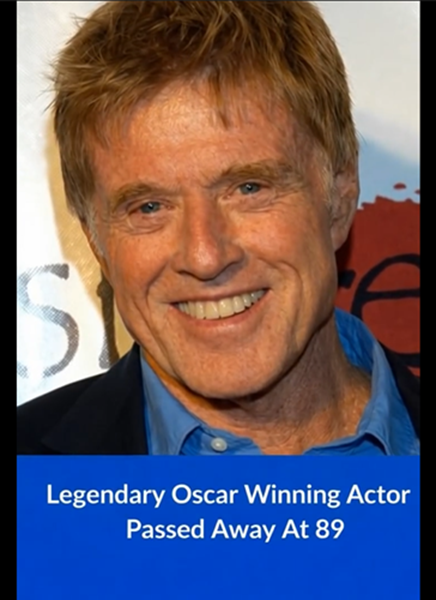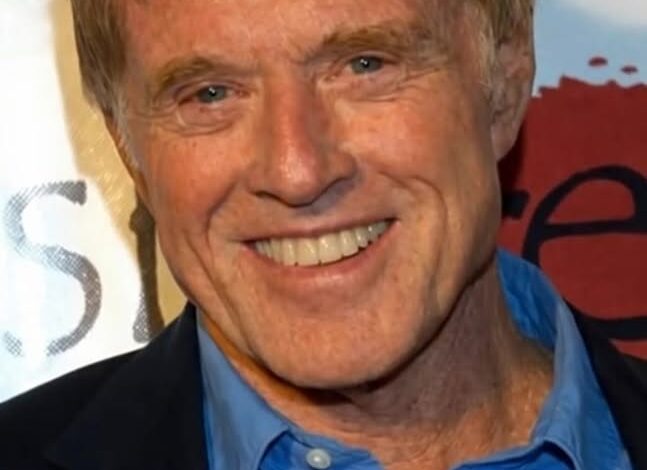
Few figures in modern entertainment left a mark as profound and enduring as Robert Redford.
For more than six decades, he stood at the center of American cinema—not merely as an actor, but as a filmmaker, visionary, activist, and champion of artistic freedom. His passing on September 16, 2025, at the age of 89 marked the end of an extraordinary chapter in cultural history.
According to a statement released by his longtime publicist, Cindi Berger, and shared with PEOPLE, Redford died peacefully at his beloved home in Sundance, Utah, surrounded by family and loved ones. Nestled among the mountains he cherished, it was a fitting place for a man who spent much of his life seeking beauty, authenticity, and connection to the natural world.
His family requested privacy as tributes poured in from every corner of the globe. Filmmakers, actors, environmental advocates, and countless admirers reflected on a legacy that stretched far beyond the screen.
Robert Redford was more than a movie star.
He was a symbol of independence, creativity, and purpose.
Born Charles Robert Redford Jr. on August 18, 1936, in Santa Monica, California, he grew up in a household that valued hard work and perseverance. His father worked as an accountant, while his mother nurtured his artistic interests from an early age.
Her death during his youth left a lasting impact.
Friends and colleagues would later describe Redford as thoughtful and introspective, qualities that became hallmarks of both his personality and his performances.
As a young man, he excelled in sports and earned a baseball scholarship to the University of Colorado. Yet academics and athletics alone could not satisfy his restless curiosity.
Searching for direction, Redford left college and embarked on a journey across Europe.
Those years proved transformative.
He immersed himself in art, studied painting, wandered through museums and cities, and encountered ideas that expanded his understanding of creativity and human experience. Though he could not have known it at the time, the lessons learned during those travels would shape every stage of his future career.
When he returned to the United States, he made a decision that would change his life forever.
He committed himself to acting.
Redford enrolled at the American Academy of Dramatic Arts in New York and began the difficult process of building a career from the ground up. He appeared in theater productions and television dramas throughout the late 1950s and early 1960s, refining his craft and learning the discipline required to succeed in a fiercely competitive industry.
Hollywood quickly noticed his striking appearance.
Tall, handsome, and effortlessly charismatic, he possessed all the qualities of a traditional leading man.
Yet Redford resisted becoming merely another pretty face.
He sought complexity.
He wanted characters with flaws, contradictions, and emotional depth.
That determination would eventually set him apart from many of his contemporaries.
His breakthrough arrived in 1969 with Butch Cassidy and the Sundance Kid.
Starring alongside Paul Newman, Redford portrayed the quiet, reflective Sundance Kid, creating one of the most memorable partnerships in cinematic history.
Audiences embraced the film immediately.
Its mix of humor, adventure, and emotional resonance captured the spirit of a changing era, while Redford’s performance established him as one of Hollywood’s brightest stars.
The success launched him into a remarkable decade.
During the 1970s, Redford appeared in a series of films that helped define American cinema.
In The Sting (1973), he reunited with Newman for another unforgettable collaboration, creating a classic caper that remains beloved decades later.
That same year, he starred opposite Barbra Streisand in The Way We Were, portraying a writer caught between love, ambition, and political conviction. The performance revealed a vulnerability that expanded public perception of his talent.
Then came All the President’s Men (1976), one of the most important political dramas ever made.
Playing journalist Bob Woodward during the Watergate investigation, Redford brought intensity and integrity to a story about truth, accountability, and the responsibilities of a free press.
The role reflected many of his own values.
Throughout his life, he believed storytelling could challenge authority, expose injustice, and inspire meaningful change.
As the years passed, Redford refused to become complacent.
Instead, he expanded his creative ambitions.
In 1980, he made his directorial debut with Ordinary People, a deeply emotional examination of grief, family dysfunction, and healing.
The film stunned critics and audiences alike.
Its emotional honesty and psychological depth earned widespread acclaim, ultimately winning the Academy Award for Best Director.
For Redford, it was more than a professional achievement.
It was proof that he could shape stories not only as an actor but as a filmmaker with a distinct artistic vision.
His success behind the camera opened new possibilities.
Films like Out of Africa further reinforced his reputation for choosing meaningful projects that balanced emotional complexity with broad audience appeal.
Unlike many stars who chased trends, Redford remained guided by principle.
He selected stories because they mattered.
Because they asked important questions.
Because they had something worth saying.
Yet perhaps his greatest contribution to cinema occurred away from movie sets entirely.
In 1981, he founded the Sundance Institute.
What began as an effort to support emerging filmmakers grew into one of the most influential artistic movements of modern times.
The Sundance Film Festival became a launching pad for independent storytellers whose voices might otherwise have gone unheard.
Generation after generation of filmmakers found opportunity through Sundance.
Many of today’s most respected directors, writers, and actors owe part of their success to the platform Redford created.
He viewed independent cinema as essential—not simply as entertainment, but as a space where creativity could thrive free from commercial limitations.
His commitment to artistic freedom never wavered.
Beyond filmmaking, Redford dedicated enormous energy to activism.
Environmental conservation became one of his lifelong passions.
Living much of his life in Utah, he developed a deep connection to the landscapes of the American West and fought tirelessly to protect them.
He advocated for sustainable development, preservation of natural resources, Indigenous rights, and environmental responsibility.
These causes were never public relations exercises.
They were personal convictions.
He used his influence not to draw attention to himself, but to bring awareness to issues he believed deserved greater attention.
Despite worldwide fame, Redford remained remarkably private.
He avoided the excesses often associated with celebrity culture and instead built a life centered on creativity, family, and nature.
Even after reducing his acting work in later years, he continued mentoring artists and supporting causes close to his heart.
The honors he received were numerous.
Awards, lifetime achievement recognitions, and tributes acknowledged his extraordinary contributions to cinema.
Yet those closest to him often noted that recognition was never his primary motivation.
What mattered most was purpose.
Integrity.
The freedom to create meaningful work.
As news of his passing spread, tributes arrived from across the entertainment world and beyond.
Many remembered him as a mentor.
Others celebrated him as a pioneer.
Countless filmmakers credited him with opening doors that changed their lives.
His influence can be seen not only in the films he created, but in the artists he inspired and the opportunities he helped create for others.
That may be Robert Redford’s greatest legacy.
He proved that success and substance can coexist.
That artistic achievement and social responsibility need not be separate pursuits.
And that a single individual, guided by conviction and courage, can transform an industry while remaining true to his values.
Though Robert Redford has taken his final bow, his impact endures.
His films continue to captivate audiences.
His activism continues to inspire advocates.
His vision continues to shape the future of independent storytelling.
The man may be gone, but the influence remains woven into the fabric of cinema itself—a lasting reminder that true greatness is measured not only by fame, but by the lives touched, the voices elevated, and the principles never abandoned.