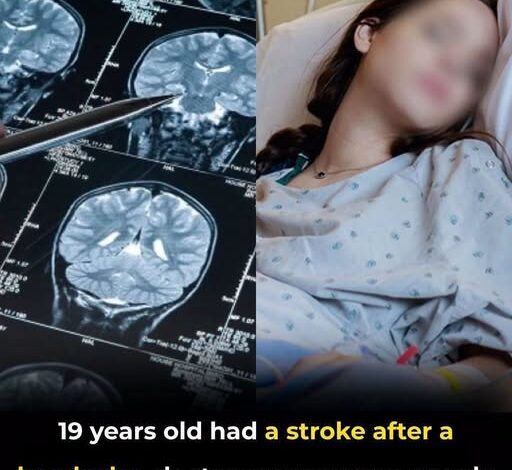
A stroke doesn’t always strike the elderly.
More and more, it’s happening to people in their 30s, 40s, and even younger—interrupting careers, families, and futures with little warning. Many still think of stroke as a condition reserved for old age, but that belief can be dangerously misleading. Today, doctors are seeing an increasing number of younger adults arriving in emergency rooms with life-changing brain injuries caused by strokes that might have been prevented.
The risk often builds quietly.
High blood pressure is one of the biggest contributors, yet millions of people don’t realize they have it because it rarely causes symptoms until serious damage has already begun. Diabetes, obesity, smoking, excessive alcohol use, high cholesterol, physical inactivity, and unhealthy diets all increase the strain on blood vessels over time. Chronic stress and poor sleep can also play a role by worsening other risk factors.
For some women, pregnancy and the weeks following childbirth can temporarily increase the risk of stroke due to changes in blood clotting, blood pressure, and circulation. Certain heart conditions, blood-clotting disorders, and rare genetic conditions may also raise the risk in younger people.
A stroke occurs when part of the brain suddenly loses its blood supply.
This can happen because a blood vessel becomes blocked by a clot—known as an ischemic stroke—or because a blood vessel ruptures and bleeds into the brain, called a hemorrhagic stroke. In either case, brain cells are deprived of oxygen and nutrients. Within minutes, those cells begin to die.
Unlike many other tissues in the body, brain cells cannot simply regenerate after significant damage.
That is why every second matters.
Neurologists often repeat the phrase, “Time is brain,” because millions of neurons can be lost every minute that treatment is delayed. A person who receives emergency care quickly may recover with little or no lasting disability, while someone who waits may face permanent paralysis, speech impairment, memory problems, or loss of independence.
The body usually gives urgent warning signs.
The problem is that many people ignore them.
One of the most common symptoms is sudden weakness or numbness on one side of the face, arm, or leg. A smile may suddenly become uneven, or one arm may drift downward when both arms are raised.
Speech is another major warning sign.
Words may become slurred, difficult to understand, or impossible to produce. Some people know exactly what they want to say but cannot get the words out. Others may speak clearly but make little sense.
Vision changes can also appear without warning.
Blurred vision, double vision, or sudden loss of sight in one or both eyes should never be dismissed, especially when accompanied by other symptoms.
Balance problems are another red flag.
Someone experiencing a stroke may suddenly become dizzy, lose coordination, stumble while walking, or feel unable to control their movements.
In some cases—particularly with bleeding strokes—a sudden, severe headache may develop.
People often describe it as the worst headache of their lives. It may be accompanied by nausea, vomiting, confusion, or loss of consciousness. While not every severe headache is a stroke, one that appears suddenly and intensely requires immediate medical evaluation.
The challenge is that these symptoms may disappear after a few minutes.
Some people experience what is known as a transient ischemic attack (TIA), sometimes called a “mini-stroke.” Because symptoms improve quickly, many people assume the danger has passed and choose not to seek medical care.
That can be a life-threatening mistake.
A TIA is often a warning that a much larger stroke could occur within hours or days. It should always be treated as a medical emergency.
Doctors recommend remembering the simple acronym F.A.S.T. to recognize stroke symptoms:
F – Face: Ask the person to smile. Does one side droop?
A – Arms: Ask them to raise both arms. Does one arm drift downward?
S – Speech: Is speech slurred, confused, or difficult to understand?
T – Time: If you notice any of these signs, call emergency medical services immediately.
Do not drive yourself to the hospital if emergency services are available.
Paramedics can begin assessment and treatment on the way, while also ensuring the patient reaches a hospital equipped to manage stroke emergencies as quickly as possible.
Perhaps the most important message is this:
Do not wait to see if the symptoms improve.
Do not take a nap.
Do not assume it is stress, dehydration, fatigue, or simply “feeling off.”
The sooner treatment begins, the greater the chance of preserving brain function and reducing permanent disability.
The good news is that many strokes are preventable.
Managing blood pressure, controlling diabetes, avoiding tobacco, limiting alcohol, exercising regularly, maintaining a healthy weight, eating a balanced diet, and attending routine medical checkups can significantly reduce the risk. Knowing your family history and discussing personal risk factors with your healthcare provider can also help identify problems before they become emergencies.
A stroke can change a life in minutes.
But recognizing the warning signs and acting immediately can save a life—and protect the abilities that make life worth living.
Your brain cannot afford hesitation.
If something suddenly feels wrong, trust the warning.
Call for help.
Those few minutes may become the most important decision you ever make.