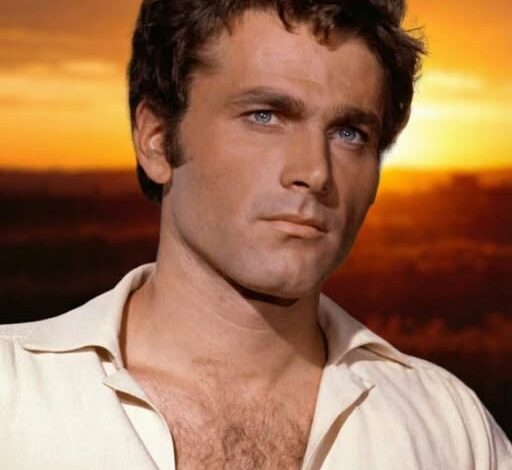
Long before audiences around the world recognized his unmistakable blue eyes and quiet intensity, Franco Nero was redefining what it meant to be a leading man. At a time when cinema often celebrated loud heroes and larger-than-life personalities, he proved that silence could be just as commanding. A single glance, a measured pause, or a restrained expression often revealed more than pages of dialogue ever could. Rather than chasing attention, Nero drew viewers in with a presence that felt mysterious, thoughtful, and deeply human.
His rise came during one of the most exciting periods in European filmmaking. The 1960s were transforming the cinematic landscape, with directors pushing creative boundaries and audiences embracing stories that explored moral complexity instead of simple heroes and villains. Historical epics, crime thrillers, and Westerns flourished, but Franco Nero quickly distinguished himself by bringing emotional depth to every role he accepted. His performances rarely relied on grand speeches or dramatic gestures. Instead, he trusted subtlety, allowing emotions to simmer beneath the surface until they became impossible to ignore.
Everything changed in 1966 with the release of Django.
The film did more than launch Nero to international fame—it transformed the Western genre itself.
Until then, many movie cowboys had been portrayed as fearless, almost mythical figures who rode confidently into danger and rarely revealed vulnerability. Nero offered something entirely different. His Django was scarred by violence, burdened by loss, and haunted by a past that seemed to weigh on every step he took. Dragging a mysterious coffin through muddy streets, he became one of cinema’s most unforgettable antiheroes.
What made the performance extraordinary was not explosive dialogue or exaggerated heroics.
It was restraint.
With remarkably few words, Nero conveyed pain, determination, loneliness, and quiet resolve. Every expression carried meaning. Every silence built tension. Audiences found themselves drawn not simply to what Django did, but to what he carried inside.
The impact was immediate and lasting.
Django became a landmark in European cinema, inspiring countless sequels, unofficial spin-offs, tributes, and reinterpretations across the decades. Directors and actors alike studied its style, while filmmakers around the world borrowed elements of its gritty realism and morally ambiguous storytelling. Even today, the film remains one of the defining works of the Spaghetti Western movement, and much of its enduring power can be traced back to Nero’s unforgettable performance.
Many actors struggle to escape the shadow of one iconic role.
Franco Nero chose a different path.
Rather than relying on the success of Django, he continuously challenged himself by accepting an extraordinary variety of roles. Historical dramas, political thrillers, action adventures, psychological stories, and art-house productions all became part of his remarkable filmography. His willingness to explore different genres kept his career fresh while demonstrating an impressive range that many audiences had not initially expected.
Over the years, Nero appeared in more than two hundred film and television productions, building one of the most extensive careers of his generation.
His success was not limited to Italy.
He worked throughout Europe and established a respected presence in Hollywood, adapting seamlessly to different languages, filmmaking traditions, and production styles. At a time when truly international acting careers were relatively uncommon, Nero proved that talent and professionalism could transcend national borders. Whether performing in Italian, English, French, or other productions, he approached each project with the same quiet dedication that had first captured audiences’ attention.
As trends shifted and cinematic fashions evolved, many stars from his era gradually disappeared from the spotlight.
Franco Nero endured.
His longevity was never built on publicity, scandal, or carefully manufactured celebrity. Instead, it rested on qualities that rarely go out of style: discipline, adaptability, and genuine respect for storytelling. Directors valued his reliability. Fellow actors admired his professionalism. Audiences appreciated the honesty he brought to every character, regardless of the size of the role.
That commitment allowed him to remain active across generations.
Younger viewers continue discovering his performances through restored classics, streaming platforms, and international film festivals, while longtime fans revisit his work with renewed appreciation. Film schools and critics frequently point to his performances as examples of how subtle acting can create extraordinary emotional impact. Rather than overpowering a scene, Nero often elevated it through careful control, proving that less can indeed become far more.
Perhaps that is the true reason his legacy continues to grow.
He reminds us that lasting success rarely comes from chasing attention.
It comes from mastering a craft.
Franco Nero never needed to dominate the screen with spectacle. He understood that the strongest performances often leave space for the audience to think, feel, and imagine. His characters were rarely perfect, but they were believable. They carried scars, doubts, determination, and quiet resilience that reflected real human experience.
In an industry that often rewards constant reinvention and fleeting popularity, Nero built something far more enduring.
A career founded on substance instead of excess.
On consistency instead of trends.
On artistry instead of image.
Today, decades after his breakthrough, his films continue to inspire actors, filmmakers, and movie lovers around the world. They stand as reminders that true cinematic greatness does not always shout for attention. Sometimes it speaks softly, through a single expression, a measured silence, or a performance so honest that it remains unforgettable long after the final scene fades to black.
That is the legacy of Franco Nero.
Not simply a celebrated actor.
But a craftsman whose quiet brilliance continues to shape the language of cinema itself.