For everyone who set out that morning, it was supposed to be an ordinary journey.
Some passengers were looking forward to a day spent with friends. Others had packed small bags, exchanged cheerful conversations, and climbed aboard believing they would be home again before evening. Families waved goodbye without imagining it would be the last time they would see their loved ones.
Then, in a matter of seconds, everything changed.
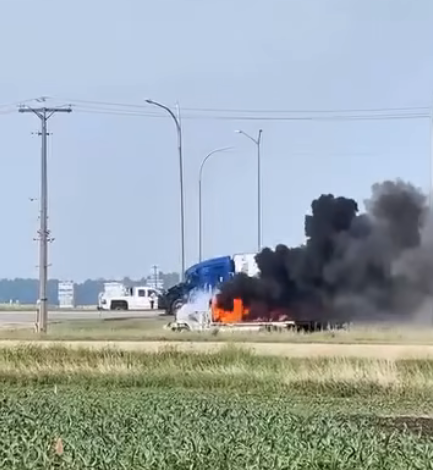
Near the rural community of Carberry, Manitoba, a devastating collision transformed a quiet intersection into the site of one of the deadliest roadway tragedies in the province’s history. What had begun as a routine drive ended in unimaginable devastation, leaving families, emergency responders, and an entire nation struggling to comprehend the scale of the loss.
For those who survived, the memories remain painfully vivid.
Many have described an otherwise peaceful journey interrupted by an instant of confusion—a large truck appearing unexpectedly, the piercing sound of brakes locking against the pavement, desperate attempts to avoid the collision, and then overwhelming chaos.
Some recall darkness.
Others remember only fragments.
The crash unfolded so quickly that few had time to fully understand what was happening before the impact changed countless lives forever.
Within minutes, emergency calls flooded dispatch centers.
Police officers, firefighters, paramedics, and rescue crews rushed toward the intersection, uncertain what they would find. As more emergency vehicles arrived, it became increasingly clear that this was no ordinary traffic collision.
The destruction stretched across the roadway.
Twisted metal, shattered glass, scattered belongings, and heavily damaged vehicles painted a heartbreaking picture of the force involved. First responders immediately began searching for survivors, working tirelessly to reach those trapped inside the wreckage while providing urgent medical care to anyone who could still be rescued.
Many later described the scene as one of the most emotionally difficult incidents they had ever experienced.
In moments like these, every second matters.
Rescuers worked under extraordinary pressure, carefully cutting through damaged vehicles, stabilizing injured passengers, and coordinating medical transport as additional emergency resources continued arriving from surrounding communities.
Despite every effort, the tragedy claimed the lives of at least fifteen people.
Behind that number are individual stories that statistics can never fully capture.
Each victim had plans.
Each had family members expecting a phone call later that day.
Parents waited for children who would never return home.
Children waited for parents who would never walk through the front door again.
Friends expected reunions.
Grandparents anticipated visits.
Ordinary lives, filled with routines and future plans, were changed forever in a single moment.
As loved ones gathered, many found themselves confronting the unimaginable reality that a normal day had become the worst day of their lives.
Throughout Manitoba, communities responded with an outpouring of grief and support.
Flags were lowered.
Vigils were organized.
Flowers, candles, handwritten notes, and photographs gradually appeared near the crash site, transforming the roadside into a place of remembrance. Strangers embraced one another. Churches opened their doors for prayer and reflection. Crisis counselors and community organizations offered assistance to families struggling to process overwhelming loss.
Even people who had never met the victims felt the weight of what had happened.
The tragedy resonated far beyond the immediate community because it reflected something deeply familiar.
Almost everyone has experienced saying goodbye to someone heading out for what should have been an ordinary drive.
Almost everyone has expected that person to return safely.
That shared experience made the loss feel especially personal.
While communities mourned, investigators began the difficult task of understanding exactly what had happened.
Major collision investigations are meticulous by necessity. Specialists carefully document every aspect of the scene, examining vehicle positions, impact points, skid marks, roadway conditions, weather, visibility, traffic controls, mechanical evidence, and witness statements.
Modern investigations may also include data retrieved from onboard vehicle systems, surveillance footage when available, and detailed reconstruction models designed to determine the sequence of events leading to the collision.
Investigators work methodically because every detail matters.
Determining factors such as speed, right-of-way, visibility, driver actions, and roadway conditions helps establish the most accurate understanding possible of how such a devastating event occurred.
Yet everyone involved understands one painful truth.
No conclusion can reverse what happened.
No report can restore the lives that were lost.
No investigation, regardless of how thorough, can erase the grief now carried by so many families.
Still, these efforts remain essential.
Understanding tragedies of this magnitude often leads to improvements designed to protect future travelers. Transportation officials, engineers, policymakers, and safety experts frequently review major collisions to identify opportunities for reducing similar risks through roadway improvements, traffic control changes, enhanced signage, public education, or other safety measures.
In that sense, careful investigation serves not only those directly affected but everyone who uses the roads each day.
As memorials continue growing near the intersection, they stand as quiet reminders of lives interrupted far too soon.
Photographs flutter gently in the wind.
Fresh flowers replace those that begin to fade.
Messages of love, remembrance, and support continue arriving from people determined to ensure the victims are remembered not simply as part of a tragic headline, but as individuals whose lives mattered deeply to those who knew them.
For the families left behind, healing will not follow a timetable.
There will be birthdays marked by absence, holidays forever changed, and ordinary moments unexpectedly interrupted by memories of the people no longer there to share them.
The road ahead will be measured not only in grief but also in remembrance.
In the days and months to come, investigators will continue seeking answers, communities will continue offering support, and conversations about roadway safety will undoubtedly continue.
But beneath every discussion lies one heartbreaking reality that cannot be forgotten.
What began as an ordinary outing became a final journey for at least fifteen people whose only expectation that morning was to return home.
Their loss will be remembered not only through official reports or roadside memorials, but through the countless lives they touched—and through the hope that understanding this tragedy may one day help prevent another family from enduring the same unimaginable pain.