The sea had always been part of life.
For generations, people living along the coastline understood its beauty, respected its power, and accepted its unpredictability. Fishing boats left before sunrise, ferries carried passengers across familiar routes, and harbors bustled with activity from dawn until dusk.
Most days ended peacefully.
This one did not.
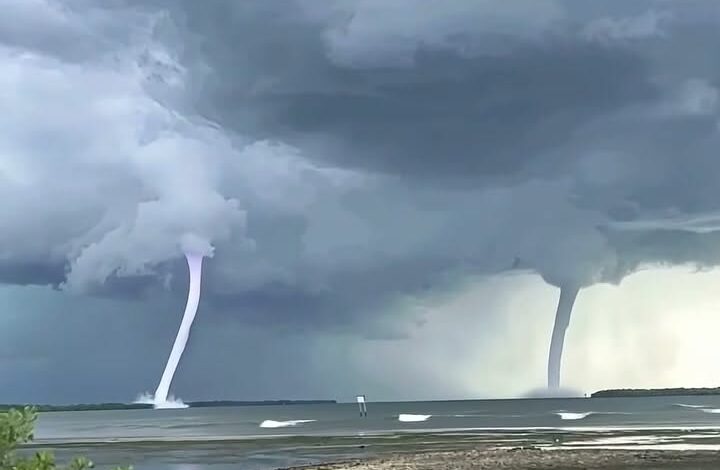
What had begun as an ordinary day slowly transformed into a desperate struggle against nature as weather conditions deteriorated with startling speed. Winds strengthened, waves grew larger, and skies that had seemed harmless only hours earlier darkened into something far more threatening.
Those already on the water suddenly found themselves facing conditions few had expected.
Some vessels managed to turn back.
Others continued fighting rough seas while searching for the safest route home.
Along the shoreline, families watched the horizon with growing concern.
Phone calls became more frequent.
Simple questions carried enormous weight.
“Where are you now?”
“Are you okay?”
“When will you be back?”
As evening approached, answers became increasingly difficult to obtain.
Communication grew unreliable.
Signals weakened.
Some calls disconnected unexpectedly.
Others never connected at all.
By nightfall, the coastline no longer sounded like itself.
The familiar rhythm of boat engines returning to harbor had largely disappeared.
Instead, crashing waves dominated the darkness, accompanied by powerful gusts of wind that rattled docks and sent spray high into the air.
Half-secured boats strained violently against their ropes.
Metal groaned.
Wood creaked.
Harbor lights reflected across restless water that seemed almost unrecognizable compared with the calm sea people had known only hours before.
On the piers, groups of family members stood quietly together.
Some stared into the darkness, hoping to recognize the lights of approaching vessels.
Others refreshed weather updates repeatedly on their phones, searching for any information that might bring reassurance.
Every notification caused hearts to race.
Every unfamiliar number offered a brief moment of hope.
Sometimes it was only another weather alert.
Sometimes it was someone checking to ask whether loved ones had returned.
Inside emergency operations centers, a different kind of silence settled over the room.
Rescue coordinators remained focused on radar screens, marine charts, weather updates, and incoming radio traffic.
Every moving signal required attention.
Every reported location demanded careful evaluation.
Every decision had the potential to save lives.
Search-and-rescue teams prepared vessels capable of operating in dangerous conditions whenever circumstances allowed.
Coast Guard crews remained ready to respond despite enormous risks posed by high winds and rough seas.
Dispatchers worked continuously, carefully documenting every report while maintaining communication with emergency personnel spread across the region.
Hours passed.
Fatigue slowly settled across everyone involved.
Yet no one stopped working.
There was simply too much at stake.
Emergency responders understand that every minute matters when severe weather places lives in danger.
Each radar return could represent a vessel needing assistance.
Each burst of static over marine radio frequencies might become the only opportunity for someone to communicate their position before conditions worsened further.
In those moments, experience and training become invaluable.
Every procedure.
Every checklist.
Every carefully practiced emergency protocol exists for nights exactly like this one.
While rescue crews remained focused on their mission, something equally remarkable began unfolding throughout nearby communities.
Neighbors opened their homes to families unable to return safely.
Churches unlocked their doors to provide warmth and shelter.
Community centers distributed blankets, hot drinks, flashlights, and charging stations for phones running low on battery.
Local restaurants donated food.
Volunteers arrived without being asked.
Many had loved ones of their own still somewhere beyond the shoreline.
Yet they continued helping others while quietly carrying their own fears.
Strangers comforted one another in waiting areas.
Conversations began with simple questions.
“Have you heard anything?”
“What boat were they on?”
“When was the last time you spoke?”
Sometimes no one had answers.
Still, people stayed together.
Shared silence often became its own form of support.
No one wanted another family to wait alone.
As the night grew darker, weather forecasts remained uncertain.
Meteorologists continued monitoring changing conditions while advising everyone to avoid unnecessary travel near the coast.
Authorities repeatedly reminded the public that emergency responders were working tirelessly but that dangerous seas sometimes limited immediate rescue operations until conditions allowed safe deployment.
It was a difficult message for anxious families to hear.
Waiting often feels unbearable when someone you love remains unaccounted for.
Yet rescuers understand another painful truth.
Rushing into impossible conditions can create even greater tragedy.
Every decision balances urgency against safety.
Every operation requires careful judgment.
Throughout the night, hope remained stronger than exhaustion.
Families refused to leave the shoreline.
Many continued scanning the darkness long after visibility had disappeared completely.
Others remained beside emergency radios or televisions, unwilling to miss even the smallest update.
Children slept across waiting room chairs while parents remained awake beside them.
Coffee grew cold.
Phones required constant charging.
Conversations became quieter.
But hope never entirely disappeared.
History has shown countless times that remarkable rescues can occur after long hours of uncertainty.
Experienced mariners know survival often depends upon preparation, calm decision-making, and the extraordinary determination of both those awaiting rescue and those searching for them.
Every search continues because every possibility matters.
As dawn slowly approached, the first hints of light began separating sea from sky once again.
The coastline looked different than it had the evening before.
The storm had left its mark.
Debris scattered beaches.
Some boats remained damaged.
Harbors bore fresh evidence of nature’s tremendous force.
Yet alongside that destruction stood something equally powerful.
A community that had refused to face fear alone.
The sea cannot always be controlled.
Storms arrive despite careful planning.
Nature often reminds humanity of its immense power.
But nights like this reveal another truth just as clearly.
When uncertainty falls over an entire community, compassion rises with it.
Neighbors become family.
Strangers become support.
Ordinary people discover extraordinary strength simply by refusing to let one another carry fear alone.
Because although no one can calm the waves once they begin to rise, people can still choose something equally important.
To remain together.
To keep searching.
To keep hoping.
And to welcome every safe return home as the miracle it truly is.