For the rest of that morning, the house moved carefully around the truth like people stepping around broken glass.
Nobody raised their voice.
That somehow made everything feel worse.
My daughter carried her cereal bowl to the sink without her usual music playing from her phone. My son left for school fifteen minutes early, muttering a quick goodbye that barely sounded like him. Even our youngest, who normally filled every silence with questions and stories and endless observations about the world, seemed quieter.
Peter sat at the kitchen table long after the kids had gone.
The envelope of cash remained untouched between us.
Every dollar he had taken was stacked neatly inside, each bill flattened carefully as though precision itself could somehow undo betrayal.
But betrayal is not measured only by money.
It is measured by what people allow you to believe.
And for weeks, I had believed my own children were capable of stealing from me.
That knowledge sat inside my chest like a stone.
Peter rubbed both hands over his face slowly.
“I never thought it would go this far,” he said finally.
I leaned against the counter with my coffee growing cold between my palms.
“That’s the problem with secrets,” I replied quietly. “People always think they can control how far they spread.”
He nodded once.
The exhaustion in his face startled me suddenly. Not because I pitied him, but because I realized he had probably been carrying this anxiety alone every single night—slipping out of bed, checking the hallway, counting cash, inventing excuses, trying to keep separate versions of reality from colliding.
And eventually, they always collide.
“I should’ve told you from the beginning,” he admitted.
“Yes.”
“I thought you’d say no.”
That hurt more than I expected.
Not because he feared my reaction.
Because after twenty years of marriage, he still believed honesty was riskier than deception.
I sat down across from him slowly.
“You really thought I’d refuse to help abandoned puppies?”
His jaw tightened slightly.
“It wasn’t only that.”
The room fell silent again.
Then softly:
“You’re still scared around dogs, Charlotte.”
The memory returned immediately.
Second grade.
A sharp bark.
Small teeth catching my wrist.
Blood running down my arm while adults insisted it “wasn’t that bad.”
People underestimate how deeply fear roots itself inside children.
The bite itself healed quickly.
The panic stayed much longer.
For years afterward, large dogs made my pulse spike instantly. I crossed streets to avoid them. Even friendly barking triggered something automatic in me.
Peter knew all of that.
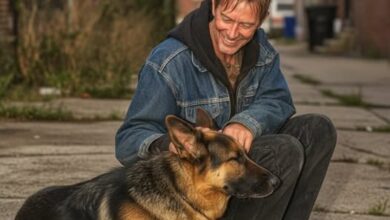
When we first dated, he once walked six blocks out of our way because a neighbor’s German shepherd had escaped into the yard beside the sidewalk.
He remembered things like that.
Always had.
“I didn’t want to force you into it,” he said carefully. “And once I started helping the shelter, it became… complicated.”
Complicated.
Such a harmless word for something capable of quietly poisoning an entire household.
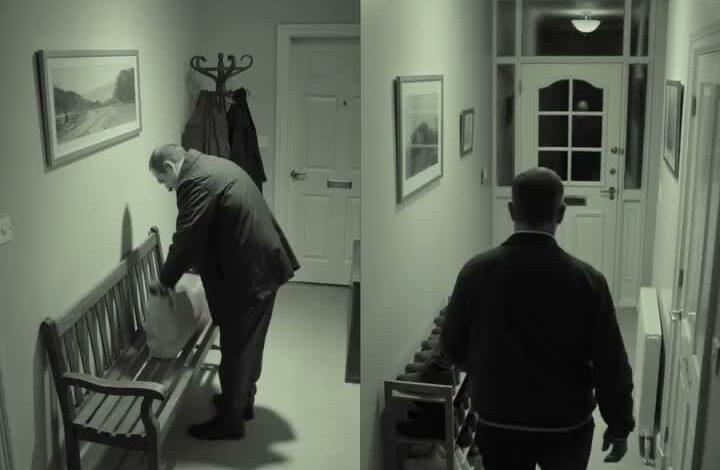
I looked toward the hallway where the hidden camera still sat mounted near the ceiling.
Twenty-four hours earlier I installed it convinced one of my children was betraying me.
Now it felt less like a security device and more like evidence of how fragile trust really is.
Marriage changes slowly over time in ways nobody notices immediately.
Not through dramatic explosions.
Through tiny assumptions.
Tiny omissions.
Tiny decisions to avoid difficult conversations because exhaustion feels easier than vulnerability.
You wake up one day and realize the person beside you has entire emotional rooms you no longer enter.
That realization terrified me far more than missing money ever had.
“I need you to understand something,” I said finally.
Peter looked up immediately.
“You didn’t just take cash from my wallet.”
He swallowed hard.
“You made me suspicious of our children.”
His eyes closed briefly.
“I know.”
“No,” I said softly. “I don’t think you do.”
Because once a parent begins doubting their children’s honesty, something shifts subtly inside the home. Every answer sounds potentially rehearsed. Every nervous glance feels loaded. Innocent behavior starts looking strategic.
For three weeks I watched my kids differently.
That damage would not disappear overnight simply because the truth finally surfaced.
Peter stared down at the envelope.
“I hated myself every time you questioned them.”
“Then why didn’t you stop?”
That question lingered heavily between us.
Finally he answered with brutal honesty.
“Because once people start hiding something successfully, they convince themselves they can fix it before anyone gets hurt.”
I thought about that for a long time after he left for work.
Because he was right.
Most betrayals do not begin with cruelty.
They begin with rationalization.
A small lie.
A temporary secret.
A shortcut justified by good intentions.
People rarely wake up planning to destroy trust.
They just keep postponing honesty until dishonesty becomes its own structure.
That afternoon I picked the kids up from school myself.
Usually Peter handled afternoons because my work schedule ran later, but I needed to see them differently now. Or maybe I needed them to see me differently.
My daughter climbed into the passenger seat first.
She stared out the window for several blocks before speaking.
“You really thought it was us.”
Not accusatory.
Not angry.
Wounded.
That almost broke me.
“I thought something was wrong,” I admitted quietly.
“But you looked at us like criminals.”
Children notice everything.
Especially the way their parents look at them.
I tightened my grip slightly on the steering wheel.
“I’m sorry.”
She nodded faintly but kept looking outside.
From the back seat my son spoke next.
“I knew Dad was acting weird.”
I glanced at him through the mirror.
“What do you mean?”
“He kept checking if we were asleep.” My son shrugged uneasily. “And he was always tired lately.”
That detail unsettled me deeply.
Because while I sat building suspicion toward my children, they had already been quietly noticing their father unraveling under the weight of his own secrecy.
Families are emotional ecosystems.
Nothing stays isolated for long.
That evening we ate dinner together more honestly than we had in weeks.
Not perfectly.
Not magically healed.
Honestly.
Peter answered questions directly this time.
Yes, he should have told us.
Yes, he understood why everyone felt hurt.
Yes, he would remove money from savings openly moving forward if the shelter needed help.
And perhaps most importantly:
yes, trust takes time to rebuild.
No defensiveness.
No excuses disguised as explanations.
Just accountability.
That mattered.
After dinner, our youngest tugged gently on Peter’s sleeve.
“Can we see the puppies again?”
Peter looked toward me first before answering.
The pause was small.
But meaningful.
He was asking permission now instead of deciding alone.
I nodded slowly.
“Tomorrow,” I said.
The shelter looked completely different during daylight.
The industrial neighborhood still felt bleak—faded buildings, rusted fencing, cracked pavement—but now I could properly see the exhaustion woven through the place. The kennels were overcrowded. Bags of donated food sat stacked beside old towels and cleaning supplies. Everything smelled faintly of disinfectant and damp fur.
And everywhere there were dogs.
Large dogs.
Tiny dogs.
Old dogs sleeping heavily under blankets.
Nervous dogs pacing in circles.
Puppies climbing over one another in clumsy piles of movement.
My youngest laughed immediately.
My daughter hung back at first, arms folded protectively.
My son crouched beside a shepherd mix missing one ear.
And Peter moved through the shelter with surprising familiarity.
He knew names.
Feeding schedules.
Which animals needed medication.
Which ones became frightened by loud voices.
Watching him there complicated my anger in ways I hated.
Because the same secrecy that damaged our family had also kept vulnerable animals alive.
Human beings are rarely only one thing.
That is what makes forgiveness difficult.
If Peter had been entirely selfish, this would have been easier.
If his motives had been cruel, anger could have stayed clean.
But love mixed with dishonesty creates emotional confusion no one prepares you for.
The shelter manager approached me quietly while the kids played with the puppies.
“I didn’t know he hadn’t told you,” she said gently.
Her name was Marianne. Late fifties. Tired eyes softened by kindness.
“He came here every week?”
She nodded.
“Sometimes after midnight.” A small smile crossed her face. “Those puppies probably survived because of him.”
I watched Peter kneeling beside the smallest puppy, carefully bottle-feeding it while our youngest sat beside him completely enchanted.
“He still lied,” I said quietly.
Marianne’s expression softened further.
“Yes,” she agreed. “But people can do loving things badly sometimes.”
That sentence stayed with me.
Because marriage itself is often exactly that:
two imperfect people trying to love each other while dragging around old fears, bad instincts, exhaustion, pride, and damage they don’t fully understand themselves.
The puppies came home three days later.
Officially we agreed to foster them temporarily.
Unofficially everyone knew they were staying.
The house changed almost immediately afterward.
Laughter returned first.
Then noise.
Tiny paws scratched across hardwood floors. Towels appeared everywhere. My daughter became fiercely attached to the runt of the litter while pretending she absolutely was not. My son researched training videos obsessively online. Even Peter seemed lighter somehow, as though confession itself finally allowed him to breathe normally again.
One night about two weeks later, I woke up around 2 a.m.
Instinctively, panic flickered through me.
For one terrible second I expected to find Peter slipping from bed again.
Instead, I found him downstairs asleep on the couch with three puppies sprawled across his chest while late-night television played quietly in the background.
The sight hit me unexpectedly hard.
Because suddenly I understood something important:
the problem had never been the puppies.
Or the shelter.
Or even the money.
The problem was isolation.
Peter carried responsibility alone until secrecy felt easier than vulnerability.
And I, meanwhile, carried suspicion alone until fear distorted how I saw my own children.
Neither of us had trusted the other enough to bring difficult truths fully into the light.
Marriage cannot survive long in darkness.
Not because people stop loving each other.
Because secrecy changes the shape of love over time.
I sat beside him quietly.
One of the puppies lifted its head sleepily before crawling into my lap without hesitation.
Peter opened his eyes slowly.
“Hey,” he whispered.
“Hey.”
For a moment neither of us spoke.
Then finally I looked down at the tiny sleeping puppy curled against my sweater.
“You know,” I said softly, “I probably would’ve said yes.”
“To what?”
“To helping them.”
Pain flickered briefly across his face.
“I know.”
And somehow that answer mattered more than any apology he had given before.
Because at last he understood the real tragedy underneath all of this:
he never actually gave me the chance to stand beside him honestly.
The next morning the hidden hallway camera came down.
Not because trust had been magically repaired.
Because rebuilding trust requires something harder than surveillance.
It requires people choosing transparency repeatedly, even when honesty feels uncomfortable.
Especially then.
And over time, slowly, awkwardly, imperfectly…
…that became the new rule inside our house.
No more quiet accusations.
No more secret sacrifices.
No more pretending protection justifies deception.
Only truth.
Even when it arrives messy.
Even when it costs pride.
Even when it forces difficult conversations around tired dinner tables.
Because we learned something painful but necessary in those weeks:
sometimes the greatest damage inside a family does not come from cruelty.
It comes from love hidden badly enough to start looking like betrayal.