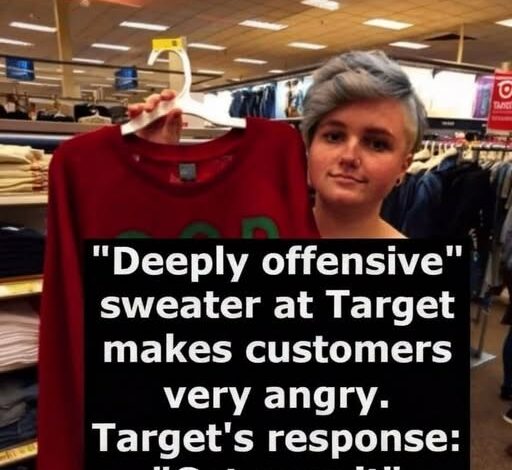
A routine shopping trip recently became the center of a much larger public discussion after a customer noticed a message on a holiday sweater that raised concerns about how mental health conditions are portrayed in consumer products. What might have otherwise been just another seasonal clothing item quickly attracted widespread attention online, sparking conversations about awareness, representation, and the responsibility companies have when creating products that reference medical conditions.
The debate began when shopper Reign Murphy shared concerns about a holiday sweater being sold by Target. The sweater featured the phrase “OCD Christmas obsessive-compulsive disorder,” a design intended to play on the common stereotype of being highly organized or particular during the holiday season.
For Murphy and others who criticized the product, the issue was not simply the words themselves but the broader message they believed the sweater communicated.
Obsessive-compulsive disorder, commonly known as OCD, is a recognized mental health condition that affects millions of people worldwide. It involves unwanted intrusive thoughts, fears, or urges known as obsessions, along with repetitive behaviors or mental rituals called compulsions. For many individuals, OCD can significantly affect daily life, relationships, work, education, and overall well-being.
Critics argued that using the term casually on novelty clothing risks reducing a serious medical condition to a personality trait or joke.
Many mental health advocates have spent years encouraging greater public understanding of OCD because the disorder is often misunderstood. People frequently use the term informally to describe someone who enjoys organization, cleanliness, or attention to detail. However, mental health professionals note that OCD is far more complex than simply liking things neat or orderly.
As images of the sweater circulated online, reactions varied widely.
Some consumers agreed with Murphy’s concerns and felt the design trivialized a condition that many individuals struggle with every day. They argued that products referencing mental health conditions should be created thoughtfully and with an understanding of how those conditions affect real people.
Others, however, viewed the situation differently.
Many individuals who identified themselves as living with OCD publicly stated that they were not offended by the sweater. Some considered it harmless humor, while others felt that people should be free to interpret such products according to their own experiences.
This difference in reaction highlighted an important reality about public discussions involving health, identity, and personal experience.
No single community speaks with one voice.
Individuals often have different opinions about how conditions, experiences, or identities should be represented in media, advertising, entertainment, and consumer products. What one person finds insensitive, another may find harmless, relatable, or even humorous.
The discussion quickly expanded beyond the sweater itself.
People began debating broader questions about language, representation, and the role businesses play in shaping public perceptions.
Should companies avoid using references to medical conditions altogether?
Should products be evaluated based on intent or impact?
Can humor and awareness coexist when discussing serious topics?
These questions have become increasingly common in recent years as consumers pay closer attention to the messages embedded within products, advertisements, and branding campaigns.
The rise of social media has amplified these conversations dramatically.
In previous decades, concerns about a product might have remained local or limited to a small group of customers. Today, a single photograph can reach millions of people within hours, generating national and even international discussions.
As a result, companies often find themselves navigating complex public reactions to products that may have been created without anticipating controversy.
Target eventually responded to the concerns through spokesperson Jessica Carlson.
The company acknowledged that some customers found the sweater offensive and expressed regret for any discomfort it may have caused. At the same time, the retailer stated that there was no intention to offend consumers and confirmed that the product would remain available for purchase.
The response reflected a balancing act that many businesses face when controversies emerge.
On one hand, companies often want to recognize customer concerns and demonstrate sensitivity. On the other hand, they may choose not to remove products if they believe those products were created in good faith and remain acceptable to a large portion of their customer base.
The incident also serves as part of a broader cultural conversation about mental health awareness.
Over the last several decades, public understanding of mental health conditions has improved significantly. Topics that were once rarely discussed openly are now part of mainstream conversations in schools, workplaces, healthcare settings, and media.
This increased awareness has encouraged many people to speak more openly about their experiences with anxiety, depression, OCD, and other conditions. At the same time, it has also led to greater scrutiny of how those conditions are represented in public spaces.
Advocates argue that language matters because it shapes public understanding.
When medical terms become casual expressions or punchlines, some worry that the real challenges faced by those living with the condition may be overlooked or misunderstood.
Others believe that language evolves naturally and that context should be considered before assuming harmful intent.
Both perspectives appeared throughout the discussion surrounding the sweater.
Ultimately, the controversy demonstrated how differently people can interpret the same message.
A phrase that one shopper sees as offensive may appear completely harmless to another. Personal experiences, cultural background, education, and individual beliefs all influence how people respond to language and imagery.
The debate also revealed how modern consumers increasingly expect companies to think carefully about the messages associated with their products.
Whether discussing mental health, identity, culture, or social issues, businesses now operate in an environment where customers often evaluate not only the products themselves but also the values those products appear to communicate.
In the end, the holiday sweater became more than a seasonal clothing item.
It became a catalyst for a larger conversation about mental health awareness, consumer responsibility, personal perspective, and the evolving relationship between businesses and the communities they serve.
While opinions remain divided about whether the design was offensive or harmless, the discussion itself reflects a growing willingness to engage with questions about representation and understanding.
Perhaps the most important lesson from the controversy is that intent, context, and personal experience all matter. Products, advertisements, and messages are rarely interpreted in exactly the same way by every person who encounters them.
As society continues to have more open conversations about mental health, situations like this are likely to remain part of the public landscape. They remind us that awareness involves more than recognizing a condition’s name—it also involves listening to different experiences, considering multiple perspectives, and approaching complex topics with thoughtfulness and respect.
Whether someone viewed the sweater as insensitive, humorous, or somewhere in between, the conversation it sparked demonstrates how even ordinary products can become opportunities for deeper reflection about how we talk about mental health and how those conversations continue to evolve.