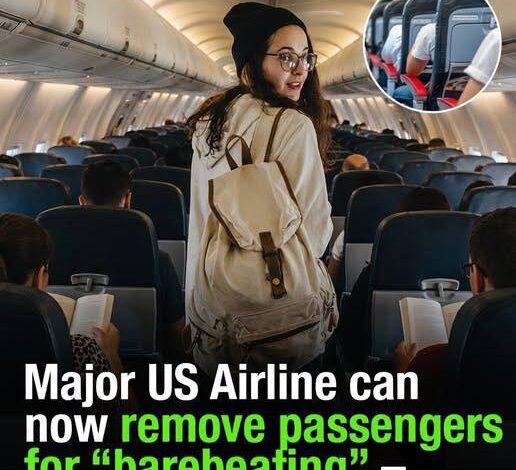
For years, air travel has operated on a strange kind of forced emotional compromise. Hundreds of strangers pack themselves into a narrow metal tube for hours at a time, surrendering privacy, comfort, and personal space in exchange for reaching another destination. Everyone accepts the trade because there is no alternative once the cabin door closes. But that fragile arrangement only works when passengers quietly agree to one unwritten rule: make the experience bearable for the people trapped beside you.
Increasingly, that agreement has been breaking down.
Anyone who flies regularly knows the modern soundtrack of air travel:
videos blasting through phone speakers,
TikToks looping endlessly,
FaceTime conversations shouted across armrests,
games chiming at full volume while exhausted passengers stare ahead in disbelief.
The problem is rarely just noise itself. It’s the feeling of helplessness attached to it. On an airplane, there is nowhere to escape. No changing seats freely. No stepping outside for air. No ability to remove yourself from someone else’s decision to treat a shared environment like a private living room.
So for years, passengers endured.
Some glared silently.
Some shoved earbuds deeper into their ears.
Others debated internally whether speaking up would solve the problem or simply create another one at 35,000 feet.
Because modern public life has become oddly tense around confrontation. Many people now fear that even polite requests can spiral unpredictably into arguments, humiliation, or viral internet moments. Asking someone to lower their volume increasingly feels less like a normal social correction and more like initiating a risk calculation.
That’s partly why United Airlines’ decision to formally crack down on passengers blasting audio without headphones feels significant far beyond simple cabin etiquette.
The policy does not merely target annoyance.
It acknowledges something larger:
shared public spaces require enforceable boundaries if they are going to remain psychologically livable.
By officially categorizing speaker use alongside other disruptive passenger behaviors, United transforms what was once treated as optional courtesy into an actual standard of conduct. That distinction matters enormously for both passengers and crew.
Before, flight attendants often occupied an awkward middle ground. They could ask people to lower devices “as a courtesy,” but courtesy is subjective. Passengers who felt entitled to their behavior could easily dismiss requests as personal opinions rather than enforceable rules.
Now the dynamic changes.
The expectation becomes clear:
if you want entertainment during the flight, bring headphones.
If you refuse, you risk consequences.
That clarity removes ambiguity, and ambiguity is where many public conflicts thrive.
For flight attendants especially, the policy provides long-missing institutional backing. Cabin crews already navigate enormous emotional labor during flights:
de-escalating conflicts,
managing intoxicated passengers,
handling delays,
comforting anxious travelers,
maintaining safety procedures,
absorbing frustration from hundreds of strangers simultaneously.
Having a clear rule reduces the emotional negotiation required each time someone refuses basic consideration. Instead of debating manners, attendants can simply enforce policy.
And many passengers feel relieved by that.
Because the modern flying experience already asks people to tolerate extraordinary discomfort:
shrinking legroom,
overbooked flights,
crying infants,
turbulence,
jet lag,
hours of physical confinement.
Silence — or at least controlled noise — becomes one of the few remaining forms of psychological relief available.
There’s also something symbolic about this shift.
For years, consumer culture has increasingly encouraged radical personalization of public behavior. Phones transformed people into portable entertainment systems carrying their own curated worlds everywhere they go. Music, videos, podcasts, games, livestreams — all instantly accessible at any moment.
But technology blurred an important line:
the difference between private convenience and public intrusion.
Just because devices can broadcast constantly does not mean every environment should absorb that broadcast without limits.
Airplanes expose that tension clearly because they intensify collective vulnerability. Nobody onboard truly has autonomy. Every passenger’s behavior affects everyone else more directly than it might in larger public spaces.
A single loud phone can dominate an entire cabin row.
One disruptive conversation can prevent multiple people from sleeping.
One person’s refusal to wear headphones can become two hundred people’s involuntary soundtrack for hours.
And fatigue amplifies irritation dramatically at altitude.
People flying are often already stressed:
running late,
mourning loved ones,
traveling for work,
managing children,
fearing turbulence,
crossing time zones,
navigating exhaustion.
Under those conditions, even small disruptions begin feeling emotionally magnified.
That’s why reactions to loud devices onboard can become surprisingly intense. It isn’t just about sound levels. It’s about respect. About whether strangers still recognize they occupy shared space together at all.
Critics of the policy argue, predictably, that it represents overreach or excessive policing of behavior. Some frame such rules as evidence society is becoming overly sensitive or authoritarian about ordinary annoyances.
But supporters see it differently.
To them, this is not about restricting freedom.
It is about defining where personal freedom ends.
Because freedom inside public environments has always required negotiation. Your ability to behave however you want cannot fully override everyone else’s ability to exist peacefully beside you. Civilized societies function through countless tiny agreements people rarely notice until those agreements collapse:
lower your voice,
wait your turn,
clean up after yourself,
respect shared silence.
Without those invisible social contracts, public life becomes exhausting very quickly.
And perhaps that is why this policy resonates emotionally beyond airplanes themselves.
Many people feel increasingly overwhelmed by modern noise culture in general:
phones playing videos in restaurants,
music blasting in waiting rooms,
speakerphone calls in grocery stores,
constant digital intrusion into once-quiet environments.
Silence has become strangely scarce.
So when an institution finally says,
“No, actually, you do owe consideration to the strangers around you,”
people experience it not merely as regulation, but as relief.
A small restoration of mutual respect.
There’s also irony in the fact that the solution itself is so simple.
No expensive equipment required.
No sacrifice of entertainment.
No complicated technology.
Just headphones.
Tiny objects capable of preserving both individual enjoyment and collective peace simultaneously.
And maybe that simplicity is what makes the issue emotionally revealing. The conflict was never truly about whether passengers could watch videos or listen to music. It was about whether people still felt obligated to consider the comfort of others while doing so.
United’s policy answers that question clearly.
Yes.
You are.
Because flying is not private life.
It is temporary coexistence.
For a few hours, hundreds of strangers share the same confined air, the same turbulence, the same exhaustion, and the same responsibility to avoid making an already stressful experience worse for one another.
That responsibility now comes with consequences.
And for many travelers, that feels less like oppression than long-overdue backup.
The message could not be simpler:
bring headphones,
respect the cabin,
or risk learning the hard way that your freedom to make noise ends exactly where everyone else’s peace begins.