I Came Home to Find My Kids Sleeping in the Hallway — What My Husband Turned Their Bedroom into While I Was Away Made Me Feral

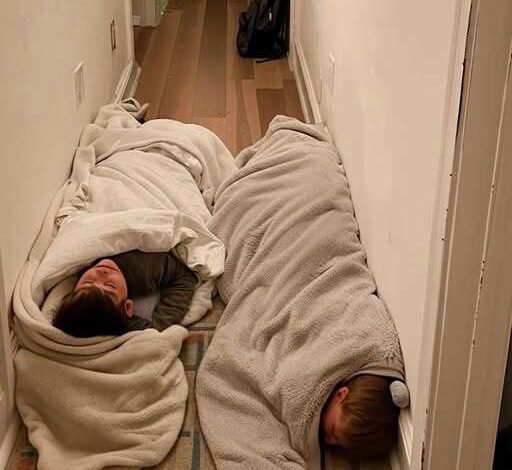
Sarah realized one evening that nothing she said was getting through to her husband anymore.
Every conversation ended the same way. She would ask for help around the house, remind him about the boys, or explain how exhausted she felt after carrying nearly every responsibility herself. Mark would laugh it off, promise to “do better next time,” or disappear behind his phone and video games until the subject faded away.
At first she argued.
Then she pleaded.
Eventually, she stopped speaking altogether.
Instead, she came up with a plan.
“If he insists on behaving like another child,” she thought, “then maybe it’s time he experiences what that actually feels like.”
The next Saturday morning, Mark shuffled into the kitchen expecting eggs and coffee.
Instead, he found a colorful plate waiting for him.
Mickey Mouse pancakes smiled up from the dish, complete with blueberries for eyes and whipped cream ears.
Sarah beamed.
“Good morning!” she said brightly. “I’m so proud of you for getting dressed all by yourself today!”
Mark stared.
“…Very funny.”
“I know!” she replied. “You earned breakfast.”
The boys burst into laughter.
Mark rolled his eyes and assumed the joke would be over by lunchtime.
It wasn’t.
That afternoon, he discovered a large chore chart taped to the refrigerator.
Across the top, written in colorful bubble letters, was:
Mark’s Responsibility Chart
Below it were boxes labeled:
- Put dirty clothes in hamper.
- Wash your own dishes.
- Take out trash without reminders.
- Help with bedtime.
- Pick up after yourself.
Beside each task sat an empty square waiting for a glittery gold star.
Mark pulled the chart off the fridge.
Sarah calmly taped it back up.
“Oh no,” she said sweetly. “We leave our charts where everyone can see our progress.”
The boys tried to hide their laughter behind their cereal bowls.
Within days, the routine expanded.
At exactly seven o’clock each evening, Sarah cheerfully announced, “Screen time is over!”
She walked over, unplugged Mark’s game controller, and carried it into the bedroom.
“You can have this back tomorrow after you’ve finished your responsibilities.”
“You can’t be serious.”
“I absolutely am.”
He protested.
She smiled.
“No whining.”
When Mark left wet towels on the bathroom floor, Sarah appeared holding them between two fingers.
“Looks like someone forgot our family rule.”
She handed him the towel.
“Let’s try again.”
If he sighed dramatically after being asked to empty the dishwasher, Sarah nodded sympathetically.
“I understand you’re having big feelings.”
The boys nearly fell off their chairs trying not to laugh.
“If you need a minute to calm down,” Sarah continued, “the timeout chair is available.”
“I am not sitting in a timeout chair.”
“Then I guess it’s time to use our grown-up words.”
For the first week, Mark insisted she was ridiculous.
By the second week, the joke wasn’t nearly as funny.
He hated hearing praise for completing basic chores.
He hated earning gold stars.
He hated asking permission for “screen time.”
Most of all, he hated feeling constantly supervised.
One evening, he caught his oldest son quietly watching the whole exchange.
“Dad…” the boy asked softly.
“Why does Mom treat you like she’s treating my little brother?”
The question landed harder than any argument Sarah had ever made.
For the first time, Mark looked genuinely uncomfortable.
Sarah noticed.
But she wasn’t finished.
She had saved the most powerful lesson for last.
The following Sunday afternoon, Mark’s mother arrived unexpectedly.
He looked confused.
“Mom? What are you doing here?”
Sarah greeted her warmly.
“Thanks for coming.”
His mother glanced around the spotless living room before noticing the chore chart still hanging proudly on the refrigerator.
She read it silently.
Then she looked at her son.
“Mark…”
He immediately understood.
“Oh no.”
Sarah explained everything—not dramatically, not angrily, simply listing the months of carrying the household alone while Mark behaved as though parenting and maintaining a home were optional responsibilities.
She described the forgotten school pickups.
The dirty dishes left for days.
The endless gaming sessions while she folded laundry, cooked dinner, helped with homework, and put the boys to bed by herself.
His mother never interrupted.
She simply listened.
When Sarah finished, the room fell completely silent.
Finally, Mark’s mother turned toward him.
“I didn’t raise you to expect your wife to be your mother.”
Her voice wasn’t loud.
It didn’t need to be.
“I’m disappointed.”
The words struck him like a punch.
Mark glanced toward the hallway.
Both boys stood there watching.
Neither of them was laughing anymore.
Their expressions weren’t amused.
They were confused.
Their father suddenly saw himself through their eyes.
Not as the fun parent.
Not as the easygoing dad.
As another child living in the house.
His shoulders slumped.
For the first time in weeks, he had nothing clever to say.
“I’m sorry,” he whispered.
Sarah waited.
He took a deep breath.
“No… I’m really sorry.”
He looked directly at her.
“I kept making jokes because admitting you were right would’ve meant admitting how much I’d left on your shoulders.”
His voice cracked.
“You shouldn’t have had to do this.”
“No,” Sarah replied quietly.
“I shouldn’t have.”
He nodded.
“I’ve been selfish.”
There was no performance.
No excuses.
No blaming work.
No promises filled with empty words.
Just honesty.
His mother picked up a sponge from the kitchen sink.
Without saying anything, she walked toward the hallway where colorful crayon marks still covered part of the wall.
Mark followed her.
Together, they began scrubbing.
The boys watched in amazement as their father cleaned without being reminded, joked without avoiding responsibility, and quietly asked Sarah what else needed to be done.
Sarah didn’t celebrate.
She didn’t tease him.
She didn’t say, “I told you so.”
Instead, she walked over and removed the glittery chore chart from the refrigerator.
“I don’t want another child,” she said softly.
“I want a partner.”
Mark looked at her.
“You have one.”
She held his gaze for a long moment.
“I hope so.”
Outside, the boys raced through the backyard, laughing as though nothing had happened.
Inside, the house felt different.
Not because every problem had disappeared overnight, but because something more important had finally changed.
Mark understood that being a husband and father wasn’t about showing up when it was convenient. It was about sharing the invisible work that kept a family together every single day.
As she watched him wiping the last crayon marks from the wall beside his mother, Sarah allowed herself a cautious smile. People could change—but only if they truly wanted to.
And if he ever forgot that lesson, she knew exactly where the timeout chair was waiting.