I Found This Strange Object and Had Absolutely No Idea What It Was The Answer Turned Out to Be Surprisingly Simple (And Deeply Comforting)

I almost threw it away.
That is the part I keep returning to.
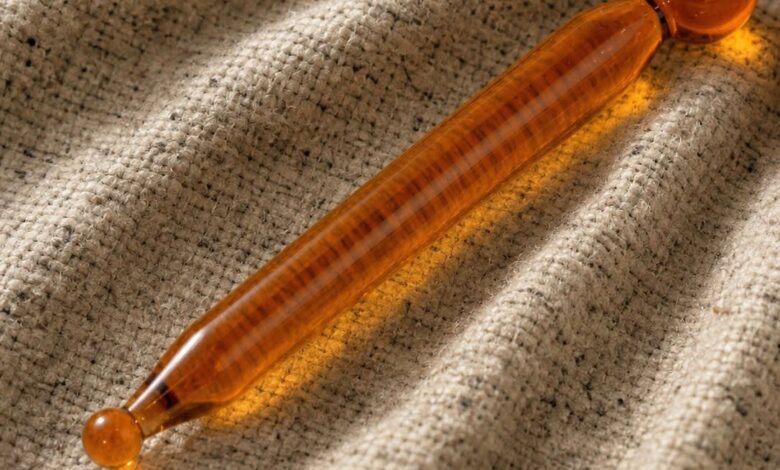
Not because the object was obviously valuable. It wasn’t. There was no glittering logo, no dramatic engraving, no clue that it belonged behind glass in a museum. It was simply an old desk tool sitting among the accumulated debris of another era—papers, clips, dried-out pens, and things whose purposes had become increasingly difficult to guess.
At first glance, it looked obsolete.
Heavy.
Unfashionable.
Unnecessary.
The kind of thing modern life has trained us to replace without hesitation.
I picked it up mostly because I wanted to know what it was before deciding which bin it belonged in.
The weight surprised me.
Modern objects are often designed to disappear in the hand. Plastic makes them light. Electronics make them smaller. Manufacturers shave away material until almost nothing remains that isn’t absolutely necessary.
This object felt different.
It had presence.
When I placed it in my palm, gravity seemed to insist that I pay attention.
The metal was cool. The edges had softened slightly with age. Small marks covered the surface—not damage exactly, but evidence.
Someone had used this.
Repeatedly.
For years, perhaps decades.
The realization made me turn it over instead of throwing it away.
There was something almost stubborn about its construction.
No part of it seemed temporary.
Whoever designed it had apparently assumed that the person buying it would still be using it years later.
That assumption now felt strangely radical.
I began examining the mechanism.
Everything had a purpose.
Nothing flashed.
Nothing beeped.
There was no battery compartment, charging port, screen, subscription, software update, or warning that the manufacturer would stop supporting it next year.
It simply did what it had been made to do.
And apparently, after all this time, it could still do it.
That should not have felt remarkable.
It did.
Somewhere along the way, I had become accustomed to objects arriving with invisible expiration dates.
Phones are replaced.
Computers become outdated.
Kitchen appliances fail and are cheaper to replace than repair.
Furniture gets discarded when styles change.
Clothes survive a season and begin losing their shape.
Even things that still function can start feeling obsolete because a newer version exists.
Version two.
Version five.
Version fourteen.
Faster.
Thinner.
Smarter.
New.
The word itself has become an argument.
New must mean improved.
Old must mean compromised.
That little desk tool refused to participate in the argument.
It didn’t care.
It had already survived generations of supposedly better replacements.
And it was still sitting there.
Useful.
Solid.
Unapologetically old.
I cleaned it.
That was the moment something changed.
Until then, I had been investigating an object.
Cleaning it made me responsible for it.
Dust came away from the grooves.
The surface began to reveal itself.
Tiny details I hadn’t noticed became visible.
Someone had thought about how it should feel in the hand.
Someone had decided how much material it needed.
Someone had chosen proportions that were practical but also pleasing.
Function and appearance had not been treated as enemies.
The object was useful.
But somebody had also wanted it to be beautiful.
Not beautiful in the decorative sense.
There were no unnecessary flourishes demanding admiration.
Its beauty came from intention.
This curve exists because a hand goes here.
This weight exists because the tool must remain stable.
This piece moves because it needs to.
That kind of design has a quiet confidence.
It doesn’t shout:
Look at me.
It says:
Use me.
And then it waits.
I began imagining the desk where it might once have lived.
Perhaps beside a stack of correspondence.
Maybe next to an ink bottle, ledger, telephone, or typewriter.
Someone could have reached for it hundreds of times without thinking.
That person might have complained about work.
Drunk coffee beside it.
Made important decisions while it sat within arm’s reach.
Perhaps several people owned it.
Maybe it passed from one office to another.
Maybe someone kept it because replacing something that worked perfectly would have seemed absurd.
I would never know.
But uncertainty gave the object more room rather than less.
Its history had disappeared.
Its usefulness had survived.
I put it on my desk.
At first, that decision was purely practical.
Then I noticed myself reaching for it.
Every time I did, there was a strange satisfaction in using something that required no explanation.
Pick it up.
Use it.
Put it down.
Done.
The object did not ask for my attention when I didn’t need it.
That distinction became increasingly important.
So many things around me are designed to demand attention.
My phone lights up.
Applications send notifications.
Websites beg me to return.
Devices announce updates.
Messages accumulate.
Everything seems to be waving from the edge of my vision, insisting that whatever I am currently doing is less important than whatever has just arrived.
The old tool never interrupted me.
It waited.
Hours.
Days.
Weeks.
It had probably spent decades waiting.
Then, when needed, it worked.
There was something almost dignified about that.
Eventually, I realized I wasn’t keeping it merely because it was useful.
It had become an anchor.
Whenever I picked it up, I remembered that not everything valuable announces itself immediately.
Some things reward attention rather than demand it.
That thought followed me away from the desk.
I began looking at other objects differently.
A chair I’d dismissed as ugly suddenly revealed beautifully joined wood beneath years of wear.
An old kitchen utensil felt better balanced than the newer replacement sitting beside it.
A jacket I’d considered donating only because I was tired of seeing it turned out to be better made than almost anything I could replace it with.
The world had not changed.
My attention had.
That was uncomfortable.
Because once you realize how quickly you dismiss objects, you begin wondering what else you dismiss just as quickly.
Places?
Ideas?
People?
How often had I confused unfamiliarity with uselessness?
How often had I looked at something old and assumed it had nothing left to teach me?
How often had I trusted my first impression simply because reconsidering it required effort?
The desk tool became an accusation against haste.
Not a dramatic accusation.
It simply sat there proving that my first judgment had been wrong.
I had seen clutter.
There had been craftsmanship.
I had seen obsolescence.
There had been usefulness.
I had seen something disposable.
There had been something capable of outlasting many of the objects I considered more advanced.
The problem wasn’t the object.
The problem was how little time I had given it.
That realization made me slower.
Not dramatically.
I didn’t abandon technology or decide everything old was automatically superior.
Nostalgia can be just as thoughtless as obsession with novelty.
Plenty of old things were badly designed.
Plenty of modern things are extraordinary.
Progress matters.
Innovation matters.
Sometimes the new version really is better.
The lesson was not “old good, new bad.”
It was simpler.
Look first.
Decide second.
That sequence sounds obvious.
Modern life makes it surprisingly difficult.
We sort constantly.
Keep.
Delete.
Buy.
Discard.
Swipe.
Skip.
Upgrade.
Replace.
Our environments reward immediate judgment.
We rarely have enough time to understand everything before deciding whether it deserves attention, so we develop shortcuts.
Useful.
Useless.
Interesting.
Boring.
Modern.
Outdated.
Worth keeping.
Trash.
Most of the time those shortcuts work well enough.
Occasionally, however, something slips through them.
Something asks for a second look.
That little tool became my second look.
I started noticing wear as a kind of biography.
The polished spot where fingers had repeatedly rested.
The small scratch from an accident nobody remembered.
The slight looseness produced by thousands of movements.
These weren’t defects.
They were records of usefulness.
Modern marketing tends to show objects untouched.
Perfect surfaces.
No fingerprints.
No scratches.
No evidence of human contact.
We are taught to desire things most intensely before we’ve actually lived with them.
But perhaps the more interesting beauty comes later.
A wooden table with marks from dinners.
A pan darkened from years of cooking.
A book whose spine has softened because somebody kept opening it.
A tool worn smooth where hands held it.
These things have crossed from possession into relationship.
They have participated.
That is different from merely being owned.
I began thinking about the person who designed my desk tool.
They almost certainly never imagined me.
Why would they?
I belonged to a future they could not see.
Yet something they made had traveled through time and reached my hand.
That is an extraordinary kind of communication.
The designer didn’t leave me a letter.
They left decisions.
Material.
Weight.
Shape.
Durability.
Every choice said something about what they expected from the object’s future.
They expected it to be used.
They expected it to survive use.
Perhaps they even expected someone to repair it rather than discard it if something went wrong.
That worldview feels increasingly unfamiliar.
We often buy things while already anticipating their replacement.
The new phone will eventually become the old phone.
The new laptop will eventually become slow.
The fashionable furniture will eventually look dated.
The cheap appliance will eventually fail.
Replacement is built into the relationship from the beginning.
My old tool seemed to come from a different philosophy.
Make the thing.
Make it well.
Let someone use it.
Then let someone else use it.
There is environmental wisdom in that, of course.
The longest-lasting object is often the one that doesn’t need to be manufactured again.
But the lesson felt personal too.
Durability changes how we relate to possessions.
If something is expected to last, care makes sense.
You maintain it.
Clean it.
Repair it.
Learn how it works.
If something is assumed to be temporary, care begins to feel inefficient.
Why repair what you can replace?
Why understand what you’re going to discard?
That mentality does not necessarily remain confined to objects.
I sometimes wonder whether the habits created by disposable culture leak into the rest of life.
When something becomes inconvenient, replace it.
When something requires patience, abandon it.
When something loses its shine, search for an upgrade.
People are not desk tools, obviously.
Relationships are infinitely more complicated than possessions.
But patience is still a habit.
So is attention.
So is care.
And habits practiced in one part of life have a way of appearing elsewhere.
The object on my desk became a reminder to resist automatic disposal.
Not to preserve everything.
That would simply turn the house into storage.
But to distinguish between something that has genuinely reached the end of its usefulness and something I have merely stopped noticing.
Those are very different conditions.
Sometimes boredom masquerades as obsolescence.
Sometimes familiarity makes quality invisible.
We notice a new object because we haven’t seen it before.
We stop noticing the excellent old object precisely because it has worked reliably for years.
Reliability becomes invisible.
Failure gets attention.
That seems unfair.
The objects that serve us best are often the ones we think about least.
They do their jobs so consistently that they disappear into the background.
Perhaps people can suffer the same fate.
The reliable friend.
The employee who quietly solves problems.
The family member who always remembers.
The person who keeps showing up without asking for recognition.
Novelty attracts the eye.
Consistency holds the world together.
My little desk tool taught me to look for the second category.
The quiet things.
The dependable things.
The things whose value becomes obvious only when you imagine them gone.
I still keep it within reach.
Sometimes I pick it up even when I don’t particularly need it.
The weight feels reassuring.
Not because I believe the past was better.
Because the object survived.
Years passed around it.
Fashions changed.
Technology transformed offices beyond recognition.
Entire categories of equipment disappeared.
Somewhere, countless newer objects were manufactured, purchased, used, broken, and discarded.
And this small thing remained.
There is humility in that.
Our culture loves disruption.
Everything must reinvent something.
Transform something.
Change everything.
The language surrounding new products often sounds almost revolutionary.
Meanwhile, this forgotten object has accomplished something much less glamorous.
It continued working.
Year after year.
No launch event.
No advertising campaign.
No announcement.
Just usefulness extended through time.
I have come to respect that kind of achievement.
Permanence doesn’t always look impressive.
Sometimes it looks scratched.
Heavy.
Slightly unfashionable.
Sometimes it sits unnoticed in a drawer until somebody nearly throws it away.
And sometimes all that separates garbage from an heirloom is understanding.
That may be the part of the experience that changed me most.
The object itself never changed.
I did.
It was the same piece of metal when I considered discarding it as when I decided to keep it.
Its craftsmanship was already there.
Its history was already there.
Its usefulness was already there.
My ignorance had not diminished its value.
It had only prevented me from seeing it.
That thought stays with me.
How many things do we call meaningless when what we really mean is:
I don’t understand this yet?
How many people do we underestimate because their value isn’t immediately legible to us?
How many traditions do we mock before learning why they exist?
How many ordinary objects contain answers to problems we’ve forgotten anyone ever had?
Curiosity interrupts judgment.
Sometimes only for a few seconds.
But those seconds can be enough.
Instead of throwing something away, you turn it over.
Instead of dismissing someone, you ask another question.
Instead of assuming, you investigate.
Instead of moving immediately toward the next thing, you remain with what is already in front of you.
Attention changes the world that way.
Not by altering what exists.
By revealing what was already there.
That is why the old tool remains on my desk.
It is useful, yes.
But its greater purpose now is almost invisible.
It reminds me to hesitate.
To notice weight.
Construction.
Wear.
History.
To ask why something was made the way it was.
To question whether newer automatically means better.
To recognize that beauty does not need to advertise itself.
And perhaps most importantly, to remember that my first impression is only that:
First.
Not final.
I nearly discarded something because I mistook unfamiliarity for worthlessness.
Now I touch it almost every day.
It has become one of the quietest objects I own and one of the most meaningful.
No screen lights up when I reach for it.
No notification appears.
Nothing asks me to upgrade.
It simply waits.
Solid.
Patient.
Useful.
A small survivor from a world that expected things to endure.
And whenever I feel myself rushing toward the next purchase, the next judgment, the next supposedly better thing, I notice it sitting there.
Then I remember the lesson I almost threw away:
Look closer.
Care longer.
And never assume that something has nothing left to offer simply because the world has stopped calling it new.