I Raised My Fiancés 10 Children After He Left Us 30 Years Later, His Attorney Appeared at My Door and Said, He Asked Me to Deliver This Envelope Today

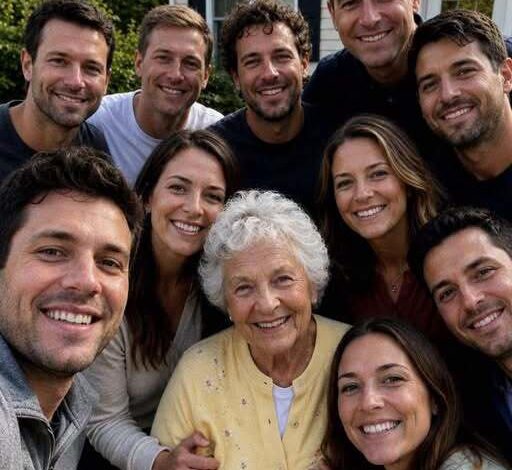
Margaret thought the hardest part of marrying Robert would be learning how to fit into a family of eleven.
She was wrong.
The hardest part was waking up one week before the wedding and discovering that Robert was gone.
No suitcase missing from the children’s rooms.
No argument from the night before.
No warning.
Just a folded note on the kitchen table.
Margaret stood there in her robe, reading the same two sentences until the words blurred.
I can’t live this way anymore.
Please don’t look for me.
That was all.
Robert had vanished.
And he had left ten children behind.
For a long time, Margaret simply stared at the note.
Then she heard footsteps upstairs.
The youngest was crying.
Someone else was calling for breakfast.
A door slammed.
Another child asked where Dad was.
Life, impossibly, kept moving.
Margaret had met Robert two years earlier.
He was a widower raising ten children, ranging from toddlers to teenagers.
His house was loud from morning until night.
Shoes gathered in impossible piles near the front door.
Someone was always hungry.
Someone was always missing a schoolbook.
The washing machine seemed to run without stopping.
There were scraped knees, broken pencils, arguments over bathrooms, forgotten lunches, and the endless low-grade chaos of a family far too large for quiet.
Margaret loved it almost immediately.
Not because it was easy.
Because it was alive.
She learned who hated peas.
Who needed the hallway light left on.
Which child lied when frightened.
Which one pretended not to need affection but always lingered nearby.
She helped with homework.
Cooked enormous pots of food.
Sewed buttons.
Sat through fevers.
Remembered birthdays.
And without realizing exactly when it happened, she stopped thinking of them as Robert’s children.
They became simply the children.
When Robert proposed, he did not ask only one question.
He looked toward the noise spilling in from the next room and said, “You know you’d be marrying all of us.”
Margaret laughed.
“That’s the part I’m saying yes to.”
She meant it.
The wedding was scheduled for June.
Then Robert disappeared in May.
By noon, the house had become a place of panic.
The older children searched closets and drawers.
One called hospitals.
Another walked to the bus station.
The little ones asked increasingly frightened questions Margaret could not answer.
“Did Dad leave because we were bad?”
“No.”
“Is he coming back?”
“I don’t know.”
“Are you leaving too?”
That question stopped her.
A six-year-old boy stood in front of her clutching the sleeve of her cardigan.
His face was terrified.
“Are you?”
Margaret knelt.
“No.”
She did not know yet what that promise would cost.
She only knew she meant it.
Robert’s relatives arrived within days.
They were practical.
Concerned.
And, in Margaret’s view, far too ready to separate the children.
“There are too many for one person,” an aunt told her.
“They can be placed with families.”
“Different families?”
“Probably.”
Margaret stared at her.
“They’ve already lost their mother and father.”
“You’re not legally responsible for them.”
“No.”
“Then don’t ruin your life.”
Her parents said almost the same thing.
Her father was furious.
“You are unmarried. You are not their mother.”
Margaret looked at the children sitting together in the next room.
“Tell them that.”
He had no answer.
She began contacting lawyers.
Social workers.
Anyone who might help.
The process was exhausting.
There were questions about guardianship, finances, suitability, living arrangements, and whether one woman could realistically care for ten children.
Margaret understood every concern.
Ten children were not a sentimental idea.
They were groceries.
Doctors.
School fees.
Clothes.
Beds.
Transportation.
Time.
Money.
Endless work.
But splitting them apart seemed worse.
So she fought.
Eventually, temporary arrangements became permanent ones.
Margaret adopted them.
Not all at once.
Not easily.
But legally, unmistakably, they became hers.
The first years nearly broke her.
She worked constantly.
At times she held two jobs.
Money was stretched until it seemed almost transparent.
She learned how to make one chicken feed twelve people.
How to mend clothes instead of replacing them.
How to say, “We can’t afford that,” without making children feel ashamed.
Dating disappeared almost completely.
A few men tried.
One lasted three dinners before saying, “I didn’t realize the children would always be here.”
Margaret laughed afterward.
Where else would they be?
Another told her he liked her but could not “take on all that.”
She thanked him for being honest.
Then went home and packed eleven lunches.
There were nights she cried alone.
That part of the story was rarely told.
People praised her as heroic.
Strong.
Selfless.
But heroism at two in the morning looked less impressive.
Sometimes it looked like Margaret standing over a sink full of dishes while one child had a fever and another needed help with algebra.
Sometimes she resented the life.
Then felt guilty for resenting it.
Sometimes she wondered what would have happened if she had listened to everyone else.
Would she have married?
Traveled?
Had children of her own?
Then one of the children would wander into the kitchen half-asleep and say, “Mama?”
And the question would disappear.
The children grew.
Slowly.
Then suddenly.
Shoes at the door became bigger.
Schoolbooks became university applications.
First jobs arrived.
Then marriages.
Then grandchildren.
The enormous household emptied one person at a time.
Margaret thought she would enjoy the silence.
Instead, for months, she found it unbearable.
So the children created a new tradition.
Sunday tea.
Every week, someone returned.
Then several someones.
Then spouses.
Then babies.
Before long, the house was noisy again.
The way Margaret liked it.
Thirty years after Robert disappeared, one Sunday began exactly like any other.
Tea.
Cake.
Too many people talking simultaneously.
Grandchildren running between chairs.
Margaret was carrying a plate into the sitting room when the doorbell rang.
A man in a dark suit stood outside.
“Mrs. Hale?”
“Yes?”
“My name is Johnson. I’m an attorney.”
The room behind her grew quiet.
He held a large envelope.
“I was instructed to deliver this to you today.”
Margaret stared at it.
“By whom?”
The lawyer hesitated.
“Robert.”
The plate slipped slightly in her hand.
One of the children caught it.
Nobody spoke.
Mr. Johnson came inside.
Margaret sat at the table with all ten of her children around her.
Even after three decades, hearing Robert’s name still had the power to rearrange the room.
The envelope contained a letter.
Robert’s handwriting.
Margaret recognized it immediately.
Her hands began shaking before she reached the first line.
Margaret, if you are reading this, then I have run out of time to explain myself in person.
She stopped.
One of her daughters placed a hand over hers.
“Keep going, Mama.”
Margaret did.
Robert had been ill.
Seriously ill.
He had learned about the diagnosis months before the wedding.
The doctors could not promise what would happen.
Treatment might work.
It might fail.
There could be long hospitalization.
Disability.
Enormous expense.
Robert had panicked.
In his letter, he did not romanticize what followed.
He wrote plainly.
I convinced myself that leaving was a form of protection.
He believed that if he stayed, Margaret would marry him and become trapped caring for a dying man while raising ten children.
He feared medical bills would consume the household.
He feared custody disputes.
He feared the children would be torn apart when he died.
So he made a decision alone.
He disappeared.
Margaret stopped reading.
One of the sons cursed under his breath.
Another stared at the floor.
Eventually, she continued.
Robert had driven away.
Then, days later, returned secretly.
He parked several streets away in a borrowed car and watched the house.
He saw Margaret taking the younger children to school.
Saw groceries being carried inside.
Saw her hanging washing in the yard.
Saw that she had stayed.
And then he made his second terrible decision.
He did not come back.
He told himself that reappearing would only reopen the wound.
That Margaret had stepped into the role the children needed.
That disrupting the household would be selfish.
In the letter, Robert wrote:
I was afraid, and then I mistook cowardice for sacrifice.
The sentence silenced the table.
Treatment eventually worked better than expected.
Robert survived.
By then, months had passed.
Then years.
Shame grew heavier.
He never remarried.
He had no more children.
He built a small bookkeeping and consulting business.
It was not the grand fortune anyone might imagine.
But he saved.
Quietly.
He established a trust for the children and Margaret.
Not enough to transform anyone’s life.
Enough to say:
I remembered.
He also admitted something more troubling.
Over the years, he had hired a retired investigator.
There were strict instructions.
No interference.
No contact.
No intrusion into the house.
Only occasional updates.
Graduations.
Marriages.
Jobs.
Moves.
Children.
The facts of lives he had chosen to watch from a distance.
One daughter stood abruptly.
“So he knew?”
Her voice shook.
“He knew all this time?”
Mr. Johnson said nothing.
The letter answered.
Robert knew.
That knowledge did not comfort them.
It angered them.
A son asked the question everyone was thinking.
“If he could watch us, why couldn’t he walk through the door?”
Margaret had no answer.
Robert did.
Because every year made the first decision harder to undo.
He knew it wasn’t noble.
He wrote that clearly.
He did not ask anyone to say he had been right.
He did not call himself a hero.
He called himself frightened.
Ashamed.
Weak.
He wrote:
The trust is not payment. It is not enough to be an apology. Nothing is.
Then came the part Margaret read twice.
I need you to know that I did not leave because you were not enough.
Her breath caught.
For thirty years, that had been the wound beneath all the others.
She had never admitted it aloud.
Not even to herself.
Somewhere inside, Margaret had always believed Robert walked away because the family had become too much.
Because loving her wasn’t enough.
Because ten children weren’t enough.
Because life with them had become unbearable.
Now she was reading another explanation.
Not a good explanation.
But a different one.
Fear.
Illness.
Cowardice dressed up as protection.
The harm remained.
But its meaning shifted.
Robert wrote individual paragraphs to each child.
Small memories.
The way one son always slept with a baseball glove beside him.
The daughter who used to hide biscuits in her room.
A child who cried on the first day of school.
Tiny proofs that he had once known them intimately.
Some cried.
Some became angrier.
One refused to listen.
Margaret allowed every reaction.
Forgiveness was not a family assignment.
The final paragraph belonged to her.
You did what I was too afraid to do.
You stayed.
Margaret lowered the letter.
Nobody spoke.
Around her sat ten adults.
Teachers.
Mechanics.
Nurses.
Accountants.
Parents.
People with gray beginning at their temples.
People who had once been frightened children asking whether everyone eventually left.
Behind them were grandchildren Margaret had stopped trying to count whenever they were all together.
Robert had feared the family would collapse.
Instead, the family had expanded.
Not because of him.
Because Margaret had refused to walk away.
One son finally asked:
“Do you forgive him?”
Everyone looked at her.
Margaret thought for a long time.
“I understand him better.”
“That isn’t what I asked.”
“No.”
She smiled sadly.
“It isn’t.”
She looked at the letter.
“I don’t know whether forgiveness is one thing you decide once.”
Nobody interrupted.
“I spent thirty years angry at a man I believed left because we weren’t worth staying for.”
Her voice softened.
“Now I know he left because he was frightened and foolish enough to think disappearing would protect us.”
She folded the letter carefully.
“That doesn’t make what he did right.”
Then she looked around the table.
“But I’m seventy-eight years old.”
A few people smiled.
“I’m tired of carrying him.”
Margaret lifted her teacup.
The room remained silent.
“To Robert,” she said.
Several children looked surprised.
Margaret continued.
“Not because he made the right choice.”
She paused.
“Because I’m done letting the wrong one occupy any more space than it already has.”
One by one, cups rose.
Some reluctantly.
Some tearfully.
Some not at all.
That was allowed too.
Then the eldest daughter raised hers higher.
“And to Mama.”
Everyone turned.
“To the person who actually stayed.”
That changed the room.
There were laughs through tears.
Someone said, “Absolutely.”
Another repeated:
“To Mama.”
Soon every cup was lifted.
Margaret looked down because she could not trust her face.
For years, people had told her what she sacrificed.
They rarely understood what she gained.
Ten children.
More grandchildren than she could comfortably fit around one table.
A house permanently marked by fingerprints, arguments, birthdays, illnesses, Christmas mornings, burnt dinners, graduations, and ordinary Sundays.
A life so full that sometimes there had barely been room to miss the one she didn’t have.
The trust Robert left was divided according to his instructions.
Nobody became wealthy.
That felt appropriate.
Money would have made the ending too easy.
The real inheritance was the truth.
And even truth did not repair everything.
Robert’s empty chair remained empty.
The children had still grown up without their father.
Margaret had still carried responsibilities she never expected.
There were still nights when she had been frightened and alone.
No letter could go backward and stand beside her.
Understanding is not erasure.
It simply changes the shape of memory.
For decades, Robert’s disappearance had been the central wound in the family’s story.
After the letter, it became something else.
A terrible decision made by a frightened man.
Still harmful.
Still selfish in its consequences.
But no longer proof that the family had been unlovable.
That mattered.
Margaret kept the letter in the same drawer as old school photographs and birthday cards.
She read it only once more.
Then she stopped.
There was no need.
The answer she had waited thirty years to receive was already visible every Sunday.
It sat around her table.
Robert had once feared that ten children would lose their home.
Margaret built one.
Not the house.
The home.
Those were different things.
A house can be purchased.
A home is created by repetition.
Breakfast tomorrow.
Laundry tonight.
Showing up to the school play.
Sitting beside the hospital bed.
Paying the bill.
Keeping the light on.
Returning when someone expects you.
Staying.
That was Margaret’s real achievement.
She had never intended to become the mother of ten abandoned children.
She had simply made one decision on one terrible morning:
I will not leave today.
Then she made it again the next morning.
And the next.
For thirty years.
Perhaps that is how families are built in the end.
Not through biology.
Not through promises made at weddings that never happen.
Through the people who remain after promises fail.
Robert loved his children.
His letter made that clear.
But love experienced only from a distance has limits.
Margaret gave them something harder.
Presence.
She was there for the scraped knees.
The failed exams.
The teenage shouting.
The graduations.
The weddings.
The babies.
The funerals.
The Sunday tea.
Robert spent decades watching the family become whole.
Margaret was the reason it did.
And whenever someone later asked how she managed to raise ten children alone, she always corrected them.
“I didn’t raise ten children alone.”
Then she would look toward whichever collection of sons, daughters, grandchildren, and in-laws happened to be filling her kitchen.
“We raised each other.”
That was the truth Robert’s letter could never compete with.
His disappearance had shaped them.
But it did not define them.
Margaret’s staying did.
And in the end, the family didn’t remember her as the woman a frightened man abandoned one week before their wedding.
They remembered her by the name she had earned one ordinary day at a time.
Mama.