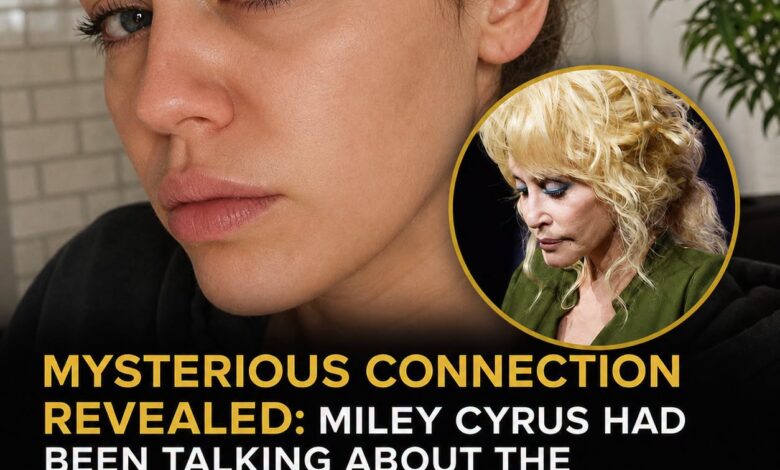
Miley Cyrus Revealed Why the Date August 25 Is of Notable Significance to Her – And What Just Happened on That Same Day..

Some dates pass through a life unnoticed.
Others seem to keep returning.
For Miley Cyrus, August 25 became one of those dates long before it carried the weight of devastating loss.
Again and again, moments connected to her career, family, relationships, reinvention, and public image landed around the same square on the calendar. Some were triumphant. Others were painful. A few were so controversial that they permanently altered how the world saw her.
Eventually, Miley herself noticed.
August 25 wasn’t simply another day anymore.
It had become a marker.
A strange recurring checkpoint in the story of who she had been and who she was becoming.
Then Dolly Parton died.
And August 25 changed forever.
For Miley, Dolly wasn’t merely one of the most important country singers in history.
She was Aunt Dolly.
Her godmother.
Her mentor.
A collaborator.
A woman who understood perhaps better than almost anyone what it meant to build an enormous public character without allowing that character to swallow the private human being underneath.
Long before grief entered the date, however, August 25 already carried history.
One of its most famous associations came during Miley’s explosive transformation from Disney star into an adult artist determined to control her own image.
“Wrecking Ball” became inseparable from that era.
The song was vulnerable beneath all the spectacle, a record about emotional destruction wrapped inside one of the most provocative visual reinventions of Miley’s career.
Then there was the MTV Video Music Awards performance.
For anyone who remembers the cultural atmosphere surrounding Miley at the time, it is difficult to overstate the reaction.
She wasn’t simply performing.
She was detonating the remaining expectations attached to Hannah Montana.
The performance was discussed endlessly.
People criticized her.
Defended her.
Mocked her.
Analyzed her sexuality, clothes, body, dancing, childhood fame, and supposed responsibility to the young audience that had grown up watching her.
For months, Miley seemed less like a singer than a national argument.
And August 25 sat right in the middle of it.
That period also became intertwined with the unraveling of her relationship with Liam Hemsworth.
Their romance would ultimately stretch across years of breakups, reunions, marriage, and divorce, but the turbulence of that relationship became part of the emotional geography of Miley’s twenties.
So the date accumulated another layer.
Public rebellion.
Private heartbreak.
Career transformation.
Love ending and beginning again.
But August 25 wasn’t exclusively painful.
It also belonged to family.
Billy Ray Cyrus, Miley’s father, was born on August 25.
Music had always been part of their relationship. Miley grew up watching her father navigate fame before experiencing an even more intense version of it herself.
The date therefore carried something tender alongside everything chaotic.
Father.
Daughter.
Songs.
History.
Then, years later, Miley deliberately returned to August 25 with “Used to Be Young.”
This time, she wasn’t being dragged into the date by circumstances.
She chose it.
That choice mattered.
“Used to Be Young” wasn’t an apology for the person Miley had once been.
It was closer to reconciliation.
She looked backward at the girl everyone had judged and refused to disown her.
Yes, she had changed.
Yes, she had behaved wildly.
Yes, she had made choices she wouldn’t necessarily make again.
But that younger woman wasn’t an embarrassment to erase.
She was part of the road.
The song carried the perspective of someone old enough to understand that growth doesn’t require hatred of your former self.
“I used to be young” wasn’t a confession.
It was recognition.
Miley had survived being publicly frozen inside countless versions of herself.
Hannah Montana.
Disney princess.
Rebellious teenager.
Tabloid obsession.
The woman from the VMAs.
Liam Hemsworth’s girlfriend.
Liam Hemsworth’s wife.
Liam Hemsworth’s ex-wife.
Pop provocateur.
Rock singer.
Grammy winner.
Every era generated another Miley that people insisted was the real one.
“Used to Be Young” pushed against that demand.
They had all been real.
And they had all passed.
By intentionally releasing the song on August 25, Miley seemed to reclaim a date associated with some of her most complicated memories.
She was no longer trapped inside the past.
She could revisit it.
Name it.
Sing about it.
Even smile at parts of it.
That might have been where the story of August 25 remained.
A meaningful coincidence turned into a personal anniversary of transformation.
Then came 2026.
Dolly Parton died at 80.
On August 25.
Suddenly every earlier association became smaller.
Because this wasn’t an album.
It wasn’t a performance.
It wasn’t a breakup.
It wasn’t controversy.
It was death.
And not the death of a distant celebrity Miley admired from afar.
Dolly belonged to the architecture of her life.
Their relationship existed somewhere between family and mentorship.
Calling Dolly Miley’s godmother explains the connection technically, but not emotionally.
Dolly had watched Miley grow.
She understood the pressures surrounding her before Miley could possibly have understood them herself.
She knew what it meant to be a woman in entertainment whose appearance threatened to overshadow recognition of her intelligence.
She knew what it meant to be underestimated.
She knew what it meant to turn exaggeration into power.
Dolly’s wigs were bigger.
Her clothes were brighter.
Her jokes often arrived before anyone else could make them.
She built “Dolly Parton” into something almost mythological while protecting a private core that didn’t belong to the audience.
For Miley, that example must have been invaluable.
Because Miley had grown up inside a machine that blurred those boundaries almost immediately.
The world met her as a child.
It watched her adolescence.
It criticized her adulthood.
There was barely time for Miley to decide who she was before millions of strangers had opinions about it.
Dolly understood the danger.
She had spent decades mastering something Miley would have to learn in public:
You can give people a show without giving them everything.
You can become larger than life without losing ownership of your life.
You can change without asking permission.
Most importantly, you can survive people’s disappointment when you refuse to remain the version of you they preferred.
That lesson connects Dolly to almost every earlier meaning August 25 held for Miley.
The controversial performer at the VMAs?
Dolly understood spectacle.
The young woman being shamed for expressing sexuality?
Dolly knew what it meant to have people confuse appearance with morality.
The songwriter processing heartbreak?
Dolly had built an empire from heartbreak songs.
The adult Miley looking backward at her younger self with greater compassion?
Dolly had spent a lifetime turning old wounds into stories without pretending they hadn’t hurt.
In that sense, Dolly wasn’t simply another event added to Miley’s August 25 timeline.
She was connected to everything already on it.
That’s what made the coincidence so haunting.
The date had always been about transformation.
Now it was about inheritance.
After Dolly’s death, her family spoke about the woman beneath the public image.
Not only the rhinestones.
Not only the hair.
Not only the impossible heels and famous laugh.
The person.
The woman who opened doors.
The woman who helped other people once she had enough power to do so.
The woman who had spent a lifetime turning her own success into opportunity for others.
And eventually, the woman who could finally rest without having to put on Dolly Parton for anyone.
For Miley, losing that person meant losing something no archive of songs or videos could reproduce.
The public gets Dolly’s recordings.
Miley had memories.
The public gets interviews.
Miley had conversations.
The public gets performances they shared.
Miley knew what happened before the cameras turned on and after they turned off.
That’s the strange loneliness of mourning someone famous.
Millions of people believe the person belonged partly to them.
And in a cultural sense, perhaps they did.
But private grief exists underneath public grief.
The world lost Dolly Parton.
Miley lost Aunt Dolly.
Those aren’t the same loss.
And now the date containing so much of Miley’s public history contains one of her most private wounds.
August 25 already held the girl she had been.
The relationships she survived.
The father whose birthday helped give the date meaning.
The performance that changed her public image.
The music through which she eventually made peace with her younger self.
Now it holds Dolly too.
Maybe that is why dates become powerful.
Not because calendars possess magic.
Not because coincidence necessarily means destiny.
But because human beings organize memory around markers.
A song comes on and suddenly you’re 20 again.
A smell brings back a childhood kitchen.
A photograph returns someone you’ve lost.
And a date arrives every year carrying everyone you used to be.
For Miley, August 25 may now do exactly that.
It can remind her of rebellion.
Heartbreak.
Family.
Embarrassment.
Freedom.
Growth.
Music.
And grief.
Most of all, it can remind her of two women.
The younger Miley who spent years fighting to become herself.
And Dolly, who showed her that becoming yourself is never really finished.
That may be the most important inheritance Dolly left her.
Not a particular hairstyle.
Not a career strategy.
Not even a song.
Permission.
Permission to evolve.
Permission to be contradictory.
Permission to be glamorous and serious.
Sexual and thoughtful.
Wild and disciplined.
Funny and wounded.
Permission to become someone new without murdering the person you used to be.
Dolly had lived that contradiction beautifully.
The exaggerated public image never canceled the songwriter underneath.
The rhinestones never erased the businesswoman.
The jokes never made the intelligence less formidable.
The country roots never prevented global reinvention.
Miley watched that.
She learned from it.
And now she has to carry it without the woman who taught her.
When August 25 comes around again, the internet may circulate the old clips.
“Wrecking Ball.”
The VMAs.
“Used to Be Young.”
Photographs with Liam.
Birthday memories involving Billy Ray.
And now, inevitably, Dolly.
People will make timelines and point out the eerie repetition.
But for Miley, the meaning will be quieter than any viral coincidence.
It will be personal.
A calendar square containing half a lifetime.
A reminder of the people she loved, the selves she shed, the mistakes she survived, and the woman who helped show her that transformation could be an act of courage.
Dolly once represented the future to Miley: proof that a woman could endure decades of fame and somehow remain recognizably herself.
Now she represents something different.
Legacy.
The person leaves.
The lesson stays.
The voice stays.
The example stays.
The love changes shape, but it stays too.
Perhaps that’s what August 25 means now.
Not an unlucky date.
Not destiny.
Not some supernatural pattern written into Miley Cyrus’s life.
Something simpler and sadder.
Memory.
Every year, the date will arrive.
And with it will come the girl Miley used to be, the woman she became, the family that shaped her, and the godmother who showed her how to survive becoming larger than life without losing the human being underneath.
August 25 followed Miley for years.
Now she will carry it.
And somewhere inside everything that date has taken and given her, Dolly will always be there.