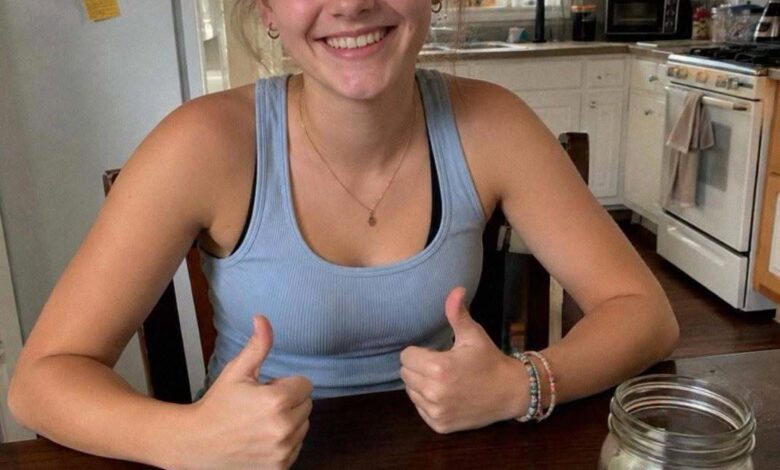
My sixteen-year-old daughter gave away four thousand dollars in a single afternoon.
It took her an entire summer to earn it.
Lily had spent June, July, and August serving tables while her friends went swimming, took weekend trips, and slept late. She volunteered for extra shifts, came home smelling like fryer oil, and tucked almost every tip into the savings account she had created for one purpose.
Her first car.
I had secretly saved another three thousand dollars to surprise her. Together, we had found a used car she loved.
We were supposed to see it Saturday.
Instead, Lily sat across from me at the kitchen table and whispered, “Mom, I don’t have the money anymore.”
I stared at her.
“What do you mean?”
“I gave it away.”
“All of it?”
She nodded.
My stomach dropped.
Four thousand dollars does not simply disappear from a teenager’s account without raising frightening questions.
“Who did you give it to?”
Lily looked down.
“Tell me.”
Her eyes filled with tears.
“Mrs. Alvarez.”
I knew the name only vaguely. Her son, Mateo, went to school with Lily.
“Why would you give Mateo’s mother four thousand dollars?”
Lily swallowed.
“Because of Dad.”
Everything inside me went still.
Michael had been dead four years.
The crash report I had been able to understand was painfully simple: something had gone wrong with Michael’s car, it crossed the center line, and the resulting chaos killed my husband.
I knew another vehicle had been involved.
I had never managed to read every page of the complete report.
For years, that other car had existed in my mind only as part of the worst day of my life.
Now it had a name.
Alvarez.
“Mateo told me his dad was driving the other vehicle,” Lily said.
I gripped the edge of the table.
She explained what Mateo had recently learned from his family.
When Michael’s car crossed into the opposite lane after an apparent mechanical failure, Mr. Alvarez had swerved to avoid a direct collision. His maneuver may have prevented an even more devastating impact, but his own vehicle rolled.
He survived.
His spine was badly injured.
He never returned to his old work.
I had spent four years thinking our family had carried the tragedy home alone.
We hadn’t.
“Why didn’t they ever contact us?” I asked.
“The lawyers told everyone not to.”
That made grim sense.
Insurance companies.
Liability.
Investigations.
People instructed not to speak while two families were trying to understand what had happened.
Then Lily told me the rest.
Mr. Alvarez needed a replacement wheelchair lift.
The family had started a fundraiser.
They were four thousand dollars short.
Exactly what Lily had saved.
“So you just sent it?”
She nodded.
“Without asking me?”
“I knew you’d tell me to wait.”
“I would have told you to verify it.”
Her tears spilled over.
“I thought if his dad hadn’t turned, maybe Dad’s car would’ve hit them straight on. Maybe Mateo wouldn’t have a dad either.”
That stopped me.
I was angry.
Not because she had helped someone.
Because she had transferred everything she had worked for based largely on a classmate’s story without telling me.
But underneath the anger was something else.
My daughter had looked at the same accident that took her father and somehow found another family’s suffering inside it.
I reached across the table.
“What you did was extraordinarily generous,” I told her. “But generosity doesn’t mean we stop being careful.”
She nodded.
“You cannot send thousands of dollars because somebody tells you a heartbreaking story. Real people need help, but scammers know exactly how to use urgency and grief.”
“I know.”
“No. Now you’re going to learn.”
We contacted Mrs. Alvarez.
The fundraiser was real.
So was the wheelchair lift.
There were records, estimates, and a documented need.
When Mrs. Alvarez discovered whose daughter had made the donation, she called me.
Her first words were, “I need to give it back.”
“You don’t have to.”
“Yes, I do. She saved that money.”
“So did you really need the lift?”
Silence.
“Yes.”
“Then let’s meet.”
We chose a quiet café.
Mrs. Alvarez arrived carrying a folder.
For the first time, the two families connected by Michael’s crash sat at the same table without lawyers between us.
She told me about her husband.
I told her about Michael.
Then she slid a document across the table.
A witness statement.
I read the lines slowly.
The witness described Michael’s vehicle moving across the center line.
Mr. Alvarez reacting.
Turning away.
Trying to avoid him.
I stopped reading.
For four years, there had been an unnamed person inside the worst memory of my life.
Now I understood that he had not caused Michael’s death.
He had been trying to survive it.
Possibly trying to save everyone he could.
And he had paid for that decision every day since.
Mrs. Alvarez reached for the donation again.
I pushed it back.
“Lily gave it to you.”
When we got home, Lily asked whether I was going to replace her four thousand dollars.
“No.”
She looked surprised.
“You chose to give it,” I said. “If I immediately restore everything, then the gift didn’t really cost you anything.”
That was not punishment.
It was part of understanding generosity.
Sacrifice becomes meaningless when someone automatically erases the sacrifice.
I put my three thousand dollars into her car fund as originally planned, and we made a new savings schedule.
The car would have to wait.
Lily went back to work.
After every shift, she automatically transferred a small amount into savings.
Meanwhile, Mrs. Alvarez sent us updates.
The lift was purchased.
Installed.
Any money not needed was properly accounted for through the fundraiser.
Word eventually reached a few people who offered to contribute toward Lily’s car. I appreciated the kindness, but I resisted turning her decision into a public campaign.
I did not want generosity becoming performance.
Lily had not donated four thousand dollars because she wanted strangers applauding her.
She had done it because she had discovered that another family had been standing on the opposite side of our grief for four years.
Months passed.
Eventually, she had enough.
Not for the car she originally wanted.
For an older one.
More miles.
A few scratches.
Nothing impressive.
When the seller handed Lily the keys, she held them in her palm for a long moment.
“You disappointed?” I asked.
She smiled.
“No.”
Those keys represented more than a car now.
They represented summer shifts.
A decision made too quickly.
A lesson about verifying before giving.
More shifts.
Patience.
And the uncomfortable discovery that compassion and caution are not enemies.
You can have a generous heart and still ask questions.
You can help someone while checking invoices, confirming organizers, using traceable payment channels, and making sure urgency is not being used to manipulate you.
That mattered especially because Lily was sixteen.
The money was hers. She had earned it.
But being old enough to earn thousands of dollars did not automatically mean she had the experience to recognize every financial risk.
We agreed that future large donations would come with a pause.
Verify first.
Give second.
Then came the afternoon she finally drove her car somewhere by herself.
I expected her to visit a friend.
Instead, she entered an address into her phone.
The Alvarez house.
I watched her pull away and felt the familiar ache of Michael’s absence.
But it was different now.
For years, I had imagined our family on one side of the crash and everyone else somewhere beyond it.
Lily had understood something before I did.
There were never two separate tragedies.
There was one terrible moment that sent pain in different directions.
Michael died.
Mr. Alvarez survived with injuries that changed his life.
His wife became a caregiver.
Mateo grew up with a father whose body carried the crash.
Lily grew up without hers.
Neither family had caused the other’s suffering.
We had simply been prevented from seeing each other.
Four thousand dollars bought a wheelchair lift.
But that was not the most valuable thing Lily’s money opened.
It opened a café conversation.
A folder.
A witness statement.
A door that lawyers and grief had kept closed for four years.
My daughter lost the car she thought she would buy that summer.
Eventually, she got another one.
Older.
Cheaper.
Harder earned.
And the first important place she drove it was toward the family I had once thought of only as strangers from an accident report.
They had never been strangers.
They had been carrying the other half of the same day.