The day my fiancé left me was the day I stopped believing my heart could break any further.
I was twenty-nine years old, sitting at our kitchen table with a terminal diagnosis and a wedding twelve days away.
One of those problems felt impossible.
The other turned out to be worse.
Two days earlier, I had been sitting in a sterile hospital room holding Daniel’s hand while a doctor carefully explained that my cancer had spread beyond what anyone had hoped. I remember hearing words like advanced, aggressive, and limited options, but they seemed distant, as though someone was speaking underwater.
The only thing I focused on was Daniel’s hand in mine.
I thought if I held on tightly enough, we could survive anything.
I was wrong.
When we got home, he barely spoke.
The next morning, he was quiet.
The day after that, he stood by our front door with an overnight bag.
At first, I thought he was visiting family.
Then I saw the look in his eyes.
Fear.
Not fear for me.
Fear of me.
“I’m sorry,” he said softly.
“For what?”
He swallowed hard.
“I can’t do this.”
The words hung between us.
I felt my stomach twist.
“You mean the illness?”
His silence answered before he could.
I stared at him.
“You’re leaving?”
He looked away.
“Please don’t make this harder.”
I actually laughed.
A sharp, bitter laugh that didn’t sound like my own voice.
“Harder?” I whispered. “I’m dying, Daniel.”
His eyes filled with tears.
But he still didn’t stay.
And that was the moment that hurt the most.
Not that he was afraid.
That he was willing to let fear decide.
A few minutes later, he walked out the door.
The wedding was less than two weeks away.
Everything was paid for.
The venue.
The flowers.
The photographer.
The dress.
The catering for one hundred and twenty guests.
My father had spent years saving for that day.
My mother had cried through every fitting appointment.
Relatives had booked flights.
Friends had reserved hotels.
And suddenly I was a bride without a groom.
For three days, I barely moved.
I ignored calls.
Ignored messages.
Ignored reality.
I lay in bed staring at the ceiling, grieving two losses at once—the future I thought I had and the man I thought I loved.
Then, on the fourth night, I found myself standing in front of my wedding dress.
The room was dark except for a single lamp.
The gown hung quietly by the closet.
And an absurd thought entered my mind.
I laughed out loud.
Then I laughed again.
Because once the idea arrived, it refused to leave.
The wedding didn’t need to be canceled.
I just needed another groom.
It sounded ridiculous.
Embarrassing.
Completely insane.
But terminal illness changes your relationship with dignity.
When time suddenly becomes precious, you stop worrying about looking foolish.
The next morning, I opened my laptop.
I searched acting agencies.
After an hour, I found one that handled unusual event appearances.
I scrolled through profiles until I found someone affordable.
His name was Peter.
Kind eyes.
Warm smile.
Nothing flashy.
I clicked his profile and started typing.
The email took nearly two hours to write.
I explained everything.
The diagnosis.
The abandoned wedding.
The fact that I wasn’t trying to trick anyone.
I simply wanted one beautiful day before life became hospitals and treatments and uncertainty.
Then I hit send.
I fully expected rejection.
Or worse.
Silence.
Instead, the next morning, I woke to a reply.
One sentence.
One condition.
“I’ll do it—but I won’t lie to your family.”
I stared at the screen.
Then burst into tears.
Not because he agreed.
Because of why he agreed.
There was honesty in those words.
Decency.
A stranger had shown me more integrity than the man who had promised forever.
When I explained everything to my parents, my mother cried.
My father sat quietly for a long time.
Finally, he asked, “Is this really what you want?”
I nodded.
“I still want my wedding.”
The room was silent.
Then he reached across the table and squeezed my hand.
“Then we’ll give you one.”
Peter came to dinner the following evening.
The situation should have felt awkward.
Instead, it felt strangely comfortable.
My father asked difficult questions.
Peter answered every one.
My mother asked whether he understood how emotional the day would be.
He said yes.
Then my father asked why he had agreed at all.
Peter took a moment before answering.
“Because if I were facing what she’s facing,” he said quietly, “I’d hope someone would show me the same kindness.”
After that, something shifted.
He stopped feeling like a stranger.
Over the next week, he helped with wedding preparations.
He attended meetings.
Sampled food.
Practiced dances.
Listened when I admitted I was terrified.
One evening, while sitting together on my parents’ porch, I finally asked what had made him so comfortable around illness.
His smile softened.
“I used to work in hospice care.”
Suddenly everything made sense.
His patience.
His calmness.
The way he never treated me like a tragedy.
“When I read your email,” he admitted, “I knew what you weren’t saying.”
“What wasn’t I saying?”
“That you weren’t looking for a wedding.”
I frowned.
“I wasn’t?”
He shook his head gently.
“No.”
His eyes met mine.
“You were looking for someone willing to stay.”
For a moment, neither of us spoke.
Because deep down, I knew he was right.
Then came the wedding day.
And everything nearly fell apart.
Fifteen minutes before the ceremony, my cousin burst into the bridal suite.
“He’s here.”
My heart dropped.
I knew immediately who she meant.
Daniel.
By the time I reached the hallway, voices were already raised.
Daniel stood arguing with my father and Peter.
The moment he saw me, his face crumpled.
“Serah.”
I said nothing.
“I made a mistake.”
Those four words would have meant everything once.
Now they meant nothing.
He started talking fast.
He was scared.
He panicked.
He still loved me.
He regretted leaving.
But every sentence felt too late.
Painfully.
Unforgivably.
Too late.
“You abandoned me,” I said quietly.
His eyes filled with tears.
“I know.”
“When I needed you most.”
“I know.”
Peter stepped beside me.
Not possessively.
Not dramatically.
Just enough that I could feel I wasn’t standing alone.
Daniel saw it.
And finally understood.
There are some mistakes apologies cannot repair.
A few minutes later, he left.
For good.
Forty minutes afterward, the music began.
The chapel doors opened.
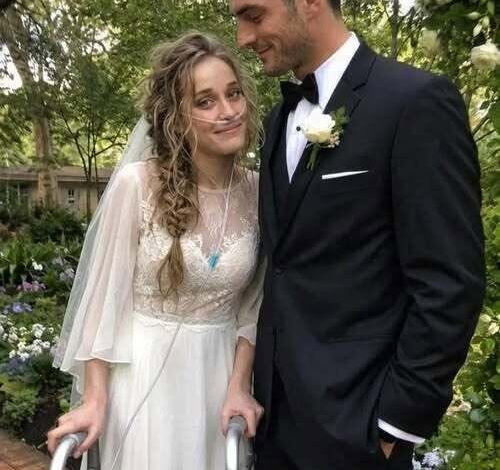
And I walked down the aisle.
My father’s arm trembled slightly as he escorted me forward.
My mother was already crying.
Half the guests were crying too.
And there stood Peter.
Waiting.
When I reached him, he leaned closer and whispered something I will never forget.
“You’re the kind of woman people should run toward, not away from.”
I nearly cried before the ceremony even began.
Then, halfway through, Peter shocked everyone.
Including me.
When given the chance to speak, he turned toward me.
“I originally agreed because I believed she deserved the wedding she dreamed of,” he said.
The room grew still.
“But somewhere along the way, she stopped being a job.”
I felt my breath catch.
Peter smiled softly.
“I don’t know what tomorrow looks like. None of us do. But standing beside her has become one of the greatest privileges of my life.”
There wasn’t a dry eye in the room.
The wedding was beautiful.
Not because it was perfect.
Because it was honest.
There was laughter.
Music.
Dancing.
Photographs.
Cake.
For one day, illness stepped into the background.
And life stepped forward.
But the most remarkable part happened afterward.
Peter didn’t leave.
When the wedding ended, he stayed.
Through treatments.
Through setbacks.
Through fear.
Through long hospital visits.
Through every difficult chapter that followed.
Months passed.
Friendship became trust.
Trust became love.
Not the dramatic kind.
The steady kind.
The kind that remains when everything else falls away.
Today, I’m writing these words from hospice care.
The room is quiet.
The future is uncertain.
But Peter is sitting beside me.
Just as he promised.
He makes me laugh when I’m exhausted.
Holds my hand when I’m afraid.
And reminds me daily that love is not measured by grand promises.
It’s measured by presence.
I once believed my story would end with abandonment.
Instead, it became a story about someone who stayed.
I don’t know how much time I have left.
But I know something I didn’t know the day Daniel walked away.
Real love isn’t revealed when life is easy.
It reveals itself when staying becomes difficult.
And somehow, when I thought I was losing everything, I found the one person willing to remain beside me until the very end.
After everything that happened, that is more than enough.