The statement was only a few lines long.
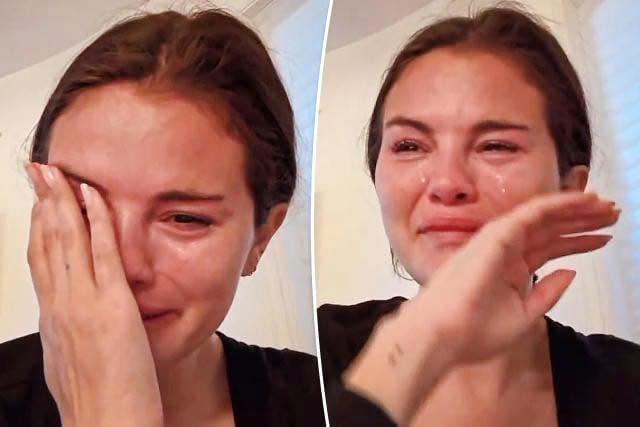
Yet within minutes, Selena Gomez’s name seemed to be everywhere.
Fans refreshed their phones. Messages raced across social media. Old interviews and performances resurfaced as people searched for answers that, for now, simply weren’t there.
The reported news concerned another health struggle.
And because Selena has already endured serious medical challenges publicly, even a vague suggestion that something might be wrong was enough to frighten people who have followed her for years.
But this time, the details were being kept private.
Her team reportedly asked for something extraordinarily difficult to obtain when you’re one of the most recognizable women in entertainment:
Space.
No speculation.
No demands for intimate medical information.
Just patience and kindness while Selena and those closest to her dealt with whatever was happening.
For longtime fans, the uncertainty felt painfully familiar.
Selena has previously spoken publicly about living with lupus, an autoimmune disease in which the immune system attacks the body’s own tissues. Her illness has affected her life and career in ways audiences couldn’t always see.
Then came one of the most serious chapters of her medical journey.
In 2017, Selena revealed that she had undergone a kidney transplant related to complications from lupus.
Her friend Francia Raisa donated the kidney.
The photographs Selena later shared from the hospital shocked many fans. Suddenly, the health struggles discussed in interviews weren’t abstract anymore.
There were hospital beds.
Surgical scars.
Recovery.
Fear.
A young woman who appeared glamorous and unstoppable onstage had simultaneously been dealing with circumstances far more serious than much of the public understood.
That experience changed how many people viewed her.
Selena wasn’t simply a former child star who had successfully transitioned into adult fame.
She had become someone audiences watched navigate illness while continuing to work under extraordinary public scrutiny.
And physical health wasn’t the only difficult subject she addressed.
Over the years, she became increasingly candid about emotional struggles and mental health, speaking openly about experiences that previous generations of celebrities might have been encouraged to conceal.
That openness created an unusual relationship with fans.
People didn’t merely listen to Selena’s songs.
Some used them as landmarks in their own lives.
A particular album reminded someone of surviving a breakup.
A lyric became attached to a period of depression.
An interview made another person feel less ashamed about needing help.
A young fan living with chronic illness could look at Selena and see someone who understood the exhausting difference between looking fine and actually feeling fine.
That is why reports of another health concern can travel so quickly.
People feel invested.
But investment can become entitlement.
And those are not the same thing.
Celebrity culture teaches audiences to expect answers.
If a famous person enters a hospital, people want to know why.
If an appearance is canceled, speculation begins.
If someone looks different in a photograph, strangers analyze their body.
If a publicist requests privacy, the request itself sometimes becomes fuel for even more investigation.
But illness doesn’t become public property simply because the patient is famous.
Selena has shared significant portions of her health history voluntarily.
That doesn’t mean she owes the world every diagnosis, test result, medication, or frightening conversation with a doctor.
There are moments when a person deserves to experience uncertainty without simultaneously having to explain it to millions of strangers.
If details of a new medical situation have not been publicly confirmed, that boundary becomes especially important.
Rumors should not be transformed into diagnoses.
Vague statements should not become invitations to invent medical conclusions.
Old health conditions should not automatically be blamed for something new.
The responsible response to incomplete information is simple:
Acknowledge what is known.
Be honest about what isn’t.
And wait.
Across social media, many fans appeared determined to do exactly that.
Instead of demanding explanations, they began sharing memories.
Concert clips returned to timelines.
Old interviews circulated.
Fans posted stories about meeting Selena or discovering her music during difficult periods.
Some wrote prayers.
Others simply wished her rest.
The tone was strikingly different from the frantic speculation that often surrounds celebrity news.
It felt less like an audience demanding access and more like a community trying, however imperfectly, to return some of the emotional support Selena had given them.
Fellow performers and public figures have often described Selena as someone whose vulnerability became part of her strength.
That may sound contradictory.
Entertainment traditionally rewards the illusion of invulnerability.
Perfect photographs.
Perfect performances.
Perfect bodies.
Perfect lives.
Selena’s public story repeatedly disrupted that illusion.
She got sick.
She admitted fear.
She stepped away when she needed help.
She returned.
She struggled again.
She kept going.
There was never a neat ending where everything difficult disappeared forever.
That is perhaps why so many people connected with her.
Real recovery rarely moves in a straight line.
Chronic illness doesn’t necessarily provide a satisfying final chapter.
Neither does mental health.
Sometimes strength isn’t conquering something permanently.
Sometimes it’s learning how to continue living when uncertainty becomes part of the landscape.
For the people closest to Selena, however, none of this is symbolic.
She isn’t an inspirational headline.
She is a daughter.
A sister.
A friend.
A person they love.
When someone you care about is facing a frightening medical situation, fame becomes remarkably useless.
Millions of followers cannot sit beside a hospital bed in your place.
Awards cannot make a difficult diagnosis disappear.
Streaming numbers cannot guarantee another easy morning.
There are some rooms where celebrity carries no special power.
Medicine has its own timetable.
Bodies have their own limits.
And families wait like everyone else.
That is why privacy matters most when the public’s curiosity is strongest.
If Selena chooses to explain what she is experiencing, she can do so when she is ready.
If she chooses not to, that decision deserves respect too.
Concern does not require access.
Love does not require answers.
Support does not require knowing every detail.
Sometimes the most compassionate thing an audience can do is resist the instinct to investigate.
For now, the world does not need to turn uncertainty into catastrophe.
It does not need anonymous theories, invented diagnoses, or dramatic predictions.
It needs patience.
Selena Gomez has already spent much of her life giving strangers pieces of herself.
Her childhood.
Her relationships.
Her music.
Her fears.
Her physical struggles.
Her mental-health journey.
Even scars that could easily have remained private.
That openness helped millions of people feel less alone.
But openness is a gift, not a debt.
And there may come moments when the person who has spent years being visible needs the world to accept a closed door.
Behind that door, whatever the circumstances, Selena deserves the same thing anyone facing uncertainty deserves:
Good medical care.
People she trusts.
Time.
Rest.
And the freedom to decide for herself what becomes public.
Fans can continue playing the songs.
They can share memories.
They can send good wishes without demanding a response.
They can hope.
But they should also remember that the absence of information is not a mystery they are entitled to solve.
Sometimes silence means nothing more than a human being trying to get through something privately.
And perhaps the kindest way to stand beside Selena now is not to search harder for answers.
It is to allow her the space to provide them—if and when she chooses.
Until then, hope doesn’t need details.
It only needs patience.