She hated her body and felt ‘ugly’ – at 32, she’s a super star, but still gets mocked for her teeth

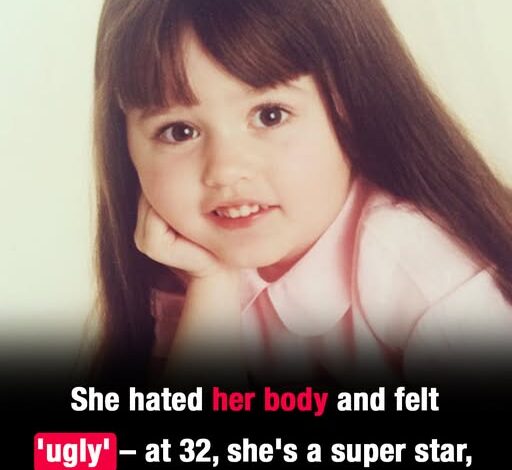
Before audiences knew her as the sharp, emotionally layered star of Sex Education or the quietly magnetic presence in The White Lotus, she was simply a little girl trying desperately not to be noticed.
Not because she lacked imagination or personality.
Because survival taught her that shrinking herself felt safer.
She has spoken openly about those early years now, and what emerges is not the glamorous origin story people often expect from rising Hollywood stars. It is a portrait of a child overwhelmed by anxiety, confusion, sensory discomfort, and the exhausting pressure of trying to move through the world without drawing attention to herself.
At school, she was painfully shy.
At home, life felt chaotic and emotionally unpredictable.
Even ordinary routines like eating at the dinner table could feel overwhelming.
That detail matters more than people may realize.
Children struggling with anxiety or neurodivergence often become experts at self-erasure very young. They learn to monitor themselves constantly:
Don’t speak too loudly.
Don’t attract attention.
Don’t behave strangely.
Don’t give people another reason to stare.
For her, the staring already happened anyway.
And eventually, much of that attention focused on her teeth.
What outsiders dismissed as a harmless physical feature became, in her mind, evidence of everything “wrong” with her. School bullying has a brutal way of doing that — taking one visible characteristic and transforming it into a symbol of total inadequacy.
Children rarely insult only appearance.
They attack belonging.
Once someone becomes “the weird one,” every insecurity starts attaching itself to that identity:
your smile,
your voice,
your body,
your habits,
your silence.
And for years, she internalized those messages deeply.
There is something especially painful about hearing successful actors discuss childhood shame because audiences often assume confidence must have existed from the beginning. We imagine performers as naturally outgoing people who always knew they belonged in front of others.
But many actors actually arrive at performance through the opposite experience.
Stage work offers temporary escape from the exhausting labor of being yourself.
That seems to be what drama class became for her.
Somewhere between rehearsals, scripts, and performing different identities, she discovered something life-changing:
the parts of herself she had been hiding were not empty flaws.
They were sources of emotional intensity and creative sensitivity.
The very traits that made ordinary social life feel difficult — hyper-awareness, emotional depth, unconventional communication, obsessive focus, sensitivity to detail — suddenly became strengths inside performance.
And perhaps that realization became even more meaningful later when she received a diagnosis involving ADHD and autistic traits.
For many neurodivergent adults, diagnosis does not feel like discovering something new. It feels like finally receiving language for experiences they have carried silently their entire lives.
Why did ordinary interaction feel exhausting?
Why did sensory overload happen so easily?
Why did masking become second nature?
Why did they feel “too much” and invisible simultaneously?
The diagnosis reframes years of confusion into understanding.
But understanding does not erase pain already absorbed during childhood.
By the time fame arrived, those insecurities still existed beneath the surface.
That is another uncomfortable truth celebrity culture rarely acknowledges:
success does not magically heal old shame.
Sometimes fame intensifies it.
Because suddenly the entire world begins commenting on the very features you spent years trying to hide.
When Sex Education exploded internationally, audiences praised her talent almost immediately. But alongside the admiration came relentless commentary about her appearance — especially her teeth.
The internet has a disturbing habit of reducing women to one physical characteristic and treating it like public property.
For her, the smile that once made school unbearable now became a recurring punchline online.
And perhaps the cruelest part was how predictable it became.
No matter how strong the performance,
how emotionally intelligent the role,
how successful the project,
someone eventually circled back to her appearance.
That dynamic says something deeply revealing about celebrity culture generally.
Women are often expected to appear unique enough to stand out,
but conventional enough to remain comfortable for audiences.
The moment someone visibly departs from narrow beauty expectations, public conversation frequently becomes fixation.
Then came the moment that pushed the issue even further into public discussion:
a major comedy show using her teeth as part of a joke.
For many people, especially those who endured years of bullying, moments like that can reopen wounds instantly. Suddenly adulthood collapses back into childhood humiliation:
people laughing,
your body becoming entertainment,
the room deciding your difference is funny again.
What made her response powerful was not outrage alone.
It was clarity.
Yes, she accepted the apology.
But she refused to accept the underlying message that her face required correction in order to deserve respect.
That distinction matters enormously.
Because Hollywood has historically trained women to treat uniqueness as a temporary problem waiting to be fixed:
straighten this,
whiten that,
reshape this,
smooth that,
become more symmetrical,
more polished,
more universally marketable.
Many actors comply not because they are shallow, but because the industry quietly pressures conformity at every level.
Producers talk about “commercial appeal.”
Agents mention “image.”
Studios discuss “accessibility.”
Underneath all those euphemisms often sits the same expectation:
be beautiful in ways audiences already understand immediately.
By refusing to “fix” her teeth, she challenged something larger than cosmetic standards.
She challenged the idea that success requires erasing visible individuality.
And that decision resonated deeply with people precisely because so many audiences are exhausted by manufactured perfection.
Modern celebrity culture creates impossible contradictions:
be authentic,
but flawless;
be relatable,
but aspirational;
be unique,
but never too unusual.
Her refusal disrupted that system.
Suddenly, people saw someone becoming globally successful while visibly remaining herself.
That visibility matters more than many realize — especially for younger viewers carrying their own insecurities quietly.
A teenager bullied for braces,
a child embarrassed by freckles,
someone hiding their laugh,
someone convinced one physical feature makes them fundamentally unacceptable.
Seeing a successful woman refuse alteration sends a powerful message:
difference is not disqualification.
And perhaps what makes her story emotionally compelling is that she did not arrive at self-acceptance through sudden confidence.
She fought toward it gradually.
Pain first.
Then hiding.
Then performance.
Then understanding.
Then public scrutiny.
Then resistance.
That progression feels human.
Because real confidence rarely appears magically.
It is usually built painfully through repeated decisions not to disappear.
And disappearing would have been easy for her.
She could have altered herself physically to silence critics.
Could have reshaped her image around Hollywood expectations.
Could have treated uniqueness as a liability.
Instead, she made a different choice:
to remain recognizable to herself.
That may ultimately be the deepest reason audiences connect to her story.
Not because she is perfect.
Because she visibly survived years spent believing she was unacceptable and still refused to erase the evidence of who she is.
In a culture obsessed with correction, that becomes its own kind of rebellion.
And perhaps that is why the conversation around her teeth eventually changed.
At first, people treated them like a flaw.
Now many people see them differently:
not as imperfection,
but as identity.
A reminder that some of the things society pressures people to hide are often the exact things that make them unforgettable.
By the time The White Lotus arrived, she no longer seemed like someone apologizing for existing differently.
She looked like someone finally understanding that visibility itself can become power.
Not despite the parts of herself she once hated.
Because she stopped trying to erase them.