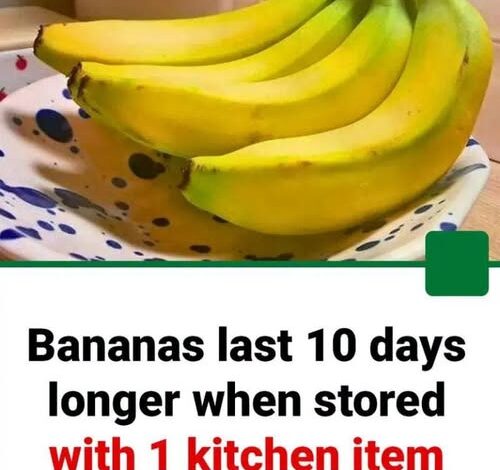
For the longest time, I couldn’t understand why my bananas seemed determined to ripen overnight. I’d buy a fresh bunch that looked perfectly yellow and firm, only to find them covered in brown spots a couple of days later. It felt like a never-ending cycle of rushing to eat them, turning them into banana bread, or reluctantly throwing them away. I blamed the grocery store, the weather, even bad luck—but the real culprit had been sitting right on my kitchen counter all along.
Like many people, I proudly displayed a colorful fruit bowl as a healthy centerpiece. Bananas rested beside apples, pears, avocados, peaches, and whatever else I’d picked up during my weekly grocery trip. It looked beautiful, and I assumed keeping all my fruit together was the most practical choice.
It wasn’t.
What I didn’t realize was that some fruits naturally produce large amounts of ethylene gas, a plant hormone responsible for triggering the ripening process. Bananas produce it, but so do apples, pears, avocados, and several other fruits. On their own, this gas is completely natural and plays an important role in helping fruit mature. The problem begins when several ethylene-producing fruits are clustered together in a confined space.
Instead of ripening at their own pace, they essentially encourage one another to ripen faster.
My decorative fruit bowl had unintentionally become a tiny chamber filled with concentrated ethylene gas. Day after day, my bananas were surrounded by fruits constantly releasing more of it, accelerating the very process I was trying to slow down.
Once I understood what was happening, the solution turned out to be surprisingly simple.
I moved the bananas.
Rather than keeping them packed tightly alongside apples and other fruit, I gave them their own spot on the countertop, away from heavy ethylene producers. The difference wasn’t dramatic overnight, but within a few shopping trips it became impossible to ignore.
The bananas stayed yellow longer.
They remained firmer.
Instead of racing from perfectly ripe to overripe in what felt like a single afternoon, they held their sweetness and texture for several extra days. Suddenly, I wasn’t scrambling to use them before they spoiled.
Then I discovered another trick that made an even bigger difference.
Most people don’t pay much attention to the stems at the top of a banana bunch, but they’re actually one of the main places where ethylene gas is released. By wrapping the stems tightly with a small piece of aluminum foil or plastic wrap, you create a barrier that helps reduce how quickly the gas escapes from that area.
It takes less than a minute.
Yet that tiny change can noticeably slow the ripening process.
After trying it myself, I found that my bananas often stayed fresh for significantly longer than they had before. While the exact amount of extra time varies depending on room temperature and how ripe the bananas were when purchased, many people report gaining several additional days of freshness—and in some cases, up to about ten extra days under favorable conditions.
For such a simple habit, the results were surprisingly rewarding.
I also learned that keeping bananas attached in their original bunch helps preserve them better than separating them too soon. Pulling individual bananas apart exposes more surface area around the stems, allowing ethylene to spread more easily and encouraging faster ripening.
Leaving the bunch intact until you’re ready to eat one helps slow that process naturally.
Another mistake I had been making involved the refrigerator.
I used to place bananas in the fridge as soon as they started changing color, assuming the cold would preserve them. Instead, I often ended up with dark, unattractive peels while the fruit inside hadn’t reached the texture I wanted.
The better approach turned out to be waiting.
Bananas generally perform best at room temperature while they ripen. Once they have reached the level of sweetness and softness you enjoy, transferring them to the refrigerator can help preserve the fruit inside, even though the peel may continue to darken. While the skin often turns brown or black in the cold, the banana itself usually remains fresh for a longer period.
Understanding that difference made it much easier to decide when refrigeration actually helped.
Over time, these small adjustments became second nature.
The bananas no longer shared space with apples or pears.
Their stems stayed neatly wrapped.
The bunch remained together until each banana was ready to be eaten.
The refrigerator became a final step instead of the first.
Individually, none of these habits seemed revolutionary.
Together, they transformed how long my bananas lasted.
Perhaps the greatest benefit wasn’t simply fresher fruit.
It was wasting less.
Week after week, fewer bananas ended up forgotten in the back of the kitchen or tossed into the trash because they ripened too quickly. Grocery shopping became a little more economical, and I no longer felt pressured to eat bananas before they reached the point of no return.
Sometimes the smallest kitchen habits produce the biggest results.
A simple change in where you place your fruit, combined with a few seconds spent wrapping the stems, can significantly slow the ripening process without requiring expensive storage containers or complicated gadgets. By understanding how ethylene works and giving bananas the conditions they need, you allow them to ripen at a much gentler pace.
Now, instead of finding a bunch that’s already past its prime, I wake up to bananas that are just the way I like them—firm yet sweet, ready for breakfast, a smoothie, or an afternoon snack. They’re no longer racing toward spoilage, and I’m no longer racing to use them first.
With just a few mindful changes, a fruit that once seemed impossible to keep fresh has become one of the easiest items in my kitchen to enjoy from the first banana to the very last.