Every so often, the internet becomes obsessed with a mystery from the past.
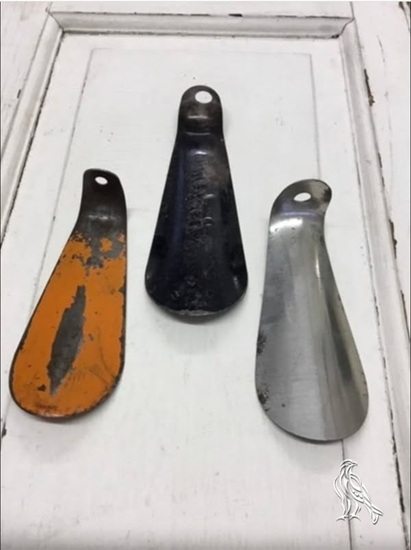
A photograph of an unfamiliar object appears online, curiosity spreads, and before long thousands of people are debating its purpose. Social media users offer theories, historians weigh in, and comment sections fill with increasingly imaginative guesses. What once served as an ordinary household item suddenly becomes an unsolved puzzle for a modern audience.
That is exactly what happened recently when an unusual-looking object sparked widespread discussion online.
Its shape left many viewers baffled.
Some believed it was an antique kitchen tool.
Others thought it might be part of an old machine, a decorative ornament, or a specialized instrument used in a forgotten trade.
As the guesses multiplied, so did the mystery.
Yet when the answer finally emerged, it proved to be far simpler than most people expected.
The object was a shoe horn.
At first glance, that explanation may seem surprising. To younger generations unfamiliar with traditional household accessories, a shoe horn can look unusual or difficult to identify. However, for centuries, this simple tool played an important role in everyday life, helping people put on their shoes more comfortably while protecting footwear from unnecessary wear.
Although often overlooked today, the shoe horn has a remarkably long history and remains one of the most enduring examples of practical design.
The origins of the shoe horn stretch back hundreds of years.
Historical evidence suggests that early versions were already being used during the late Middle Ages and became increasingly common throughout the fifteenth and sixteenth centuries. During that period, footwear was often handmade, expensive, and designed to last for many years. Preserving shoes was therefore a practical necessity rather than a matter of convenience.
The earliest shoe horns were crafted from materials that were readily available and durable.
Animal horn was among the most popular choices, giving the tool its name. Craftsmen also produced shoe horns from wood, bone, and other natural materials. These substances provided a smooth, sturdy surface that allowed a foot to slide into a shoe more easily.
Their function was straightforward but highly effective.
Rather than forcing the heel into a tight shoe opening and potentially crushing the back of the shoe, the curved surface of a shoe horn guided the foot smoothly into place. This reduced friction, protected the structure of the footwear, and made the process significantly easier.
At a time when shoes represented a substantial investment, this simple tool helped extend their lifespan.
The need was particularly important because footwear of earlier centuries was often less flexible than modern designs. Leather could be stiff, openings could be narrow, and putting on shoes sometimes required considerable effort. The shoe horn solved these problems elegantly, becoming a routine part of daily life for many households.
As centuries passed, both footwear and manufacturing techniques evolved.
So did the shoe horn.
Advances in craftsmanship allowed artisans to experiment with new materials and more refined designs. Metalworking, in particular, transformed the production of shoe horns. Brass, steel, and other durable metals became popular alternatives to horn and wood, offering greater strength and longevity.
Metal shoe horns quickly gained favor because they resisted breakage and maintained their shape even after years of frequent use.
Many were also visually appealing.
Some featured polished finishes that reflected light beautifully, while others displayed decorative engravings, ornamental handles, or intricate patterns that reflected the artistic tastes of the period.
By the eighteenth and nineteenth centuries, shoe horns had become common household items among both wealthy families and the expanding middle class.
The Industrial Revolution accelerated this transition.
Mass production techniques lowered manufacturing costs and increased availability, allowing more people to purchase practical household goods. What had once been considered a specialty accessory gradually became a standard item in homes throughout Europe and beyond.
The twentieth century introduced another significant change.
Plastic entered the picture.
Lightweight, inexpensive, and easy to manufacture, plastic made shoe horns more affordable than ever before. Manufacturers began producing them in a wide variety of colors, sizes, and styles.
Yet despite these changes in material, one aspect remained remarkably consistent.
The design itself.
The same curved shape that made shoe horns effective centuries ago continues to define them today. Few everyday tools have changed so little over such a long period of time.
That consistency speaks to the brilliance of the original concept.
The design solved a practical problem so effectively that there was little reason to reinvent it.
While many household products have undergone dramatic transformations, the shoe horn remains fundamentally unchanged because it continues to perform its job exceptionally well.
Its primary purpose is simple: helping the foot enter a shoe while protecting the heel counter—the reinforced section at the back of the shoe that helps maintain its shape.
Without a shoe horn, people often bend, crush, or deform this area when forcing their feet into footwear. Over time, repeated damage can compromise both comfort and appearance.
Using a shoe horn minimizes this stress and helps shoes retain their original structure.
This is particularly beneficial for premium footwear.
Dress shoes, formal shoes, leather footwear, and many boots often feature firm heel construction that can become damaged through repeated wear. By creating a smooth path for the foot, a shoe horn reduces strain and helps preserve the integrity of the shoe.
For individuals who invest in high-quality footwear, this simple tool can significantly extend the life of their shoes.
Modern shoe horns are available in numerous designs to accommodate different needs.
Compact versions are designed for travel and easily fit into luggage, briefcases, or carry-on bags. Frequent travelers often appreciate their convenience because they take up very little space while providing the same practical benefits.
Larger models are intended for home use and frequently include extended handles.
These long-handled versions offer an important advantage: they reduce the need to bend down while putting on shoes.
For older adults, individuals with limited mobility, people recovering from injuries, or anyone experiencing back or joint discomfort, this design can make a daily task far more comfortable.
Healthcare professionals and mobility specialists sometimes recommend long shoe horns because they help people maintain independence during everyday activities.
Their value extends beyond convenience.
They can improve accessibility, reduce physical strain, and make routine tasks easier for those facing mobility challenges.
Despite their usefulness, shoe horns are occasionally viewed as old-fashioned objects associated with earlier generations.
Yet their continued presence in homes, hotels, shoe stores, and dressing rooms suggests otherwise.
Footwear specialists frequently recommend them, particularly for people who want to protect expensive shoes and maximize their longevity.
Beyond their practical function, shoe horns have also become objects of historical and collectible interest.
Antique examples often showcase exceptional craftsmanship. Collectors seek out vintage shoe horns made from silver, ivory, carved wood, bone, and other materials rarely used in modern manufacturing.
Many feature ornate handles, decorative engravings, and intricate artistic details that transform a simple household tool into a work of craftsmanship.
These pieces offer valuable insights into everyday life during earlier periods of history.
Museums and historical collections occasionally display antique shoe horns as examples of domestic objects that reveal changing manufacturing methods, artistic styles, and social customs.
Their survival across centuries demonstrates how even ordinary items can provide a fascinating glimpse into the past.
What makes the shoe horn especially remarkable is not its complexity but its simplicity.
It represents an elegant solution to a common problem.
Unlike many inventions that become obsolete as technology advances, the shoe horn continues to perform its original function just as effectively today as it did hundreds of years ago.
Its enduring success serves as a reminder that great design does not always require constant innovation.
Sometimes the most effective solutions are also the simplest.
The recent online fascination with this object highlights how quickly everyday tools can become mysteries once they disappear from common use. For younger generations unfamiliar with traditional household accessories, a shoe horn may initially appear strange or difficult to identify.
Yet once its purpose becomes clear, its brilliance is immediately apparent.
Far from being a forgotten gadget or an obscure relic, the shoe horn remains a practical accessory that continues to make everyday life easier for millions of people.
Its story is ultimately one of thoughtful craftsmanship, functional design, and enduring usefulness.
While technologies, fashions, and lifestyles continue to evolve, the humble shoe horn stands as proof that some inventions solve problems so effectively that they remain relevant for centuries.
Quietly and without much attention, it has continued serving generation after generation—a simple tool whose value has never gone out of style.