The words we use to address someone can carry far more weight than many people realize.
A person’s name and pronouns are more than simple labels—they reflect identity, dignity, and recognition. Being addressed correctly can make someone feel respected and understood, while being repeatedly misidentified can leave lasting emotional wounds.
Nowhere is that more important than in healthcare.
Hospitals are places where people often experience some of the most vulnerable moments of their lives. During those moments, compassionate care extends beyond medical treatment. It also includes listening to patients, respecting their identities, and communicating in ways that acknowledge who they are.
For Bennett Kaspar-Williams, that lesson became deeply personal.
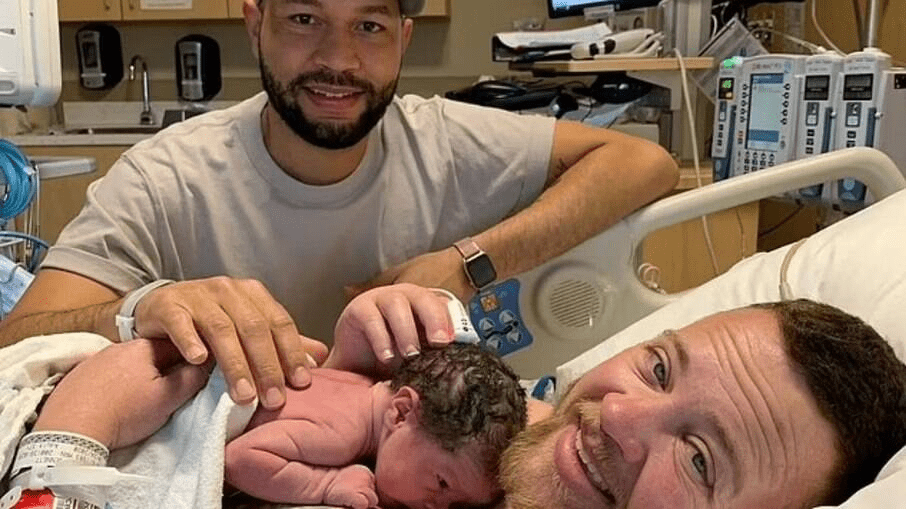
In 2020, Bennett, a transgender man, welcomed his son, Hudson, through a scheduled cesarean section. Although his medical records clearly identified him as male and he had openly shared his identity with his healthcare team, he says he was repeatedly referred to as “mother” throughout his pregnancy and during the birth.
What should have been one of the happiest days of his life became intertwined with feelings of frustration and emotional pain.
Bennett first realized he was transgender in 2011.
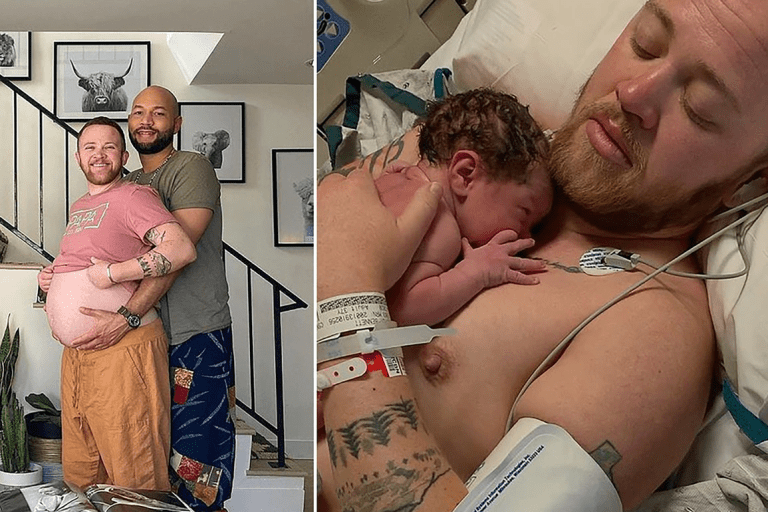
Like many people discovering an important truth about themselves, the realization brought both relief and uncertainty. Three years later, in 2014, he began his medical transition and underwent top surgery, helping his physical appearance better reflect his gender identity.
He chose not to undergo bottom surgery, a deeply personal decision that meant he retained the biological ability to become pregnant.
Years later, when Bennett and his partner began discussing their hopes of starting a family, that decision became significant.
For them, the goal was simple.
They wanted to become parents.
Since Bennett could carry a pregnancy, they chose that path as the most practical way to bring their child into the world.
He has consistently emphasized that he never viewed pregnancy as something that conflicted with his identity.
Carrying his son was a joyful experience and one he entered willingly.
The emotional challenge came not from pregnancy itself, but from the language repeatedly used around him.
Throughout prenatal appointments and during the delivery, healthcare workers frequently addressed him using terms such as “mom” and “mother.”
Even after corrections were made, those same labels often returned.
During an already emotional and physically demanding experience, being repeatedly referred to in ways that conflicted with his identity became increasingly difficult.
For Bennett, the issue was never about vocabulary alone.
It was about acknowledgment.
Being misgendered during such an important life event intensified feelings of gender dysphoria, the distress some transgender people experience when their gender identity is not recognized or affirmed.
He has spoken openly about one message he hopes people understand.
Pregnancy is a biological process.
Gender identity is something different.
In Bennett’s view, carrying a child did not change who he was.
He remained a man throughout his pregnancy and continues to identify proudly as his son’s father.
His story encourages people to reconsider assumptions that have long linked childbirth exclusively with womanhood.
Not every woman becomes pregnant.
And not every person who becomes pregnant identifies as a woman.
Recognizing that diversity, Bennett believes, does not diminish anyone else’s experience of motherhood—it simply acknowledges that families can be formed in different ways.
His experience also drew attention to broader questions surrounding healthcare.
Many hospitals and medical systems still rely on standardized language that assumes all pregnant patients are women.
Admission forms, hospital procedures, identification bracelets, and routine conversations often default to gendered terminology without considering individual identities.
For transgender patients, those assumptions can create feelings of exclusion during moments when compassionate care matters most.
Bennett has suggested that relatively simple changes can make a meaningful difference.
Asking patients how they would like to be addressed.
Using the names and titles they request.
Listening carefully when they explain their preferences.
Small acts of respect, he believes, can significantly improve a patient’s experience.
Bennett’s story is not the only one to highlight these issues.
In 2019, British transgender man Freddy McConnell also attracted international attention after giving birth to his child.
Like Bennett, Freddy had transitioned and was living openly as a man before deciding to become a parent.
His decision to carry the pregnancy was based on practicality rather than politics.
He wanted to have a child, and using his own body allowed him to achieve that goal.
Unlike Bennett’s experience, however, Freddy has described receiving strong support from his healthcare providers throughout his pregnancy.
Medical staff consistently respected his identity and used language that reflected who he was.
That acceptance transformed what might otherwise have been an emotionally difficult experience into one marked by dignity and affirmation.
Comparing the two stories illustrates how profoundly respectful care can shape a patient’s experience.
The medical procedures may be similar.
The emotional journey can be dramatically different.
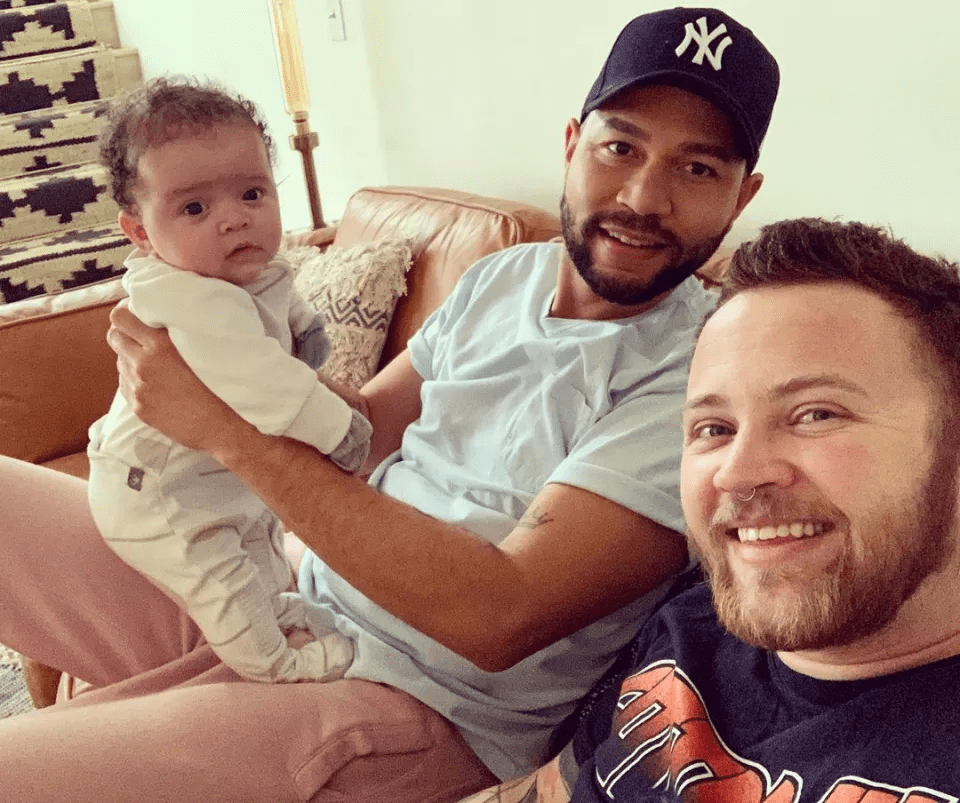
Today, both Bennett and Freddy proudly identify as fathers.
Bennett has often spoken about how meaningful that title is to him, explaining that becoming Hudson’s dad strengthened rather than challenged his identity.
He hopes that as his son grows older, learning the story of his birth will help him appreciate the many different ways families are formed and encourage him to value honesty and authenticity.
Freddy has expressed similar hopes for his own child.
He wants the next generation to understand that families are built through love, commitment, and care—not by rigid expectations about gender roles.
Their stories have encouraged broader conversations about inclusion, healthcare, and the language society uses to describe parenthood.
Research has shown that some transgender individuals postpone or avoid medical care because they fear misunderstanding or discrimination.
Creating respectful healthcare environments, therefore, is not only about courtesy—it can also improve trust between patients and providers, encouraging people to seek the care they need.
Neither Bennett nor Freddy suggests that traditional ideas of motherhood or fatherhood are somehow less meaningful.
Instead, they advocate for expanding society’s understanding so that more families feel recognized rather than excluded.
Ultimately, their experiences point toward a simple but powerful idea.
Respect often begins with language, but it reaches far beyond words.
It is reflected in how people are treated, how institutions respond, and how communities choose to recognize one another’s humanity.
At its heart, parenthood is defined not by labels, but by love, responsibility, sacrifice, and unwavering commitment to a child’s well-being.
Whether someone is called “mom,” “dad,” or another title that reflects their identity, what matters most is the care they give and the family they build together.
Through their openness, Bennett Kaspar-Williams and Freddy McConnell continue encouraging a broader understanding of what family can look like—one grounded not in assumptions, but in respect, authenticity, and compassion.