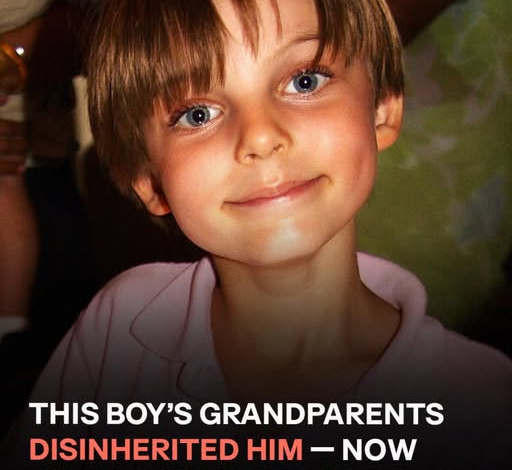
For most of his childhood, Damian Hurley existed in the public imagination less as a person and more as a headline.
He was “the son.”
The center of the inheritance battle.
The child connected to a billionaire dispute.
The boy raised by Elizabeth Hurley after years of public scrutiny surrounding his father’s absence.
People spoke about him constantly without really speaking about him at all.
That happens often to children born into celebrity and controversy. Their identities become shaped publicly by adult conflicts long before they are old enough to define themselves.
Now, years later, the conversation surrounding Damian has changed completely.
Not because the public suddenly forgot the legal drama.
But because adulthood has finally allowed him to step out from underneath it.
And strangely enough, what people seem most fascinated by now is not the inheritance battle, the famous connections, or even the Hollywood lineage.
It is the startling fact that he has become almost a mirror image of his mother.
The recent garden photographs that spread rapidly online captured something audiences always react strongly to:
familiarity transformed by time.
Elizabeth Hurley, still strikingly recognizable at 58, stood beside her 22-year-old son smiling beneath warm sunlight.
At first glance, many viewers reportedly mistook them for siblings.
Same dark hair.
Same angular cheekbones.
Same wide smile.
Even the same way of leaning toward the camera.
Genetics can feel almost unsettling when resemblance becomes that precise.
Social media reacted immediately:
“Genetics really blessed that family.”
“Wait… THAT girl is the mother?!”
But admiration was only one layer of the public response.
As often happens online, affection quickly blended with judgment, fascination, and discomfort.
Some commenters focused on Damian’s appearance:
“Too girly looking.”
“Why is he dressed like a woman?”
Others reacted to the closeness between mother and son itself:
“She acts weird around her son.”
“That’s a little creepy.”
Those reactions reveal something psychologically interesting about celebrity culture — especially when it comes to unconventional family dynamics.
People are comfortable with closeness between parents and children only as long as it fits recognizable social patterns.
But Damian and Elizabeth have always existed slightly outside those expectations.
No large extended family.
No traditional co-parenting structure.
No emotional distance carefully maintained for public comfort.
Instead, by their own descriptions, they became each other’s entire world.
Elizabeth explained it openly during a podcast appearance:
“We don’t have that relationship… I came from a much bigger family… but Damian’s only ever had me and I’ve only ever had Damian.”
That sentence explains far more than many critics probably realize.
Because only children raised by single parents often develop unusually intense emotional bonds with the one consistently present adult in their lives.
The relationship becomes layered:
parent,
protector,
friend,
stability,
home.
Especially when the absent parent remains emotionally complicated.
Damian once described Elizabeth as having filled “800 parents at the same time.”
That line sounds humorous initially, but underneath it sits something deeply revealing about his childhood.
Elizabeth was not simply his mother.
She became the entire emotional structure holding his world together.
And perhaps that closeness makes more sense once you understand the instability surrounding the early years of his life.
Because behind the glamorous photographs and celebrity connections sat a far more painful reality:
absence,
public rejection,
and a battle over belonging that played out in headlines while he was still growing up.
His father, American producer and financier Steve Bing, remained largely absent throughout Damian’s childhood.
The situation surrounding Damian’s paternity became tabloid material for years, creating the kind of public scrutiny no child should ever inherit.
And yet perhaps the cruelest detail came much later:
according to Elizabeth, Steve only truly reached out to Damian for the first time on his eighteenth birthday.
Imagine the emotional complexity of that moment.
A young man spends his entire childhood knowing his father exists somewhere publicly,
wealthy,
famous,
connected —
yet emotionally unreachable.
Then suddenly, at adulthood, contact begins just as time itself is running out.
Weeks later, Steve Bing died in June 2020 at the age of fifty-five.
And what followed afterward transformed private grief into public conflict almost immediately.
At the center of the battle sat an enormous family trust reportedly worth close to a billion dollars.
Before his death, Steve had fought legally against his own father, Peter Bing, to ensure Damian and his half-sister Kira remained included in the family inheritance despite being born outside marriage.
A judge initially ruled in their favor.
Then came the appeal.
Four months after Steve’s death, the ruling was reversed.
Damian would receive nothing.
The emotional symbolism of that decision mattered just as much as the money itself.
Because inheritance battles are rarely only about wealth.
They become public statements about legitimacy,
belonging,
who counts as family,
and whose existence is acknowledged officially.
The estimated $250 million Damian might have inherited instead went elsewhere within the family structure.
Elizabeth’s response carried visible fury beneath its restraint:
“What Stephen wanted has now been callously reversed. I know Stephen would have been devastated.”
And perhaps that word —
callously —
captures why the story lingered emotionally with so many people online.
Because regardless of legal technicalities, two children became symbolic casualties in a battle between powerful adults.
Lisa Kerkorian, mother of Damian’s half-sister Kira, asked the question many people were already thinking:
“Why make two innocent kids into victims?”
That sentence cuts directly to the emotional center of the controversy.
Children often inherit consequences from adult wars they never chose to participate in.
And for years, Damian existed publicly as the boy at the center of that conflict.
Now, at twenty-two, he is attempting to reshape that narrative entirely.
The transformation has happened gradually.
First through modeling.
Then acting.
Then filmmaking.
And importantly, Damian seems deeply aware of the assumptions surrounding him.
He knows people look at him and see:
Elizabeth Hurley’s son,
famous connections,
celebrity godparents,
privilege,
access.
After all, his godfathers include Hugh Grant and Elton John.
His social circle includes names audiences instantly recognize:
Brooklyn Beckham,
Lila Moss,
fashion elites,
Hollywood royalty.
From the outside, his path can appear effortless.
But Damian himself has pushed back directly against the idea that celebrity connections alone sustain careers.
“There’s nothing remotely glamorous about making a movie — it’s blood, sweat and tears.”
That statement matters because it reveals how badly he wants to be understood as a creator rather than merely a celebrity child.
And perhaps that desire explains why filmmaking appealed to him specifically.
Acting still places you visibly inside your parents’ world.
Directing allows a different kind of authorship.
His thriller “Strictly Confidential” became especially fascinating publicly because it blurred personal and professional boundaries in ways that reignited conversation about his closeness with Elizabeth.
Damian wrote and directed the film.
Elizabeth starred in it.
And because some scenes involved intimacy and sensuality, audiences reacted with visible discomfort.
But their response says as much about cultural assumptions as it does about the Hurleys themselves.
Many viewers struggled separating:
professional collaboration,
artistic trust,
and unconventional family closeness.
Yet for Damian and Elizabeth, the collaboration apparently felt entirely natural.
When he was eight years old, she promised him:
“If you ever make a real film, I’ll be in it.”
Years later, he remembered.
And she kept the promise.
That detail feels strangely touching beneath all the controversy because it reflects the consistency defining their relationship from the beginning:
they show up for each other.
Always.
Perhaps that consistency became necessary because so much else around Damian’s childhood felt unstable.
No reliable father figure.
No traditional family structure.
Public legal battles.
Media scrutiny.
In that environment, closeness likely became survival rather than performance.
And maybe that is why the internet remains simultaneously fascinated and unsettled by them.
Modern celebrity culture claims to value authenticity constantly.
But people often grow uncomfortable when family relationships fail to fit conventional emotional categories neatly.
Elizabeth and Damian do not behave like a distant celebrity parent and child carefully preserving image boundaries for public comfort.
They behave like two people who survived loneliness together.
That intensity can confuse outsiders.
Especially because Damian himself increasingly resembles Elizabeth physically so strongly that photographs of them together create an almost mirrored effect.
Same expressions.
Same bone structure.
Same dark glamour.
The resemblance itself adds another emotional layer to public fascination.
He looks like continuity.
Like inheritance that survived despite everything else contested around him.
And perhaps that becomes especially meaningful once you remember the inheritance he never received materially.
Because while the financial fortune disappeared through legal rulings, another kind of inheritance remained impossible to take away:
identity,
appearance,
creative instinct,
resilience,
visibility.
Damian may never have received the fortune attached to the Bing family name.
But he undeniably inherited something else from Elizabeth Hurley:
the ability to command attention the moment he walks into a room.
Only now, the attention no longer centers entirely on tragedy or legal conflict.
People are finally beginning to look at him not merely as a symbol of some old Hollywood scandal,
but as a young man trying to build something of his own.
And maybe that shift matters more than the internet realizes.
Because children who grow up inside public controversy often spend years trying to escape stories written for them before they were old enough to speak for themselves.
For Damian Hurley, that story used to be about absence,
money,
and family conflict.
Now, for better or worse, it has become about identity —
who he resembles,
who he is becoming,
and whether he can eventually step fully out of the shadows of the adults whose battles shaped his beginning.
At twenty-two, that process is probably only just starting.