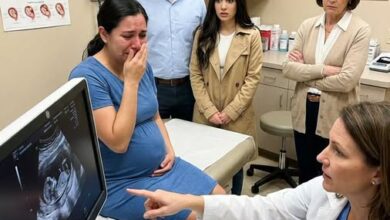
There is a moment before a living liver transplant when two people are healthy enough to speak to each other, yet only one of them may survive without what is about to happen.
One is sick.
The other has volunteered to become a patient.
That distinction is what makes living donation so extraordinary.
The donor does not enter the hospital because disease has forced them there. They walk in knowing surgeons will make an incision, remove part of a healthy organ, and leave them facing weeks or months of recovery.
They choose the operation.
Not because it will improve their own health.
Because someone else needs more time.
A mother wants to watch her child grow older.
A husband wants another anniversary with his wife.
A sister cannot imagine accepting a future in which her brother disappears while she might have been able to help.
Sometimes the donor isn’t even a relative.
The relationships differ.
The decision carries the same astonishing premise:
Take part of me so that another person might live.
Medicine makes that sentence possible because the liver possesses a remarkable capacity to regenerate.
Unlike most organs, the liver can restore much of its lost volume after a portion is removed. In living-donor transplantation, surgeons can remove part of a healthy donor’s liver and transplant it into a recipient. Afterward, both the remaining liver in the donor and the transplanted portion in the recipient can grow substantially.
It sounds almost miraculous.
But calling it miraculous can hide the complexity.
This is major surgery.
The donor undergoes extensive evaluation first, because enthusiasm alone is not enough.
Doctors need to understand whether donation can be performed with an acceptable level of risk.
Blood tests.
Imaging.
Cardiac and other medical assessments when appropriate.
Anatomical evaluation of the liver.
Psychological and social assessment.
Long conversations about complications, recovery and expectations.
The medical team is not merely asking:
Can this person donate?
They are also asking:
Should they?
That difference matters because living donors are healthy people.
Medicine therefore carries an unusual ethical responsibility.
The recipient may desperately need the transplant.
The family may desperately want the donor to proceed.
But the donor must remain more than a source of an organ.
They are a patient in their own right.
Their safety matters independently.
Their consent must be genuine.
A person should not donate because relatives have made refusal feel unforgivable.
They should not feel that saying no makes them selfish.
They should understand that even when testing looks favorable, surgery cannot be made completely risk-free.
Living liver donation can involve complications such as bleeding, infection, blood clots, bile-related problems, hernias, or the need for additional procedures. Rarely, severe or life-threatening complications can occur.
That reality deserves to stand beside the inspiring stories.
Courage is not the absence of risk.
Courage requires understanding what the risk actually is.
For donors who proceed, the night before surgery can feel surreal.
A hospital room.
A plastic identification band around the wrist.
A bag packed with clothes for recovery.
Maybe family members trying too hard to keep conversation normal.
Perhaps the recipient is nearby, preparing for an operation that depends on theirs.
Everyone knows why they’re there.
Nobody quite knows what to say.
“Thank you” can suddenly sound impossibly small.
How do you thank someone for accepting pain on your behalf?
How does a parent thank a child?
How does one sibling thank another?
The language of ordinary gratitude wasn’t built for it.
Then morning arrives.
The donor is taken away.
Anesthesia.
Bright operating lights.
A surgical team whose preparation has been unfolding long before the donor entered the room.
The liver’s anatomy must be understood with extraordinary precision.
Blood vessels matter.
Bile ducts matter.
The amount of liver remaining with the donor matters.
The amount needed by the recipient matters.
The operation is a choreography of millimeters and judgment.
Part of the donor’s liver is removed.
Another surgical team prepares the recipient.
The donated portion begins a second life inside another body.
But when the surgery ends, the inspiring headline ends too.
Recovery begins.
And recovery is less cinematic.
Pain when trying to sit up.
Fatigue that arrives after activities that once required no thought.
A walk down a hospital corridor that feels like an expedition.
Nurses checking vital signs.
Blood tests.
Medication.
Incisions that pull when the donor moves.
The first meal that doesn’t feel appealing.
The first shower that feels like an achievement.
The first night when sleep refuses to come.
Recovery often advances through tiny victories.
One more lap around the hallway.
A little less assistance getting out of bed.
Another tube removed.
A reassuring laboratory result.
Permission to go home.
Then the hospital doors close behind the donor, and another stage begins.
At home, patience becomes its own medicine.
The body has undergone major surgery.
It does not care how quickly the donor wants normal life back.
Fatigue can be frustrating.
Independence may return more slowly than expected.
A donor accustomed to caring for everyone else may suddenly need help carrying groceries, preparing meals, driving, working, or managing ordinary household tasks.
That reversal can be emotionally difficult.
Everyone called you brave.
Now you need someone to help you put on your socks.
But healing is not weakness.
It is work.
Inside the body, the liver is adapting.
Outside it, the person is adapting too.
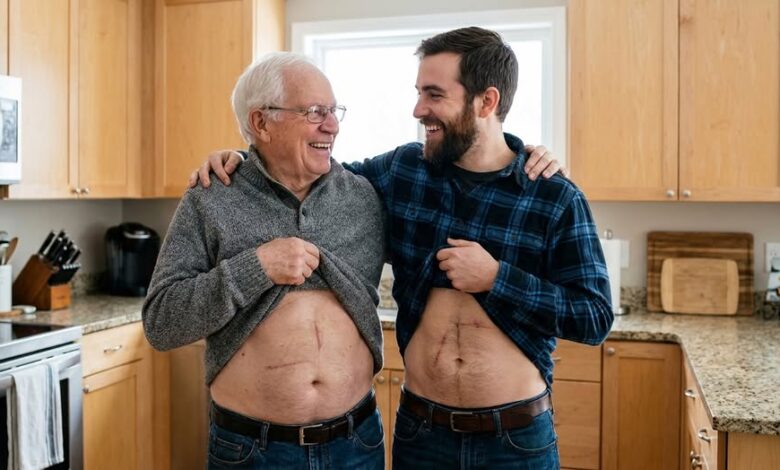
The scar begins changing.
At first it may look startling.
Then it becomes familiar.
Eventually, for many donors, it becomes something else entirely.
A landmark.
There was life before this scar.
And life after it.
The recipient has another recovery happening simultaneously.
Their story may be more medically complicated.
A transplanted liver can offer a new chance at life, but transplantation is not a magical reset button.
Recipients generally require close monitoring and medications to suppress immune rejection. Those medications carry their own risks and responsibilities.
There can be complications.
There can be frightening laboratory results.
There can be setbacks.
Not every transplant story unfolds the way a family desperately hopes.
That truth matters too.
Living donation is an extraordinary medical option.
It is not a guarantee.
Perhaps that uncertainty is what makes the decision so emotionally powerful.
The donor cannot purchase a particular future with their sacrifice.
They cannot demand twenty more years in exchange for surgery.
They can only create an opportunity.
What happens afterward belongs partly to medicine and partly to forces nobody can control.
When things go well, however, the reward arrives gradually.
Not as one grand moment.
As ordinary life.
A birthday cake.
Another Christmas.
Someone complaining about traffic.
A graduation photograph.
A family dinner where nobody mentions transplantation because, for once, there is nothing medical to discuss.
A vacation that had once seemed impossible.
An argument over something completely trivial.
That last one may be strangely beautiful.
Before transplantation, families can become so consumed by survival that ordinary irritation feels like a luxury.
Afterward, normal life begins creeping back.
The recipient stops being only “the patient.”
The donor stops being only “the donor.”
They become siblings again.
Partners again.
Parents and children again.
People with chores, jobs, jokes and bad habits.
That return to normality may be one of transplantation’s greatest victories.
Yet emotionally, things don’t always return to exactly what they were.
How could they?
Someone now carries part of another person’s liver.
That biological fact can reshape a relationship.
Gratitude may become overwhelming.
A recipient might wonder:
How can I ever repay this?
The answer is often uncomfortable because there may be nothing to repay.
A genuine gift does not create a debt equal to its value.
If it did, living donation would create an impossible obligation.
How many favors equal part of a liver?
How many thank-yous?
How many birthdays?
There is no arithmetic for that.
The healthiest relationships often have to discover a new language after donation.
The donor may need to say:
“You don’t owe me your life.”
The recipient may need to learn that accepting the gift was not an act of selfishness.
Both may need permission to stop making every conversation about what happened.
Sometimes professional support can help families navigate these emotions, particularly when guilt, anxiety, depression, disappointment, or changing family dynamics become difficult.
Because the invisible recovery matters too.
Donors can experience complicated feelings even when the surgery succeeds.
Pride.
Relief.
Fear.
Sadness.
Frustration.
Occasionally disappointment that the experience doesn’t feel as emotionally simple as everyone expected.
The world likes heroic narratives.
Hero saves loved one.
Everyone cries.
Music rises.
Credits roll.
Human beings are messier.
A donor can be grateful they donated and still hate parts of recovery.
They can say, “I would do it again,” while also acknowledging pain.
They can love the recipient deeply and still need their own experience recognized.
Those statements do not contradict each other.
In fact, respecting living donors means allowing the story to remain complicated.
They should not have to become saints simply because they made an extraordinary decision.
They are people.
People who became patients voluntarily.
People who accepted scars.
People who trusted surgical teams with healthy bodies because another person’s body was failing.
And then, after the drama, they had to heal.
Months later, life may look remarkably ordinary again.
The scar softens.
Strength returns.
Medical appointments become less central.
The donor might go an entire day without thinking about the operation.
Then something happens.
The recipient laughs across a dinner table.
Blows out birthday candles.
Walks a daughter down an aisle.
Holds a grandchild.
Complains about getting older.
And suddenly the donor remembers.
You almost weren’t here for this.
That is where the meaning of living donation may be clearest.
Not in the operating theater.
Not in photographs from the hospital.
Not even in the astonishing biology of an organ capable of regenerating.
In time.
Time is what the operation is trying to create.
Not guaranteed time.
Possible time.
Another morning.
Another season.
Another ordinary Tuesday.
Another chance to say something that would otherwise have gone unsaid.
This is why donors who describe their experiences often speak less about losing part of an organ than about what remained afterward.
They remember the pain.
But they also see the person who is still sitting beside them.
There is something profound about that exchange.
The donor gives something physical.
The recipient receives something temporal.
A piece of liver becomes a possibility measured in future moments.
Medicine deserves enormous credit for making that possible.
Decades of transplantation research.
Surgical innovation.
Anesthesia.
Imaging.
Critical care.
Immunology.
Nursing.
Pharmacy.
Laboratory medicine.
Countless people and systems stand behind every successful transplant.
Love alone cannot perform surgery.
Courage alone cannot reconnect blood vessels.
Hope alone cannot prevent rejection.
Science matters.
But science alone cannot explain why a healthy person walks through the hospital doors.
That’s where love enters.
Sometimes family love.
Sometimes friendship.
Sometimes an extraordinary compassion toward someone the donor barely knows.
The operation happens where those two forces meet.
Science says:
This can be done.
Love answers:
Then take mine.
That should never be romanticized into pressure.
Nobody owes another person an organ.
Choosing not to donate does not make someone less loving.
Medical eligibility, personal circumstances, fear, finances, family responsibilities, and individual autonomy all matter.
A gift has meaning precisely because it must remain voluntary.
But when a properly evaluated donor freely chooses to proceed, the act reveals something remarkable about human beings.
Our bodies are usually the final boundary of the self.
We can share money.
Food.
Homes.
Time.
But living organ donation crosses that boundary in a literal way.
A surgeon removes something from one living person and places it into another.
Then both begin healing.
Years later, perhaps the family no longer talks about the transplant very often.
That’s probably a good thing.
Life has become crowded again.
Work.
School.
Bills.
Birthdays.
Vacations.
Minor arguments.
Plans.
The things people once feared would never happen.
There may still be follow-up appointments.
There may still be reminders.
And there will always be scars.
But scars are strange things.
They record injury.
They also record survival.
For the donor, the scar says:
I gave.
For the recipient, survival may say:
Someone gave me a chance.
And for the family, the entire experience becomes a dividing line.
Before.
After.
Before, they counted laboratory values and feared phone calls.
After, they began counting birthdays again.
That is the quiet miracle—not that medicine eliminates mortality, because it cannot.
It is that sometimes medicine can interrupt the ending.
A healthy person lies down on an operating table.
A surgical team divides an organ capable of growing again.
Two patients wake up.
Two recoveries begin.
And somewhere months or years later, the people involved may find themselves sitting around an ordinary table talking about absolutely nothing important.
Nobody is crying.
Nobody is discussing liver function.
Someone asks what’s for dessert.
Someone laughs.
Someone checks the time.
It looks completely unremarkable.
But everyone who remembers the hospital knows better.
This ordinary evening almost didn’t exist.
And perhaps that is the greatest measure of what living liver donation can make possible.
Not heroism.
Not sacrifice.
Not even transplantation itself.
More life.
Not promised.
Not perfect.
But given a chance to continue.