The Woman Who Sold Us Our House Scratched a Warning Into a Closet: ‘Don’t Ever Give the Harrises a Key’ – Six Months Later, I Found Out Why

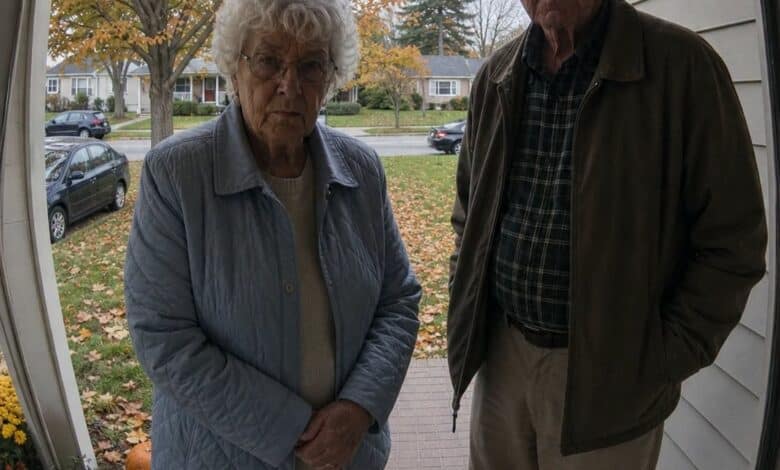
Margaret’s warning was carved into the underside of an old wooden birdhouse.
I almost threw it away without seeing it.
She had given the birdhouse to my wife, Emily, shortly before she died. Margaret was eighty-one, lived alone across the street, and had spent most afternoons watching the neighborhood from a faded green chair on her porch.
After her funeral, Emily brought the birdhouse home.
“She wanted us to have it,” she said.
I turned it over, looking for somewhere to mount it.
That’s when I saw the words.
They had been scratched deeply into the wood.
CHANGE YOUR LOCKS. DON’T TRUST TOM AND LINDA.
I stared at them.
Then I laughed.
Not because it was funny.
Because it seemed impossible.
Tom and Linda lived next door.
They were the kind of neighbors people brag about having.
When we moved in, Linda brought lasagna.
Tom lent me his ladder before I’d even finished unpacking.
They collected our packages when we traveled and watered Emily’s flowers during a weekend away.
When our daughter Sophie broke her arm, Linda appeared with cookies.
Tom helped me replace a section of fence after a storm.
If someone had asked me to name the safest people on our street, I probably would have named them.
Emily read Margaret’s message twice.
“She didn’t like them.”
“Margaret didn’t like anybody.”
“That isn’t true.”
It was mostly a joke, but neither of us laughed.
Margaret had certainly been suspicious.
She noticed unfamiliar cars.
She knew when garbage collection was late.
She once called me because I’d left the garage door open for twenty minutes.
At the time, I found it charming.
Now I wondered whether her vigilance had become paranoia near the end of her life.
Emily ran her fingers over the carved letters.
“She worked pretty hard to write this.”
“Maybe they had an argument.”
“About what?”
“I don’t know.”
We put the birdhouse in the garage.
And did nothing.
That decision bothers me more than I’d like to admit.
Not because we should have immediately accused our neighbors of something terrible.
We had no evidence.
But changing a lock would have taken an hour.
Instead, we worried that taking Margaret seriously somehow made us disloyal to Tom and Linda.
Two weeks later, Emily couldn’t find a necklace.
It wasn’t especially valuable, but it had belonged to her grandmother.
She searched everywhere.
Then a small envelope containing emergency cash disappeared from my desk.
“Did you use it?” I asked.
“No.”
“Maybe I moved it.”
We blamed ourselves.
Then Sophie said something strange.
“Why was Mr. Tom in Mommy’s room?”
Emily froze.
“What?”
Sophie was seven.
She was coloring at the kitchen table and barely looked up.
“Mr. Tom.”
“When?”
“Yesterday.”
Yesterday we’d been at work.
Sophie had been at school.
“What do you mean?”
She shrugged.
“I saw him through my camera.”
She meant an old tablet we’d turned into a simple monitor for her hamster.
The camera faced most of her bedroom, including the open doorway and part of the upstairs hallway.
My heart began pounding.
“Show me.”
We opened the app.
The recordings were stored automatically.
At 1:17 the previous afternoon, the hallway was empty.
Then a figure appeared.
Tom.
He walked past Sophie’s doorway toward our bedroom.
No knock.
No hesitation.
Nothing in his hands.
He moved like a man who knew exactly where he was going.
Emily whispered:
“How did he get inside?”
We kept watching.
Six minutes later, Tom returned.
He stopped outside Sophie’s room.
For one horrifying second, he looked directly toward the camera.
Then he walked downstairs.
Emily was already reaching for her phone.
“Wait.”
“For what?”
“I want to know how he got in.”
We checked the doorbell footage.
At 1:14, Tom walked up our driveway.
He looked toward the street.
Then he removed something from his pocket.
A key.
Our front door opened immediately.
Emily sat down.
“Oh my God.”
Suddenly Margaret’s carved warning didn’t seem eccentric.
It felt like a voice reaching out of a grave.
We called the police.
An officer arrived and watched the recordings.
“Did you ever give him a key?”
“No.”
“Has he ever had access to one?”
I thought about it.
Then remembered.
Eight months earlier, Emily and I had gone away for our anniversary.
Linda had offered to feed our cat.
We’d given her our spare key.
When we returned, she handed it back.
Apparently that didn’t mean she hadn’t copied it.
The officer told us not to confront them.
We changed every exterior lock that evening.
We reset the garage code.
Changed passwords.
Checked windows.
Installed additional cameras.
For the first time since buying the house, I walked through every room asking a question I’d never imagined needing to ask:
Who else has been here?
The answer became worse.
A camera in our home office had captured Linda entering several weeks earlier.
Another recording showed Tom opening drawers in the kitchen.
They hadn’t broken windows.
They hadn’t kicked down doors.
They simply entered.
That was somehow more disturbing.
The next morning, Tom waved while taking out his trash.
Instinctively, I almost waved back.
Then I remembered watching him walk through my daughter’s hallway.
Police investigation eventually uncovered property belonging to us and other neighbors.
Small things.
Jewelry.
Cash.
Prescription medication.
Items people could easily misplace and blame themselves for losing.
That was the brilliance of it.
Nothing dramatic enough to immediately scream burglary.
A bracelet disappears?
Maybe you lost it.
Twenty dollars missing?
Perhaps you spent it.
Someone seems to have moved something?
You’re probably imagining it.
Tom and Linda had allegedly relied on familiarity more effectively than any burglar could have relied on darkness.
People trusted them.
And trusted people receive keys.
Garage codes.
Vacation schedules.
Information about when houses will be empty.
Then investigators asked about Margaret.
That was when the story finally made sense.
Months before she died, Margaret had apparently seen Tom leaving another neighbor’s house while the owners were away.
She confronted him.
He claimed he’d been checking a leaking pipe.
Margaret didn’t believe him.
She began watching.
She saw Linda entering homes.
She noticed objects disappearing.
She tried warning people.
Nobody took her seriously.
“She watches everyone.”
“She’s getting old.”
“She probably misunderstood.”
Tom apparently discovered she was suspicious.
After that, Margaret became quieter.
But she hadn’t stopped trying.
She carved the message beneath the birdhouse because she knew something spoken could be dismissed.
A physical warning might survive her.
It did.
We were simply too polite to believe it.
Months later, after the legal process had begun and our stolen belongings were returned, Emily mounted Margaret’s birdhouse beside our back porch.
Not because we wanted a reminder of Tom and Linda.
Because we wanted a reminder of Margaret.
Sometimes I sit outside and look at it.
I think about all the times she called because something seemed unusual.
All the times I smiled and told Emily:
“Neighborhood security is on duty again.”
She had been watching because she’d learned something we hadn’t.
Danger doesn’t always announce itself.
Sometimes it borrows your ladder.
Sometimes it remembers your birthday.
Sometimes it carries groceries from your car.
Sometimes it stands beside you at a barbecue while already knowing which drawer contains your spare keys.
The hardest lesson wasn’t learning that Tom and Linda could deceive us.
It was realizing how much access we’d surrendered because establishing boundaries felt rude.
We had confused trust with unrestricted permission.
They’re not the same.
You can appreciate a neighbor without giving them permanent access to your home.
You can be friendly without sharing every travel plan.
You can change a garage code after someone no longer needs it.
You can ask for a spare key back and still change the lock afterward.
None of those actions accuse anyone of being dangerous.
They’re simply boundaries.
Today our house feels like ours again.
Sophie is older.
The missing necklace is back in Emily’s jewelry box.
Our locks are different.
Our cameras are better.
But the biggest change isn’t technological.
It’s the little pause I take whenever my instincts tell me something doesn’t fit.
I no longer silence that feeling because acknowledging it might seem impolite.
Margaret taught me that.
She couldn’t force us to believe her.
She couldn’t know whether she’d live long enough to explain everything.
So an eighty-one-year-old woman sat somewhere with a sharp object and carved six words into the bottom of a birdhouse.
CHANGE YOUR LOCKS. DON’T TRUST TOM AND LINDA.
She was gone before we understood.
But her warning remained.
And whenever I see that birdhouse now, I remember the lesson hidden beneath it:
A locked door isn’t an insult.
A boundary isn’t an accusation.
And trust should never require you to surrender the right to protect your own home.
Because the people who truly respect you will never be offended that your door has a lock.
Only the people who believe they’re entitled to open it will be.