My Daughter Was the Only Kid Not Invited to Her Best Friend’s Sweet 16 – When I Called to Ask Why, She Whispered, ‘You’d Better Ask Your Husband’

I drove away from the party with more questions than answers.
For once, I didn’t try to make that feeling disappear.
I didn’t turn up the radio. I didn’t call someone who would tell me everything was probably fine. I didn’t rehearse excuses for Mark or search for some softer interpretation that would let me return home and pretend nothing fundamental had changed.
I simply drove.
And for the first time in years, uncertainty didn’t feel like something I needed to fix.
It felt like information.
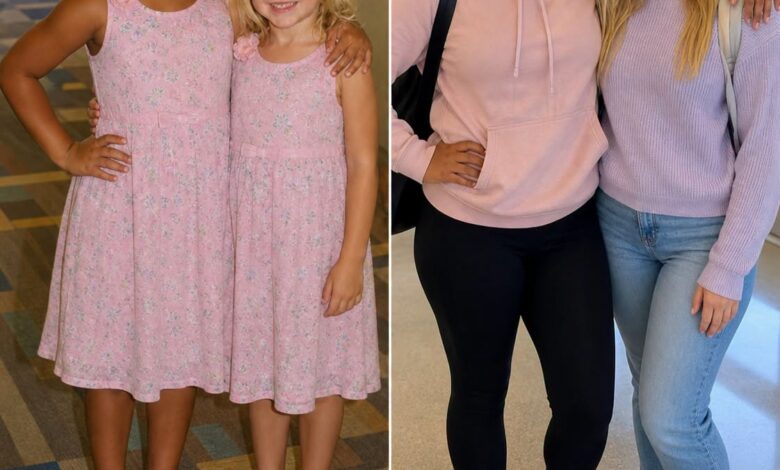
In the rearview mirror, the house disappeared behind me, but I kept thinking about Emma and Sophie.
Watching them stand in the same room again had affected me more deeply than I expected.
There had been no dramatic reconciliation. No tearful embrace that magically erased years of damage. They hadn’t suddenly agreed on everything or discovered that the past had been one enormous misunderstanding.
What happened was smaller.
And because it was smaller, I trusted it more.
They stayed.
Two people who had spent years separated by decisions supposedly made for their protection had chosen not to walk away from each other.
They talked.
Carefully at first.
There were pauses long enough to become uncomfortable. Questions neither knew how to answer. Memories that didn’t match. Moments when one of them looked wounded by something the other genuinely remembered differently.
But neither ran.
That was the beginning.
Not forgiveness.
Not resolution.
Just willingness.
For years, frightened adults had made choices in Emma and Sophie’s names. They had called those choices necessary. Protective. Sensible.
Maybe some of them had even believed it.
But fear has a way of disguising itself as wisdom.
Watching Emma and Sophie slowly separate what had actually happened from what they had been told made me realize something uncomfortable about my own marriage.
I had spent years doing the opposite.
Whenever something became difficult, I smoothed it.
Whenever Mark and I disagreed, I searched for the version of events that required the least conflict.
Whenever he said, “Let me handle it,” I felt relieved.
Whenever he told me something was complicated, I accepted that complexity as a reason not to ask questions.
I had called that trust.
Sometimes it was.
Sometimes it was avoidance.
That realization followed me all the way home.
Mark’s betrayal wasn’t the kind people immediately recognize.
There was no lipstick on a collar.
No hotel receipt.
No secret text from another woman lighting up his phone.
Nothing I could hold in my hand and point to while saying, There. That’s what you did.
His betrayal was quieter.
He had taken decisions that should have belonged to both of us and gradually made them his.
He wrapped control in generosity.
“Don’t worry about it. I’ll take care of everything.”
He wrapped influence in advice.
“I really think this is what’s best for us.”
He wrapped secrecy in protection.
“I didn’t want to stress you out.”
And I had rewarded him for it.
That was the part I hated admitting.
Every time Mark removed something difficult from my plate, I thanked him.
Every time he said he would deal with the bank, the paperwork, the investments, the insurance, or some financial decision I found exhausting, I felt lucky.
I told myself I had a husband who took responsibility.
What I hadn’t noticed was how responsibility had slowly become authority.
And authority, left unquestioned long enough, had become control.
That didn’t make everything between us false.
I refuse to rewrite my entire marriage simply because I can finally see parts of it differently.
There were real birthdays.
Real laughter.
Real tenderness.
There were mornings when Mark brought me coffee because he knew I was tired and evenings when we sat together saying almost nothing because nothing needed to be said.
Love existed there.
But love doesn’t make scrutiny unnecessary.
If anything, love should be able to survive questions.
When I got home, Mark was awake.
He looked at me from the kitchen.
“How did it go?”
Normally, I would have said, “Fine.”
That one word had carried half our marriage.
Fine meant I don’t want to fight.
Fine meant I’m still processing.
Fine meant I disagree, but I’ll let it go.
Fine meant please don’t make me explain what I haven’t admitted to myself yet.
This time, I put my keys on the counter.
“Complicated.”
He watched me carefully.
“About Emma and Sophie?”
“About everything.”
His expression changed.
Only slightly.
But I saw it.
Once, I would have rescued him from that silence.
I would have softened my voice or changed the subject.
Instead, I let the silence remain.
Then I said, “Tomorrow, I want to go through the accounts.”
He frowned.
“What accounts?”
“All of them.”
“You don’t need to worry about—”
“Yes,” I said.
Not loudly.
That surprised both of us.
“Yes, Mark. I do.”
He stared at me.
I continued.
“Bank accounts. Investments. Insurance. Property documents. Anything with my name on it. Anything with both our names on it. Anything you’ve been managing for us.”
“Why?”
There were a hundred possible answers.
Because I don’t trust you.
Because you’ve been making decisions without me.
Because I’m terrified of what else I don’t know.
Instead, I gave him the simplest one.
“Because they’re mine too.”
He leaned against the counter.
“You’ve never cared about this stuff before.”
There it was.
The sentence that would once have stopped me.
He wasn’t entirely wrong.
I hadn’t cared enough.
Or perhaps I had cared and simply preferred the comfort of not knowing.
“I care now.”
“What exactly are you accusing me of?”
“I’m asking questions.”
“Feels like the same thing.”
“No,” I said. “That’s part of the problem. You think questions are accusations.”
He looked away.
I felt my heart pounding, but something else was happening beneath the fear.
Relief.
Not because the marriage was fixed.
Because I had stopped pretending it was my responsibility to keep every difficult emotion out of the room.
“I don’t know what’s going to happen to us,” I told him.
His eyes returned to mine.
That frightened him.
It frightened me too.
Maybe our marriage survives this.
Maybe we open every account, uncover every decision, argue until we’re exhausted, and somehow build something more honest from what remains.
Maybe Mark recognizes the difference between caring for me and controlling what I know.
Maybe I recognize the difference between trusting someone and surrendering responsibility for my own life.
Or maybe we discover that too much has happened quietly for too long.
I don’t know.
And strangely, I can live with that tonight.
Emma and Sophie taught me something without meaning to.
Healing doesn’t begin when everyone agrees about the past.
Sometimes it begins when people become brave enough to examine it.
So I will examine mine.
Every account.
Every signature.
Every decision I once accepted because asking questions seemed harder than staying comfortable.
I will allow the conversations to become awkward.
I will allow Mark to be angry.
I will allow myself to be angry too.
Most importantly, I will stop confusing peace with the absence of confrontation.
The woman I was before that party believed love meant absorbing discomfort so everyone else could remain comfortable.
She trusted without looking.
Agreed without understanding.
Called silence harmony.
I don’t hate her.
She was doing what she thought marriage required.
But she cannot come with me into whatever happens next.
Maybe my marriage survives.
Maybe it doesn’t.
I cannot control that outcome alone.
What I can control is whether I disappear inside it again.
So tomorrow, Mark and I will sit at the table.
There will be passwords, statements, documents, explanations, and probably arguments.
There will be mess.
For once, I won’t clean it up before I’ve understood what made it.
Because Emma and Sophie reminded me that sometimes the thing we’ve been taught to fear—the questions, the conflict, the uncomfortable truth—isn’t what destroys a relationship.
Sometimes it’s the first thing that gives it a chance to become honest.
I drove away from that party with more questions than answers.
For the first time in my life, that feels like progress.