A single photograph can tell a powerful story—or at least make us believe it does.
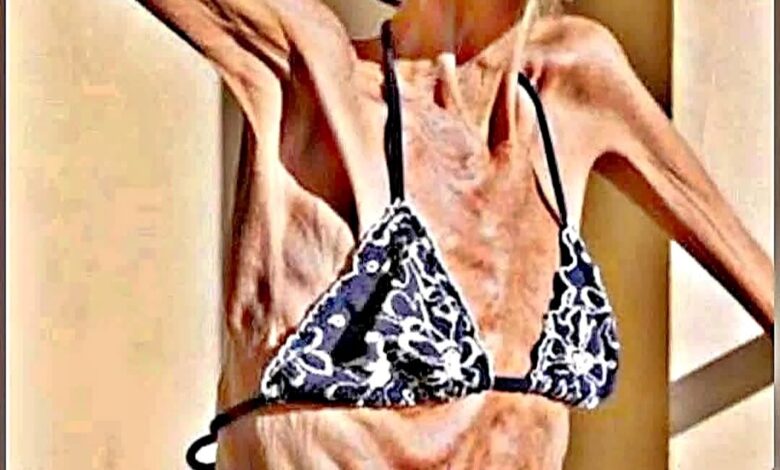
Images showing dramatic physical transformations often spread rapidly online, especially when they depict someone who appears frail, exhausted, or dangerously underweight standing beside a later photo that radiates strength and recovery. One such image, shared widely across social media, shows a woman whose appearance changes so dramatically that many viewers stop scrolling instantly. The contrast is striking. In one photo, she appears painfully thin and fragile. In the other, she looks healthier, stronger, and full of life.
Yet while the image captures attention, the full story behind it remains unclear.
The exact circumstances surrounding the woman’s condition have never been independently verified. There is no confirmed public record explaining what caused her weight loss or what treatments contributed to her apparent recovery. Despite that uncertainty, the image continues to resonate because it reflects something universal: the possibility of healing after profound physical struggle.
Extreme weight loss can occur for many reasons.
Serious illnesses such as cancer, gastrointestinal diseases, chronic infections, autoimmune disorders, and metabolic conditions can dramatically affect the body’s ability to absorb nutrients and maintain weight. Mental health conditions, including eating disorders, depression, and severe anxiety, can also contribute to significant physical decline.
Regardless of the cause, the effects are often devastating.
As weight drops, the body begins losing not only fat but also muscle tissue. Energy levels decline. Everyday tasks become exhausting. Walking, climbing stairs, carrying groceries, or even standing for extended periods can become difficult. The immune system may weaken, making the person more vulnerable to additional illnesses and complications.
For many patients, recovery becomes a long and challenging journey rather than a single turning point.
The first step is often identifying the underlying cause.
Without addressing the root problem, lasting improvement is difficult to achieve. This is why recovery frequently involves a team of professionals working together. Physicians focus on diagnosis and treatment. Nutritionists help rebuild physical strength through carefully planned dietary support. Therapists and counselors address the emotional challenges that often accompany serious illness and dramatic body changes.
The process requires patience.
When the body has been weakened for a long time, rebuilding cannot happen overnight. Nutritional rehabilitation must often be gradual and carefully monitored. Too much too quickly can sometimes create additional medical risks. Small improvements accumulate over weeks and months, eventually leading to larger changes that become visible both physically and emotionally.
What many people don’t see in transformation photos are the countless difficult days between the “before” and “after.”
The medical appointments.
The setbacks.
The fear.
The frustration.
The moments when progress feels painfully slow.
Recovery is rarely a straight line.
There are often periods of improvement followed by unexpected challenges. Yet many individuals eventually regain strength, independence, and quality of life through consistent treatment and support.
That reality is one reason these images inspire so many people.
They serve as reminders of the body’s remarkable ability to heal and adapt.
At the same time, it’s important to approach viral transformation photos with caution.
Social media often presents dramatic visual outcomes without providing meaningful context. Viewers are shown the result but not necessarily the circumstances behind it. The change may reflect recovery from illness, successful medical treatment, improved nutrition, recovery from an eating disorder, lifestyle modifications, or countless other factors that remain unknown.
Without verified information, assumptions can be misleading.
Images alone rarely tell the complete story.
What appears obvious at first glance may not reflect reality at all.
Yet even without knowing every detail, the broader lesson remains powerful.
Across the world, countless people face serious health challenges that leave them feeling exhausted, frightened, and uncertain about the future. Many wonder whether they will ever feel strong again. Many struggle to imagine life beyond their diagnosis, treatment, or recovery process.
Stories of healing—even incomplete ones—offer a reminder that improvement is possible.
Not guaranteed.
Not easy.
But possible.
Medical advances, proper nutrition, emotional support, and determination have helped countless individuals reclaim their health after circumstances that once seemed overwhelming.
That is why images like these continue to resonate.
Not because they provide all the answers.
But because they point toward hope.
And sometimes, hope is the most important thing a recovery journey begins with.
While the true story behind this particular photograph may remain unknown, its enduring message is clear: the human body possesses extraordinary resilience, and with the right care, support, and perseverance, many people can find their way back from even the most difficult chapters of illness and hardship.