The Last Living Legend of the Golden Age How This 103 Year Old Icon Defied Time and Changed Hollywood Forever

In Hollywood, careers often burn brightly and disappear just as quickly.
A hit film can make someone famous overnight, while changing trends can send even established stars into obscurity. In an industry obsessed with youth, reinvention, and the next big thing, longevity is rare. Remaining relevant for a decade is an achievement. Surviving multiple generations of cultural change is something else entirely.
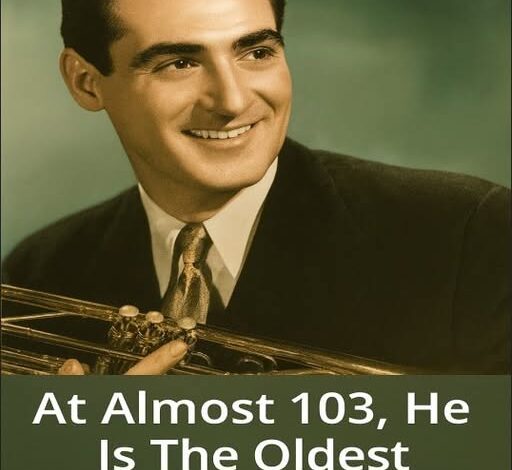
Then there are figures like Ray Anthony.
At nearly 103 years old, Anthony occupies a place few entertainers ever reach. He is more than a celebrated musician, bandleader, and performer. He is a living connection to a chapter of American history that many people know only through photographs, documentaries, and old recordings. While entire industries have transformed around him, Anthony has remained a symbol of artistic dedication, adaptability, and enduring passion.
His remarkable life spans more than a century of extraordinary change.
When Anthony was born, radio was still shaping popular culture. Motion pictures were in their infancy compared to what audiences know today. The world looked dramatically different, and the entertainment industry operated according to entirely different rules. Success was not measured by viral videos, streaming numbers, or social media followers. Artists built careers through relentless work, live performances, touring schedules, and years of mastering their craft.
It was in that environment that Ray Anthony developed his talents.
Rising to prominence as a trumpet player and bandleader during the Big Band era, Anthony became one of the defining musical figures of his generation. His work helped shape an important chapter of American music history, a period when orchestras filled dance halls, live performances brought communities together, and musicians became household names through talent rather than algorithms.
The Big Band era represented more than a style of music.
It reflected an entire cultural movement.
Dance floors were crowded. Radio broadcasts united listeners across the country. Live orchestras created experiences that felt immediate and communal. Musicians served not only as entertainers but also as cultural ambassadors who helped define the mood and spirit of their time.
Anthony thrived within that world.
Yet what makes his story particularly remarkable is not simply that he achieved success. It is that he continued evolving as the world around him changed.
Many performers struggle when the cultural landscape shifts. New technologies emerge. Audience preferences evolve. Entire genres rise and fall. Careers that once seemed untouchable can disappear almost overnight.
Anthony witnessed all of it.
He saw radio dominate entertainment before television transformed households. He lived through the emergence of rock and roll, the cultural revolutions of the 1960s, the rise of modern pop music, and the digital revolution that completely reshaped how people consume art.
Through every transformation, he remained connected to his passion.
That ability to adapt may be one of the greatest lessons his life offers.
True creativity is not limited to a specific era.
It is not confined to one generation’s tastes.
Instead, it evolves, learns, and finds new ways to remain meaningful.
Anthony’s longevity is not merely a matter of physical endurance. It reflects a mindset rooted in curiosity, discipline, and a genuine love for music. While many people view aging as a gradual process of decline, his life presents a different perspective entirely.
For Anthony, age has become evidence of accumulated experience rather than limitation.
That perspective carries tremendous significance in today’s world.
Modern culture often celebrates speed. Careers are built rapidly. Trends emerge and disappear within weeks. Attention spans grow shorter. Success is frequently measured by immediate visibility rather than lasting contribution.
Against that backdrop, Ray Anthony represents something increasingly rare: permanence.
His career reminds audiences that meaningful accomplishments are often built over decades rather than moments.
He also serves as an important cultural witness.
When Anthony speaks about music, performance, or the entertainment industry, he is not discussing history from a distance. He lived it. He remembers the people, places, and events that shaped the development of modern American entertainment. His memories provide insights that no textbook can fully capture.
For younger artists, that perspective is invaluable.
Many performers today struggle with burnout, uncertainty, and the pressure to remain constantly visible. Anthony’s example offers a powerful alternative. His life demonstrates that artistic fulfillment is not a sprint but a lifelong journey. Success is not solely about reaching a peak; it is about sustaining purpose over time.
Perhaps even more impressive is the vitality he continues to display.
Many people naturally withdraw from public life as they age, choosing privacy and rest after decades of work. Anthony, however, has remained a visible symbol of enthusiasm and perseverance. His continued engagement with music sends a message that creativity does not have an expiration date.
Researchers who study aging frequently point to the benefits of remaining mentally, socially, and creatively active. Purpose plays a critical role in overall well-being. People who stay engaged with meaningful pursuits often report greater life satisfaction and stronger emotional health.
Anthony appears to embody those findings.
His connection to music remains vibrant.
His appreciation for audiences remains genuine.
His enthusiasm continues to inspire.
In many ways, he challenges common assumptions about aging itself.
Society often views growing older through a lens of limitation. Older adults are frequently underestimated, overlooked, or defined primarily by what they can no longer do. Yet figures like Anthony remind us that age can also represent wisdom, resilience, and continued contribution.
Rather than fading into the background, he stands as proof that meaningful engagement with life can continue well into one’s later years.
His story also highlights the importance of preserving artistic traditions.
As technology increasingly shapes music production, the craftsmanship of earlier generations becomes even more valuable. Anthony’s work reflects an era when musicians relied heavily on technical mastery, live performance skills, and deep musical understanding. By remaining active and visible, he helps ensure that those traditions remain part of the cultural conversation.
His influence extends beyond nostalgia.
He represents continuity.
He creates a bridge between generations.
Young musicians can look to his career for inspiration, while older audiences find comfort in seeing a beloved figure continue to thrive. In a rapidly changing world, that sense of connection carries extraordinary value.
Public fascination with Anthony’s age is understandable, but his true significance lies in something deeper.
People are not simply amazed that he has lived so long.
They are inspired by how he has lived.
His story reflects perseverance through changing times, dedication to a lifelong passion, and an unwavering commitment to sharing his gifts with others. He demonstrates that purpose can remain strong regardless of age and that fulfillment often comes from continuing to do what you love.
As the entertainment industry continues evolving, Ray Anthony stands as a remarkable reminder that some values never become outdated.
Talent matters.
Discipline matters.
Passion matters.
Connection matters.
His legacy is not defined solely by recordings, performances, or historical achievements. It lives in the example he provides to anyone who worries that time inevitably diminishes possibility.
At nearly 103 years old, Ray Anthony continues to prove the opposite.
He shows us that a life devoted to creativity can remain vibrant across generations, that purpose can outlast trends, and that the most enduring performances are not measured in minutes or years but in the lasting impact they leave behind.
In the end, Ray Anthony is more than a survivor of a vanished era.
He is a living testament to the power of passion, resilience, and artistic devotion.
And perhaps his greatest lesson is this: when a person dedicates themselves wholeheartedly to something they love, the passing years do not diminish their light—they give it even greater depth.