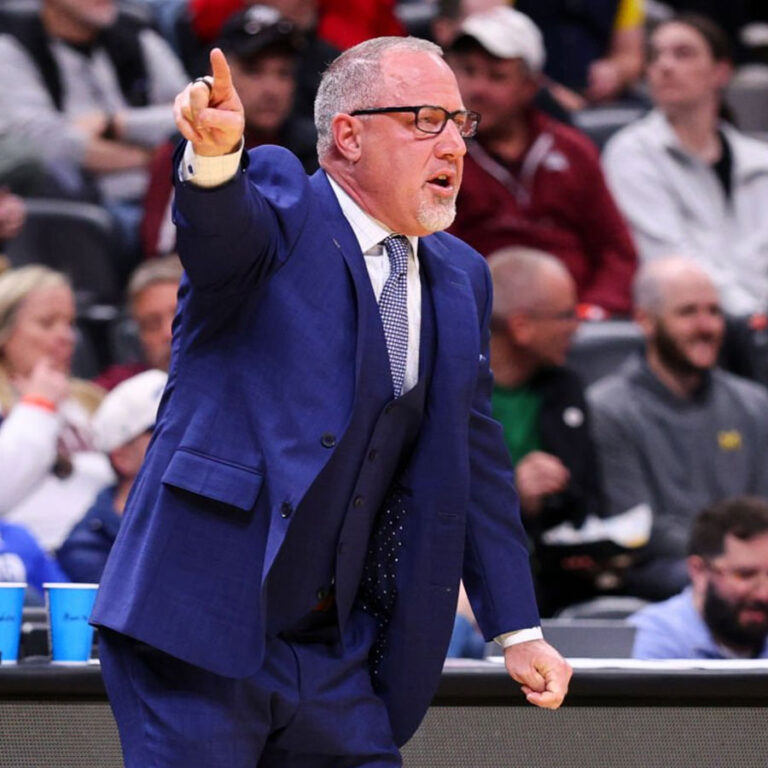
Most coaches spend the preseason talking about conditioning, teamwork, and winning.
Buzz Williams starts by talking about gratitude.
Before a single game is played, before rankings matter, and before players begin chasing championships, the Virginia Tech basketball coach gathers his team for a lesson that has nothing to do with shooting percentages or defensive schemes.
It’s a lesson about respect.
And for many players, it becomes one of the most memorable moments of their college careers.
Inside the gym, the atmosphere is different from an ordinary practice. The players stand quietly, expecting another team meeting. Some assume they’re about to hear a speech about discipline or effort. Others are thinking about upcoming games, workouts, or classes.
Then they notice something unusual.
Several military veterans enter the room.
Some wear full uniforms.
Others carry themselves with the unmistakable confidence and composure developed through years of service.
The room becomes quieter.
The players straighten up.
And Coach Williams begins.
Before delivering his message, he often points out something most people never notice during the national anthem.
A glance toward the floor.
A quick adjustment of a jersey.
A player shifting weight from one foot to the other.
A hand tugging at shorts.
A wandering gaze.
Individually, these actions seem harmless.
Most are unconscious habits.
But Williams believes they reveal something important.
Not disrespect.
Not bad intentions.
Simply a lack of awareness.
And awareness, he explains, can be taught.
Standing before his team, he challenges them to think differently about the moments that occur before every game.
For many athletes, the national anthem has become part of the routine.
It plays before tipoff.
Everyone stands.
Then the game begins.
But Williams wants his players to understand that those two and a half minutes represent something much larger than a pregame tradition.
He wants them to understand who made those moments possible.
The veterans standing nearby are not invited guests for decoration.
They are the reason for the lesson.
As the players face them, Williams delivers words that often leave a lasting impact.
“We didn’t earn these chairs.”
The statement immediately captures attention.
The athletes look around, confused.
What does he mean?
Then he explains.
Being tall didn’t earn those chairs.
Being able to shoot a basketball didn’t earn those chairs.
Scoring points didn’t earn those chairs.
Scholarships didn’t earn those chairs.
Talent didn’t earn those chairs.
The opportunity to sit in a college classroom, compete in front of thousands of fans, travel across the country, and pursue dreams as student-athletes exists because generations of men and women sacrificed for freedoms many people rarely stop to consider.
The room grows still.
Williams continues.
He reminds them that when many veterans were their age, life took a dramatically different path.
Some interrupted their education.
Some left families behind.
Some abandoned promising careers.
Others never returned home at all.
The freedom to play basketball, attend school, and build a future came at a price paid by people sitting only a few feet away from them.
Suddenly, the anthem no longer feels like background music.
It becomes personal.
The veterans share stories.
Some describe leaving home as teenagers.
Others talk about deployments, uncertainty, and sacrifice.
A few recount experiences that permanently changed their lives.
The players listen.
For many, it is the first time they’ve heard such stories directly from those who lived them.
The impact is immediate.
Abstract concepts like freedom and service become human.
They acquire faces.
Names.
Voices.
Memories.
The lesson is not political.
It is not about forcing opinions.
It is about understanding perspective.
Williams wants his athletes to recognize that life extends far beyond basketball courts, training facilities, and game schedules.
He wants them to appreciate the opportunities they often take for granted.
Most importantly, he wants them to develop respect.
So he teaches through details.
During the anthem, stand still.
Make eye contact.
Pay attention.
Don’t sway.
Don’t shuffle your feet.
Don’t adjust your clothing.
For those brief moments, dedicate your complete attention to the people who earned the freedoms allowing everyone in that arena to gather peacefully.
Some critics might dismiss such attention to detail as excessive.
But Williams sees it differently.
He believes character is revealed through small actions.
Discipline begins with little things.
Awareness begins with little things.
Respect begins with little things.
The ability to remain focused during a two-and-a-half-minute ceremony may seem insignificant.
Yet the same focus influences practice habits.
It influences preparation.
It influences leadership.
It influences how athletes treat others.
What starts as a lesson about posture often becomes a lesson about life.
The players begin noticing things they previously ignored.
They become more conscious of body language.
More aware of their surroundings.
More attentive to the experiences of people outside their own world.
That awareness gradually spreads into other areas.
Veterans are no longer anonymous figures seen only during ceremonies.
They become individuals with stories.
People whose sacrifices shaped opportunities others now enjoy.
The atmosphere within the team changes as well.
Players hold themselves differently.
Not because they’re being forced to.
Because they understand.
And understanding always creates stronger motivation than rules alone.
Williams reinforces the lesson through his own example.
During the anthem, he stands perfectly still.
Focused.
Attentive.
Respectful.
He never asks players to demonstrate behavior he is unwilling to model himself.
That consistency strengthens his message.
Athletes see that the values he teaches are values he genuinely lives.
Over time, the lesson becomes part of the team’s culture.
New players arrive and learn the tradition.
Older players pass it along.
Veterans continue visiting.
Stories continue being shared.
And another generation of young athletes gains a deeper appreciation for sacrifice, gratitude, and responsibility.
The influence extends beyond basketball.
Former players carry those lessons into careers, families, and communities.
Many discover that the habits Williams emphasized—presence, respect, attention to detail, and gratitude—matter just as much in boardrooms, classrooms, and relationships as they do on a basketball court.
That is why his approach resonates so strongly.
He isn’t simply coaching athletes.
He is developing people.
In an era where sports often focus exclusively on performance, statistics, and championships, Williams uses a simple pregame moment to teach something far more enduring.
He teaches perspective.
Because championships fade.
Records are broken.
Careers end.
But character remains.
And every season, before the first game begins, Buzz Williams reminds his players of a simple truth:
The opportunities they enjoy today were purchased through sacrifices made by others.
The least they can do is stand still, pay attention, and remember.
For two and a half minutes, basketball can wait.