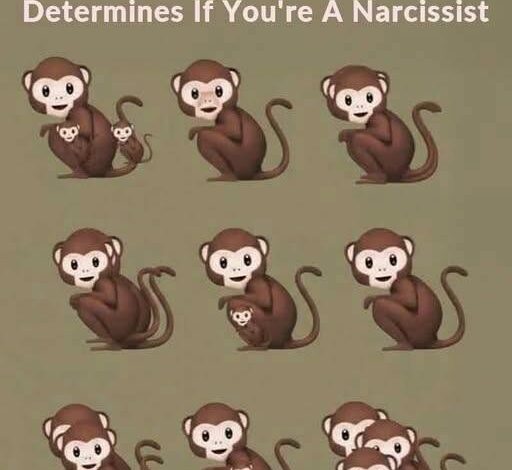
At first glance, it looks like nothing more than a playful internet puzzle.
A picture filled with hidden monkeys, accompanied by a bold claim that the number you find reveals something profound about your personality. Within minutes, people begin counting, comparing answers, and wondering what their result supposedly says about them.
But the real story isn’t hidden inside the image.
It’s hidden inside the way we respond to it.
The moment you start searching, your brain does something fascinating. It begins scanning for patterns, separating shapes from background details, deciding what belongs and what doesn’t. Some people immediately notice the obvious figures, while others continue looking until they uncover details that were easy to miss at first.
Neither approach is right or wrong.
It’s simply a reflection of how human perception works.
Our brains aren’t cameras that record every detail equally. Instead, they constantly filter information, deciding what deserves attention and what can safely be ignored. That process happens so quickly that we’re rarely aware of it.
Optical puzzles take advantage of that natural tendency.
They encourage us to slow down, look more carefully, and realize that the first thing we notice isn’t always the whole picture.
The personality claims attached to these images are another reason they spread so quickly.
People naturally enjoy learning about themselves. Whether it’s a personality quiz, an optical illusion, or a “what do you see first?” challenge, we’re curious about how our minds work and how we compare with others.
These puzzles tap into that curiosity.
However, it’s important to remember that they aren’t scientific personality assessments.
There is no reliable evidence showing that counting a certain number of hidden figures can accurately measure kindness, intelligence, honesty, confidence, or any other personal trait.
The descriptions that accompany viral puzzles are usually written to sound broadly relatable, allowing many different people to recognize parts of themselves in the results.
That doesn’t mean the experience lacks value.
Sometimes a simple puzzle encourages useful reflection.
You might ask yourself why you stopped searching when you did.
Were you satisfied quickly?
Did you enjoy looking for every possible detail?
Did you compare your answer with others or trust your own observation?
Those questions may reveal more about your habits than the number itself.
The image also highlights an important truth about perception.
Two people can study exactly the same picture and notice different things.
One may immediately identify hidden shapes that another overlooks completely.
After someone points them out, however, they suddenly become impossible to miss.
The information was always there.
The difference was simply where attention happened to land.
That same principle extends far beyond visual puzzles.
In everyday life, people often experience the same event, conversation, or situation differently because each person notices different details, brings different experiences, and interprets information through their own perspective.
Recognizing that reality can help us become more patient with others—and with ourselves.
First impressions are valuable, but they aren’t always complete.
Sometimes the most important discoveries come only after we’re willing to look again.
That willingness to reconsider our assumptions is one of the mind’s greatest strengths.
It allows us to learn, adapt, and see possibilities we may have overlooked at first glance.
Perhaps that’s the most meaningful lesson these viral images offer.
Not that they can define who we are, but that they remind us how selective human attention can be.
Every day, our brains simplify an incredibly complex world by focusing on some details while filtering out countless others.
Most of the time, that ability helps us function efficiently.
Occasionally, it also reminds us that there may be more to see than we initially realize.
So if you find yourself counting monkeys, hidden faces, or other cleverly disguised figures, enjoy the challenge for what it is—a fun exercise in observation rather than a psychological diagnosis.
The number you discover doesn’t determine your character.
What matters more is your willingness to stay curious, question your assumptions, and remain open to seeing something new.
Because growth rarely begins with having all the answers.
More often, it begins with looking a little longer, noticing what you missed the first time, and recognizing that understanding—whether of an image, another person, or yourself—is rarely finished after a single glance.