After 65 Years of Marriage, I Opened My Husband’s Locked Drawer – Inside, I Found a Stack of Letters, and My Knees Buckled When I Saw Who They Were Addressed To

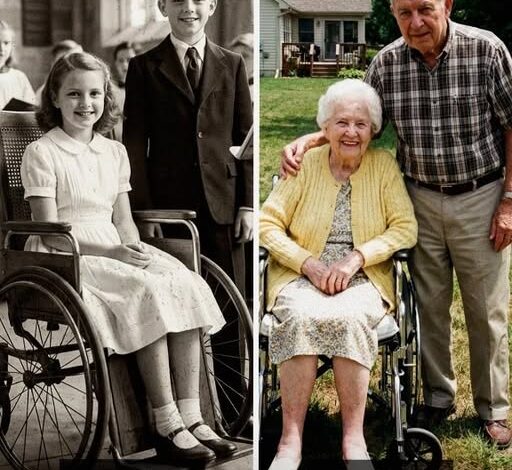
At eighty-five years old, I believed there were no real surprises left in marriage.
After a lifetime spent beside my husband Martin — decades of shared routines, whispered conversations in the dark, hospital visits, holidays, arguments, grandchildren, and quiet evenings falling asleep in front of the television — I thought I knew every corner of our life together. Love that lasts that long becomes less like romance and more like landscape. Familiar. Permanent. You stop imagining there could still be hidden doors left unopened between you.
But all it took was one locked drawer and a tiny brass key to show me how wrong I was.
Martin and I met when we were children singing in the church choir.
By then, I had already spent years in a wheelchair after the accident that changed my life. People looked at me differently afterward. Some with pity. Some with discomfort. Others with the kind of forced kindness that feels worse than cruelty because you can hear the awkwardness underneath it.
But Martin never looked at me that way.
The first thing he ever said to me was completely ordinary.
“Do you sing alto?”
No hesitation.
No pity.
No strange carefulness.
Just a boy talking to a girl like nothing about her required explanation.
That single moment changed everything.
We became inseparable after that. He pushed my wheelchair without turning it into an act of charity. He argued with me during choir practice about harmonies. He saved seats for me before anyone else could take them. Slowly, without either of us fully noticing when it happened, friendship became love.
At twenty years old, he proposed beneath the old oak tree behind the church.
“I can’t imagine my life without you,” he said.
And I believed him completely.
So we built a life together.
Not a perfect life.
Not an easy one.
A real one.
We raised children.
Then grandchildren arrived and filled the house with noise and fingerprints and impossible amounts of energy. Through every season of life, Martin remained steady beside me — dependable in the quiet ways that matter most over decades.
When you spend that many years with someone, they stop feeling separate from you entirely. Their habits become part of your rhythm. Their voice becomes part of the house itself. You stop imagining what existence would even feel like without them in it.
Then last winter, Martin died.
I was holding his hand when it happened.
I remember desperately searching for something profound to say — some final sentence worthy of fifty years of marriage. But grief empties language sometimes. In the end, all I managed was:
“I’m here.”
And then he was gone.
Afterward, people came constantly.
Flowers.
Cards.
Casseroles.
Soft voices saying soft things.
But eventually everyone returned to their normal lives while mine stayed frozen in place.
The house changed immediately after his death.
Not physically.
Emotionally.
Rooms felt larger somehow. The silence became unbearable at certain hours of the day. Every object carried memory attached to it like weight.
His glasses still rested beside his chair.
His favorite coffee mug sat untouched near the sink.
His jacket still hung beside the front door exactly where he left it.
I couldn’t move any of it.
Especially not his office.
That room became sacred territory after he died. I avoided even looking inside when I passed the doorway because part of me still imagined he might be sitting there balancing bills or pretending to organize paperwork while secretly reading old magazines instead.
Months passed that way.
Not living exactly.
Just existing carefully around grief.
Then one afternoon my daughter Jane came over and stood quietly in the hallway watching me move through the house like a ghost.
Finally she said gently:
“Mom… you don’t have to do this alone.”
Something inside me cracked when she said it.
Because she was right.
So together, we opened the office door.
The room smelled exactly like Martin still.
Paper.
Coffee.
Old books.
Everything remained untouched:
his chair,
his glasses,
half-finished notes scattered across the desk.
For several seconds I genuinely had to fight the irrational feeling that he might walk back into the room at any moment asking what we were doing in there.
Then I noticed something strange.
One of the desk drawers was locked.
Martin never locked anything.
Not letters.
Not paperwork.
Not personal belongings.
The locked drawer felt wrong immediately, like finding a hidden wall inside your own home.
Jane saw my expression change.
“What is it?”
“He never locked drawers.”
The key ended up inside the pocket of his old brown jacket hanging in the closet. My hands shook carrying it back into the office.
Even then, standing there with the key between my fingers, I still had no idea how much of my life was about to rearrange itself.
The lock clicked softly.
And inside the drawer sat dozens of letters tied carefully together with faded ribbon.
At first I assumed they were old financial papers or correspondence from relatives long gone.
Then I saw the name written across one envelope.
Dolly.
My sister.
The sister I hadn’t spoken to in over fifty years.
The room tilted beneath me.
I stared at the letters unable to breathe properly for several seconds because my brain simply refused to connect what my eyes were seeing with reality.
Dolly had disappeared from my life decades earlier after a painful falling out I never fully understood. Over time, silence hardened into permanence. Eventually I convinced myself she simply no longer wanted me in her life.
And now here she was again.
Hidden inside my dead husband’s desk.
My hands trembled violently as I opened the first letter.
It was from Martin.
The first sentence read:
“She still talks about you in her sleep.”
I physically sat down.
Letter after letter revealed the same impossible truth:
Martin had been writing to my sister for decades.
Not occasionally.
Not secretly for a short time.
For years.
Maybe longer than I could emotionally process.
Some letters had been returned unopened.
Others contained replies from Dolly herself.
This wasn’t an affair.
Wasn’t betrayal.
It was something stranger and somehow far more emotional.
Martin had quietly kept a bridge alive between my sister and me long after both of us stopped believing one still existed.
I found one letter from Dolly where she admitted she never stopped loving me but couldn’t bear the pain of staying close after learning she would never have children. Watching me build a family while she carried that grief became unbearable for her.
So she left.
And once enough years passed, shame kept her away more effectively than distance ever could.
I pressed that letter against my chest and cried harder than I had even at Martin’s funeral.
Because suddenly all those missing years felt devastatingly unnecessary.
And because my husband had known.
Known all along.
Yet instead of forcing reconciliation or confronting me before I was emotionally ready, he simply kept writing to her quietly in the background.
He sent updates about our children.
Photos.
Stories about birthdays and graduations.
News about grandchildren.
He never pressured her to return.
He just made sure she never felt forgotten.
I looked at Jane through tears.
“Why wouldn’t he tell me?”
She shook her head softly.
But deep down, I already understood the answer.
Martin knew me.
He knew if he pushed too hard, I would retreat deeper into old hurt and pride. So instead he protected the possibility of reconciliation quietly, patiently, year after year, hoping someday the timing would finally be right.
The next morning, my son Jake drove me to the address listed in the most recent letter.
The entire drive felt endless.
Every mile carried another impossible question:
What would I say?
Would she even want to see me?
Could fifty years of silence actually survive first contact?
When we reached the first house, my heart shattered immediately.
“She moved a few weeks ago,” the new resident explained kindly.
But then she handed us a forwarding address.
An hour later, we pulled up outside a small pale-blue house surrounded by flowerpots.
And there she was.
Dolly.
Older now.
Smaller somehow.
But unmistakably my sister.
For several seconds neither of us moved.
Then she looked directly at me and whispered:
“Colleen?”
My throat closed completely.
“I found the letters,” I managed.
The second I said it, she understood everything.
Then I told her Martin had passed away.
Without saying another word, she walked forward and wrapped her arms around me.
And suddenly fifty years disappeared.
Not erased.
Not forgotten.
But softened enough for love to finally reach through them again.
Later, sitting together at her kitchen table, I finally asked the question that haunted me for most of my adult life:
“What did I do wrong?”
Dolly started crying immediately.
“Nothing,” she whispered.
That answer hurt worse somehow.
She explained how infertility consumed her slowly, how every birthday party and pregnancy announcement deepened wounds she didn’t know how to survive. Leaving became easier than constantly confronting what she believed she would never have.
And the longer she stayed away, the harder returning became.
Then she told me something else.
“Martin wrote to me a month after I left,” she said quietly.
I closed my eyes.
Of course he did.
“He never judged me,” she continued. “Never pressured me. He just kept reminding me that somewhere out there… I still had family.”
We talked for hours that afternoon.
About childhood.
About regret.
About grief.
About all the years we lost unnecessarily because pain convinced both of us that silence was safer than vulnerability.
And slowly, incredibly, something new began growing between us.
Not restoration exactly.
Something gentler.
A second beginning.
On the drive home, Jake glanced over at me carefully.
“You okay?”
I looked out the window thinking about Martin.
About the letters.
The drawer.
The decades he quietly protected a relationship neither Dolly nor I believed could ever survive again.
And for the first time since his death, my grief felt different.
Still painful.
Still enormous.
But threaded now with gratitude too.
Because even after he was gone, Martin somehow managed to give me one final gift:
my sister back.
That night, I returned to his office alone.
The drawer remained open.
The letters still scattered across the desk.
And standing there in the silence, I finally understood something about love that took me eighty-five years to fully learn.
Real love does not always arrive loudly.
Sometimes it exists in small hidden acts repeated patiently over decades.
In letters no one else sees.
In bridges quietly maintained long after others stop believing reunion is possible.
In people who protect the connections we are too wounded to repair ourselves.
Sometimes the greatest thing a person leaves behind is not money or possessions or even memories.
Sometimes it’s a door.
Left unlocked carefully.
Waiting for us when we are finally ready to walk through it.