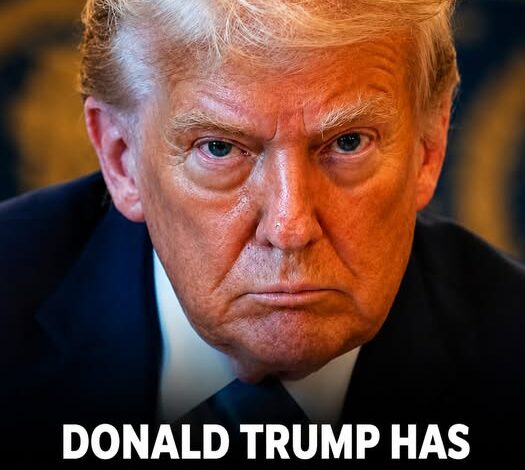
For a politician who has built an entire career on visibility, seven days can feel like an eternity.
Donald Trump has spent decades cultivating an image that thrives on constant exposure. Whether through rallies, television appearances, press conferences, social media posts, or impromptu exchanges with reporters, he has rarely allowed himself to drift far from public attention. Even his critics would acknowledge one thing: Trump is almost always visible.
That is why his recent absence from public view sparked such intense curiosity.
The questions began quietly.
A few commentators noticed that the president had not appeared before cameras for several days. Then journalists started discussing the gap. Social media users began comparing schedules. Soon, what might have been dismissed as an ordinary lull became one of the most discussed political mysteries of the week.
Where was Donald Trump?
The question spread rapidly across online platforms, news discussions, and political circles. Supporters defended the president’s right to conduct business away from television cameras. Critics argued that a week-long disappearance from public appearances was unusual enough to deserve scrutiny.
Regardless of political affiliation, one fact remained difficult to ignore.
People had become accustomed to seeing Trump almost every day.
When that routine suddenly stopped, speculation rushed in to fill the silence.
The curiosity surrounding Trump’s absence says as much about modern politics as it does about the president himself. In earlier generations, Americans often knew relatively little about the daily activities of their leaders. Presidential schedules existed, but constant visibility was neither expected nor possible.
Today’s political environment is radically different.
The public has grown accustomed to instant updates, live broadcasts, social media reactions, and round-the-clock coverage. Citizens no longer simply learn about presidential decisions after they happen. They often watch those decisions unfold in real time.
Trump, perhaps more than any modern political figure, embraced that environment.
Throughout his business career, reality television years, presidential campaigns, and time in office, visibility became one of his most powerful tools. His supporters saw accessibility. His opponents saw self-promotion. Yet both sides agreed on one thing: he was rarely absent.
That reality transformed an otherwise routine scheduling gap into a source of widespread speculation.
The timeline itself appeared straightforward.
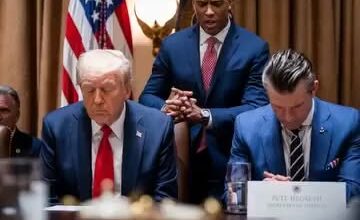
Trump’s last major public appearance occurred during a Cabinet meeting at the White House. Afterward, days passed without the usual collection of public events, televised remarks, or press interactions that had become familiar features of his presidency.
While a pre-recorded interview surfaced during that period, it did little to satisfy growing curiosity.
For many observers, recorded footage was not the same as a live appearance.
The distinction mattered.
A recorded interview could have been filmed earlier.
A recorded message could be carefully controlled.
What people wanted was confirmation that the president remained actively engaged and visible in real time.
As the days accumulated, online discussions intensified.
Some commentators described the absence as unusual.
Others began searching for patterns.
Several users claimed they had noticed similar periods of reduced visibility occurring at various points over the previous year. Whether those observations reflected genuine trends or merely selective memory remained open to debate.
Yet the perception itself became part of the story.
Political observers have long understood that perception often drives public conversation more effectively than facts alone.
Once enough people began asking questions, the questions themselves became newsworthy.
The situation also highlighted a broader issue facing modern governments: transparency.
Citizens increasingly expect access.
Not merely information about policies and decisions, but visual confirmation that leaders remain present, active, and healthy.
When those expectations go unmet, uncertainty develops.
And uncertainty rarely remains empty for long.
It attracts theories.
Some reasonable.
Some speculative.
Some wildly imaginative.
In Trump’s case, the discussion quickly expanded beyond scheduling concerns and into questions about health.
Fueling those conversations was news that the president had recently visited Walter Reed National Military Medical Center.
On its own, such a visit might not have generated significant attention.
Presidents routinely undergo examinations and receive medical care.
Yet timing matters.
The medical visit occurred shortly before the period of public absence.
For many observers, that connection seemed impossible to ignore.
Questions multiplied.
Was the visit routine?
Was additional testing required?
Did doctors discover something concerning?
Had the White House fully disclosed the circumstances?
These questions spread rapidly across social media.
As often happens online, speculation moved faster than evidence.
Claims emerged.
Counterclaims followed.
Rumors circulated.
Theories expanded.
Yet despite the volume of discussion, concrete proof remained elusive.
The White House responded firmly.
Officials repeatedly insisted that Trump remained healthy and fully capable of performing presidential duties.
Medical reports released by the administration described him as being in excellent condition.
According to official statements, examinations revealed strong cardiac, neurological, pulmonary, and overall physical function.
Trump himself reinforced those claims.
He publicly stated that recent medical evaluations produced positive results and emphasized that he had successfully completed cognitive assessments.
Administration representatives echoed those assurances.
They pointed to ongoing meetings, policy discussions, and daily responsibilities continuing behind the scenes.
From their perspective, the issue was being exaggerated.
The president was working.
The government was functioning.
The cameras simply weren’t present.
Yet skepticism persisted.
Partly because of Trump’s age.
Partly because of previous public discussions surrounding presidential health.
And partly because some medical experts questioned aspects of the information released.
Several physicians interviewed by media organizations noted that certain findings appeared remarkably positive for a man approaching eighty years old.
Others wondered about the purpose of specific follow-up imaging procedures.
These observations did not constitute evidence of serious illness.
They merely introduced additional questions.
Questions that, in the absence of live appearances, continued attracting public attention.
The controversy also revealed an interesting double standard present in modern politics.
Health concerns surrounding political leaders often become intensely partisan.
When one side raises questions, supporters dismiss them as politically motivated.
When the other side raises similar concerns, critics demand accountability.
This pattern has repeated across multiple administrations.
Former President Joe Biden faced relentless scrutiny regarding his age, stamina, and cognitive abilities.
Supporters frequently argued that critics exaggerated normal signs of aging.
Opponents insisted transparency demanded difficult questions.
Now, similar conversations have emerged around Trump.
The political positions may differ, but the underlying dynamic remains remarkably familiar.
Americans want confidence in their leaders.
Particularly when those leaders occupy positions carrying enormous responsibility.
Health becomes part of that equation.
Not because voters expect perfection.
Because they expect honesty.
The challenge lies in determining how much information constitutes sufficient transparency.
Too little information encourages speculation.
Too much information raises privacy concerns.
Every administration struggles to find the balance.
Trump’s temporary disappearance brought that challenge into sharp focus.
Supporters viewed the controversy as overblown.
Presidents, they argued, conduct substantial portions of their work away from cameras.
Meetings happen behind closed doors.
Policy discussions occur privately.
National security matters frequently require discretion.
From this perspective, public visibility should not be confused with effectiveness.
Critics disagreed.
They argued that a president known for extraordinary public exposure suddenly becoming invisible naturally invites questions.
Particularly when health concerns have already become part of public discussion.
Neither position lacks logic.
Both reflect legitimate concerns about leadership, transparency, and public trust.
Ultimately, the mystery surrounding Trump’s absence reveals something important about contemporary politics.
Visibility has become a form of reassurance.
Citizens expect to see their leaders.
Not merely hear about them.
Not merely read schedules.
Actually see them.
Appearances communicate stability.
Presence communicates control.
When either disappears, people notice.
The attention surrounding Trump’s absence also demonstrates how dramatically the relationship between politicians and the public has changed.
Modern leaders exist under nearly constant observation.
Every movement is tracked.
Every schedule adjustment is analyzed.
Every deviation from routine becomes a potential story.
This environment creates extraordinary scrutiny.
But it also creates extraordinary expectations.
Silence becomes suspicious.
Absence becomes meaningful.
Even when no evidence suggests anything is wrong.
As of now, there remains no indication that Donald Trump is missing in any official sense.
The White House continues releasing schedules.
Officials maintain that the president remains actively engaged in governing.
No medical emergency has been announced.
No evidence suggests he is unable to perform presidential responsibilities.
Yet the questions persist.
Not because definitive answers are unavailable.
Because visibility itself has become part of the answer people seek.
For seven days, one of the most publicly recognizable figures in American politics stepped away from the spotlight.
In another era, few might have noticed.
In today’s political landscape, it became a national conversation.
Whether the absence reflected routine scheduling, strategic planning, personal preference, or something else entirely, one thing became clear.
Donald Trump’s political identity remains deeply connected to public presence.
When that presence suddenly disappears, even briefly, curiosity fills the void.
And in a world driven by constant information, curiosity rarely stays quiet for long.
The next time Trump steps back before cameras, he will likely find himself answering not only questions about policy, elections, and governance, but also the question that dominated discussions during his absence:
Where have you been?
The answer may ultimately prove simple.
But the public fascination surrounding the mystery reveals something far larger than one week without appearances.
It reveals how deeply modern politics depends on visibility, how quickly uncertainty generates speculation, and how even the briefest absence can become a story when the person disappearing is one of the most watched political figures on Earth.