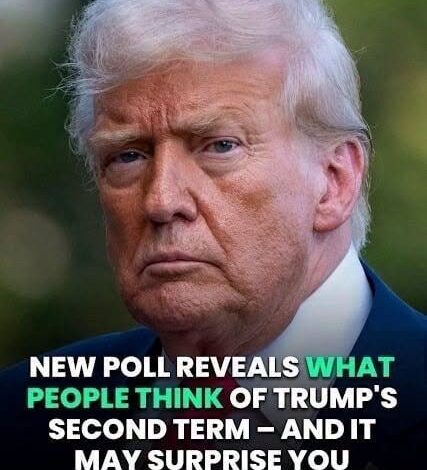
Few political figures in modern American history provoke reactions as intense, personal, or polarized as Donald Trump. His approval ratings continue to attract close attention because they reveal more than simple support or opposition. They offer a glimpse into a nation that remains deeply divided over his leadership, political style, and the movement that has grown around him.
Recent polling continues to show Trump facing significant national disapproval while maintaining strong loyalty among his core supporters. Surveys conducted by major polling organizations have consistently found that his approval is strongest among Republicans and considerably weaker among Democrats and independents.
One of the most striking aspects of Trump’s political standing is its durability.
Among many supporters, approval has remained remarkably resilient. To them, Trump is not simply another politician. He is viewed as a disruptive force who challenged political norms, confronted institutions they distrust, and spoke directly about issues they believe other leaders avoided.
For these voters, criticism of Trump often does not weaken support.
In some cases, it strengthens it.
They view attacks from political opponents, media organizations, prosecutors, and establishment figures as evidence that he is challenging a system they already consider unfair or unresponsive. That shared sense of grievance has helped maintain an unusually committed political base, even through controversies, investigations, and setbacks.
But Trump’s opposition is equally entrenched.
For many Americans, his name is associated with division, legal battles, inflammatory rhetoric, and concerns about democratic institutions. His critics do not view him as a necessary disruptor. They see him as a destabilizing figure whose influence has intensified political conflict and weakened public trust.
That is what makes his approval ratings so revealing.
They are not merely measurements of whether people like or dislike a politician. They reflect two fundamentally different interpretations of the same public figure.
To supporters, Trump represents strength, defiance, and resistance to elite opinion.
To critics, he represents instability, resentment, and a political culture increasingly driven by confrontation.
Over time, those views have shown little sign of convergence.
If anything, they appear to have hardened.
Supporters remain loyal because they believe Trump continues to fight for their interests and concerns. Opponents remain deeply skeptical because they believe his return to power would amplify the very problems they fear most.
This divide helps explain why Trump remains such a dominant force in American politics.
Even when national discussions focus on Congress, the courts, immigration, foreign policy, the economy, or public trust in institutions, his influence often shapes the broader conversation. His approval ratings are therefore about more than his personal popularity. They also serve as a measure of the country’s broader political climate.
The numbers suggest a nation where political identity has become increasingly tied to emotion, loyalty, and distrust.
Many voters are no longer evaluating policies in isolation. Instead, they are responding to what Trump symbolizes: disruption, resistance, authority, grievance, or threat, depending on their perspective.
That symbolism helps explain why his ratings can remain weak nationally while remaining powerful within his base.
National disapproval may be substantial, but among loyal supporters, his influence remains significant. That combination has defined much of Trump’s political career: widespread controversy paired with unusually intense support.
In the end, Trump’s approval ratings tell a story larger than any single poll.
They reveal a political figure who continues to divide the country in profound ways. They reflect a movement that has not disappeared and an opposition that remains equally determined.
Whether admired or criticized, Trump remains one of the central figures in American public life.
His numbers reveal not only how Americans feel about him, but also how sharply they disagree about the direction, values, and future they envision for the United States.