Man trying to ‘hot pot’ fell into Yellowstone hot spring and was completely dissolved within a day

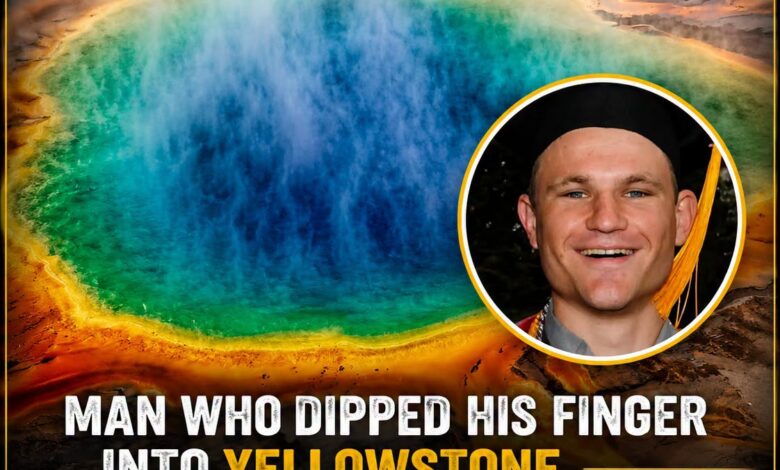
Yellowstone National Park is famous for its breathtaking geothermal wonders, but beneath their beauty lies an environment as unforgiving as it is spectacular. In 2016, 23-year-old Colin Scott learned that reality in the most tragic way after venturing off the park’s designated boardwalks in search of a natural hot spring where he hoped to soak.
The ground surrounding Yellowstone’s thermal features is often deceptively fragile. What appears to be solid earth can be nothing more than a thin mineral crust covering pools of superheated, highly acidic water. Temperatures in some springs exceed the boiling point, and the water’s chemistry can be intensely corrosive.
According to park officials, Scott left the marked trail and entered a restricted thermal area. While exploring near one of the hot springs, he lost his footing and fell into the scalding water. The extreme heat and acidity caused catastrophic injuries almost immediately, leaving rescuers facing an extraordinarily dangerous recovery operation.
Park rangers responded as quickly as conditions allowed, but Yellowstone’s geothermal terrain presents hazards not only to visitors but also to emergency personnel. As crews worked to recover Scott, severe weather moved into the area. Lightning and heavy rain forced rescuers to suspend their efforts for safety, delaying the operation until the following day.
When teams returned, they encountered another harsh reality of Yellowstone’s thermal environment. The combination of intense heat, acidic water, and constant geothermal activity had dramatically altered the scene overnight. Recovery efforts became exceptionally difficult, underscoring just how powerful and unpredictable these natural features can be.
The tragedy has since become one of the park’s most sobering reminders of why visitors are instructed to remain on boardwalks and marked trails at all times. Those wooden walkways, warning signs, and protective barriers are not placed for convenience—they exist because the dangers beneath the surface are often invisible.
Every year, millions of people safely experience Yellowstone by following those simple rules. The park’s geysers, hot springs, mud pots, and fumaroles remain among the world’s most remarkable natural wonders, but they demand respect as much as admiration.
Colin Scott’s death is remembered not only as a heartbreaking loss for his family and friends, but also as a powerful reminder that nature’s beauty and its dangers often exist side by side. In Yellowstone, the same geothermal forces that create brilliant colors and awe-inspiring landscapes can also become deadly in an instant.
His story continues to encourage visitors to heed posted warnings, stay on designated paths, and recognize that the park’s safety measures are grounded in hard-earned experience. Sometimes, the safest choice is also the one that allows these extraordinary places to be appreciated for generations to come.