Michael Carter knew something was wrong long before he could prove it.
For months, the numbers from his family’s diner chain had been bothering him. Revenue was slipping. Employee turnover was climbing. Customer traffic remained steady, online reviews were mostly positive, and yet the profits continued to shrink. The spreadsheets sitting on his desk told a story that didn’t make sense.
At first, he blamed inflation, competition, and changing consumer habits. But the deeper he dug, the more he felt a nagging certainty that the real problem wasn’t outside the business.
It was inside.
That suspicion led him to Carter’s Diner before sunrise on a chilly Tuesday morning.
The diner had been part of his life for as long as he could remember. His father had built it from the ground up, turning a small roadside restaurant into a local institution. Michael had grown up refilling ketchup bottles, wiping tables, and listening to customers tell stories over endless cups of coffee.
Standing in the parking lot now, he expected to feel pride.
Instead, he felt uneasy.
The familiar red-brick building looked the same, but something about it seemed lifeless. The warmth that once defined the place felt absent.
Dressed in an old flannel shirt and faded jeans, Michael walked inside unnoticed.
The breakfast rush was already underway.
Plates clattered. Coffee machines hissed. Orders were shouted across the kitchen.
Yet beneath the activity, something felt off.
Employees moved quickly but without enthusiasm. Conversations were short. Smiles appeared only when required and disappeared seconds later. Customers were being served, but they weren’t being welcomed.
Michael slid onto a stool at the counter and ordered coffee.
From there, he watched.
A cashier named Megan barely looked up from her phone while ringing up customers. Another employee, Troy, seemed more interested in rushing through transactions than helping the growing line.
The service wasn’t terrible.
It was worse.
It was indifferent.
And indifference was something Carter’s Diner had never tolerated.
His father used to say, “People can eat anywhere. They come here because we make them feel like they belong.”
Looking around, Michael wondered when that philosophy had been forgotten.
Then he noticed Henry.
The elderly dishwasher moved through the kitchen with slow but deliberate steps. His gray hair was thinning, his back slightly bent from decades of work, but his eyes still carried warmth.
Unlike everyone else, Henry acknowledged people.
He greeted customers by name.
He asked about families.
He smiled genuinely.
While others treated the diner like a job, Henry treated it like a community.
Michael found himself watching the older man throughout the morning.
There was a quiet dignity about him.
No shortcuts.
No complaints.
Just steady, honest work.
Then something happened that explained more than any financial report ever could.
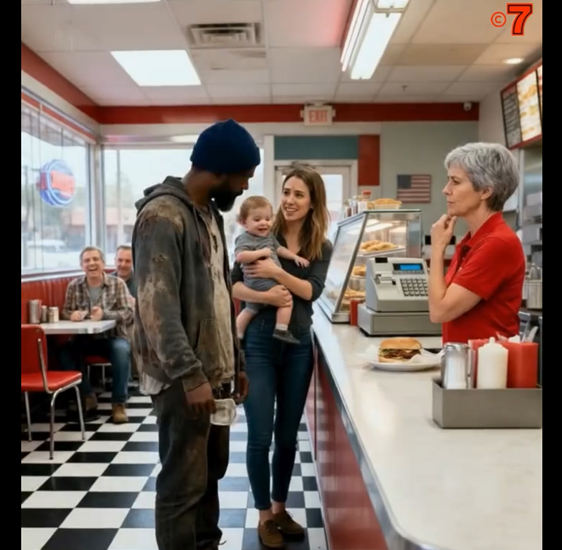
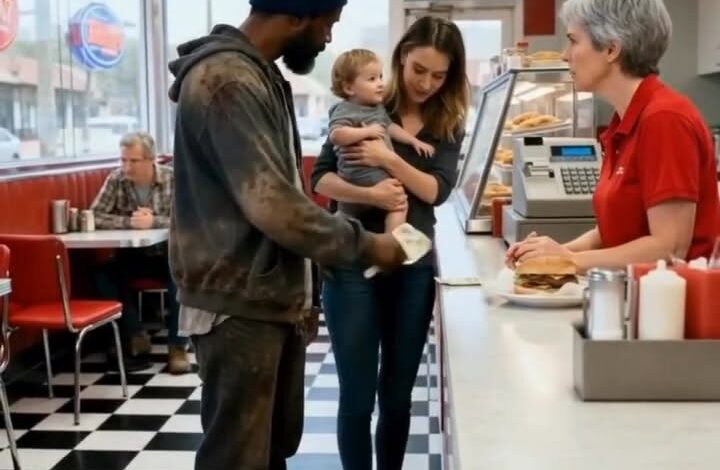
A young mother approached the register carrying a sleepy toddler.
When it came time to pay, her face drained of color.
She checked her wallet twice.
Then three times.
“I’m so sorry,” she whispered. “I thought I had enough.”
The embarrassment in her voice was heartbreaking.
Several customers glanced away awkwardly.
Megan sighed impatiently.
Troy rolled his eyes.
Before anyone else could react, Henry stepped forward.
Without a word, he reached into his pocket and placed a few bills on the counter.
“That should cover it,” he said gently.
The woman stared at him.
“You don’t have to do that.”
Henry smiled.
“Everybody needs a little help sometimes.”
Tears filled her eyes.
She thanked him repeatedly before leaving.
Michael felt proud.
For exactly three seconds.
Then Megan laughed.
“Again?” she muttered.
Troy smirked.
“You’re turning this place into a charity.”
The words hit harder than Michael expected.
Not because they were rude.
Because they revealed a culture that had rotted from within.
Henry simply returned to work without responding.
But Michael saw the hurt flash across his face.
And that was enough.
The rest of the morning only confirmed his fears.
Customers with complaints were brushed aside.
Orders were mishandled.
Cash procedures were ignored.
The more Michael observed, the clearer the picture became.
This wasn’t a business struggling because of outside pressures.
It was suffering from neglect, dishonesty, and a loss of values.
When he finally left the diner, he wasn’t just disappointed.
He was angry.
Back at home, he spent the entire day reviewing records.
Security footage.
Cash logs.
Customer complaints.
Staff reports.
By midnight, he had the answers.
The missing money.
The discrepancies.
The blame repeatedly directed toward Henry.
It all pointed to the same people.
Megan and Troy had been covering their mistakes and shifting responsibility onto the one employee least likely to defend himself.
The next morning, Michael returned.
This time, he wasn’t wearing a disguise.
Word spread quickly as employees gathered near the dining area.
The atmosphere felt tense.
Everyone sensed something was coming.
Michael stood in front of them holding a stack of documents.
Security footage played on a monitor.
Transaction records were displayed.
Customer statements were read aloud.
One by one, every excuse collapsed.
Megan and Troy tried to defend themselves.
Then they tried blaming others.
Finally, they ran out of explanations.
Silence filled the room.
Michael looked around.
“Do you know what built this company?” he asked.
Nobody answered.
“It wasn’t the food.”
The employees exchanged confused glances.
“It wasn’t the buildings. It wasn’t the advertising.”
His voice hardened.
“It was people.”
He pointed toward Henry.
“That man has spent decades serving this diner.”
Henry looked stunned.
“He treats customers with respect. He helps people when nobody is watching. He protects the reputation of this business every single day.”
Michael paused.
“And some of you repaid him by mocking him, blaming him, and taking advantage of his kindness.”
Nobody spoke.
Nobody could.
Then Michael smiled.
“Today that changes.”
He turned toward Henry.
The old dishwasher looked completely overwhelmed.
“Henry, your debts are paid.”
Gasps echoed across the room.
“You’re getting a new home.”
Henry covered his mouth.
“And starting today, you’re the new Floor Manager.”
The room erupted into applause.
Not forced.
Not polite.
Real.
Several employees wiped away tears.
Henry stood frozen.
For a moment, he seemed unable to speak.
When he finally did, his voice cracked.
“I was just doing my job.”
Michael shook his head.
“No.”
He smiled warmly.
“You were protecting the heart of this place.”
The weeks that followed brought remarkable changes.
New training programs emphasized customer care and respect.
Employees were recognized for kindness, not just productivity.
Customer complaints dropped.
Morale improved.
Profits returned.
But the biggest transformation couldn’t be measured on any spreadsheet.
The diner felt alive again.
Customers lingered longer.
Employees laughed more.
New hires learned quickly under Henry’s guidance.
From his office window, Michael often watched the older man mentoring younger staff members.
Not teaching them how to carry plates.
Teaching them how to treat people.
And that made all the difference.
As word spread through the community, Carter’s Diner became known for something more important than good food.
It became known for character.
Looking back, Michael realized his undercover visit had revealed something invaluable.
Businesses succeed because of systems.
But they endure because of people.
People like Henry.
People who do the right thing even when nobody notices.
People who quietly hold everything together while others chase recognition.
Years later, Michael would often repeat the lesson he learned during that difficult chapter.
“The most important thing we serve isn’t on the menu.”
When customers asked what he meant, he would smile.
“Respect. Kindness. Integrity.”
Because those were the ingredients that had saved Carter’s Diner.
And thanks to one humble dishwasher who never stopped caring, those values would continue to guide the business for generations to come.