At first glance, it looks surprisingly simple.
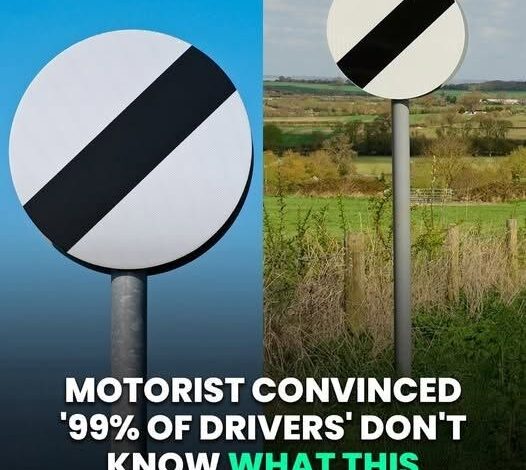
A white circular sign with a single black diagonal stripe across the middle doesn’t display any numbers at all. Unlike most speed limit signs, it doesn’t tell drivers exactly how fast to travel, which is why it often causes confusion among people unfamiliar with its meaning.
Some assume it means “drive as fast as you want.”
Others joke that it’s an invitation to “floor it.”
Neither interpretation is correct.
This sign indicates the national speed limit and tells drivers that the previous posted speed restriction has ended. Instead of introducing an unlimited speed, it signals that the default legal speed limit for that particular road and vehicle now applies.
Exactly what that limit is depends on both the type of road and the type of vehicle being driven.
For cars and motorcycles in the United Kingdom, the national speed limit is generally:
- 60 mph (97 km/h) on single carriageway roads.
- 70 mph (113 km/h) on dual carriageways and motorways.
However, these limits are not the same for every vehicle.
Vans, buses, heavy goods vehicles, and vehicles towing trailers are often subject to lower legal speed limits, even when the same national speed limit sign is displayed. Drivers are responsible for knowing which limits apply to the vehicle they are operating.
The sign is therefore less like a new instruction and more like a reminder.
It assumes drivers already understand the national speed limit rules and can apply them appropriately.
That is one reason the sign sometimes generates confusion online.
Photos of the sign frequently attract humorous comments suggesting it means “unlimited speed,” “drive as fast as possible,” or “country road race mode.” While these jokes may seem harmless, they can reinforce dangerous misunderstandings among drivers who are unfamiliar with the actual rules.
In reality, the national speed limit is exactly that—a legal maximum under normal conditions, not a target that must always be reached.
Safe driving depends on much more than the posted limit.
Road conditions, weather, visibility, traffic, road width, bends, pedestrians, cyclists, and wildlife all influence the appropriate speed at any given moment.
On a narrow rural road with sharp corners and limited visibility, driving at the legal maximum may still be unsafe. Conversely, on a clear motorway with light traffic, conditions may comfortably support travel at the posted national speed limit.
The Highway Code makes this distinction clear.
Drivers should always travel at a speed that allows them to stop safely within the distance they can see to be clear, regardless of the legal limit.
In other words, the speed limit is a ceiling—not a recommendation.
The national speed limit sign also plays an important role in reducing roadside clutter.
Rather than posting multiple numerical speed limit signs whenever a default limit applies, the single black-striped symbol efficiently tells drivers that standard national limits are back in effect.
It’s a simple design, but one that relies on driver education rather than constant explanation.
That makes understanding the sign especially important for anyone driving in the UK or visiting from another country, where similar-looking signs may have different meanings—or may not exist at all.
Misinterpreting it can have serious consequences.
Excessive speed remains a contributing factor in many road collisions, particularly on rural roads where changing conditions, hidden junctions, and limited visibility demand extra caution. Assuming the sign grants permission to drive without restraint puts both the driver and others at unnecessary risk.
Ultimately, this familiar black-striped circle isn’t a symbol of unlimited freedom.
It’s a reminder of responsibility.
It tells drivers that the default national speed limits now apply—but it also assumes they will combine that knowledge with sound judgment, awareness of road conditions, and an understanding of their own vehicle’s legal restrictions.
The safest journeys are not made by those who simply know the numbers.
They’re made by drivers who recognize that every speed limit is only one part of safe driving. The real challenge is choosing a speed that fits the road, respects the law, and gives everyone the best chance of arriving home safely.