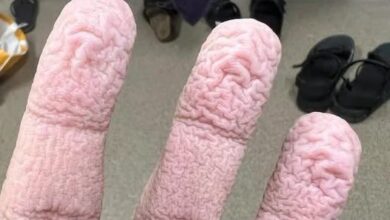
At first glance, the swollen bumps on the fingers can look alarming.
Many people fear they are seeing the signs of a rapidly progressing disease, but in many cases, these changes are the result of osteoarthritis—the most common form of arthritis and a condition that develops gradually over time as joint cartilage wears down.
The firm enlargements that appear near the finger joints are known as Heberden’s nodes, which form at the joints closest to the fingertips, and Bouchard’s nodes, which develop at the middle finger joints. Rather than being abnormal growths, these bony enlargements are the body’s response to long-term joint changes, creating extra bone as it attempts to stabilize damaged joints.
Early on, the affected joints may become swollen, warm, or tender. During this stage, everyday tasks such as buttoning clothing, opening jars, or gripping objects can become uncomfortable. As time passes, the inflammation often settles, leaving behind firm, permanent nodules that may continue to limit movement or alter the appearance of the fingers.
Although osteoarthritis can be painful, it is not usually a medical emergency.
However, some symptoms should never be ignored.
If finger joints become suddenly very swollen, intensely red, or extremely painful, if fever develops, or if stiffness and swelling appear rapidly in multiple joints, it is important to seek prompt medical evaluation. These features may suggest an infection, gout, or an inflammatory arthritis such as rheumatoid arthritis, all of which require different treatment.
For many people living with osteoarthritis, the goal is not simply to reduce pain but to preserve hand function and independence.
Fortunately, several approaches can help.
Gentle hand exercises recommended by a healthcare professional or hand therapist can improve flexibility and maintain strength. Warm compresses or paraffin wax treatments may ease stiffness before activity, while cold packs can help reduce discomfort during flare-ups. Some people benefit from finger splints that support painful joints during specific activities, and ergonomic kitchen tools, pens, and jar openers can make daily tasks easier while reducing strain.
When needed, healthcare professionals may also recommend medications such as topical anti-inflammatory gels, oral pain relievers, or other treatments based on an individual’s symptoms and overall health. In persistent or severe cases, referral to a hand specialist or occupational therapist may provide additional options for managing pain and improving function.
Perhaps the most important step is understanding what is happening.
Knowledge replaces uncertainty.
Instead of seeing unfamiliar changes and assuming the worst, you can recognize the signs, seek appropriate medical advice, and take practical steps to protect your joints.
Our hands tell the story of our lives.
They prepare meals, comfort loved ones, build careers, create art, and accomplish countless ordinary tasks we rarely think about until they become difficult.
Caring for them isn’t simply about easing discomfort.
It’s about preserving the independence, confidence, and daily abilities that allow us to continue doing the things that matter most.