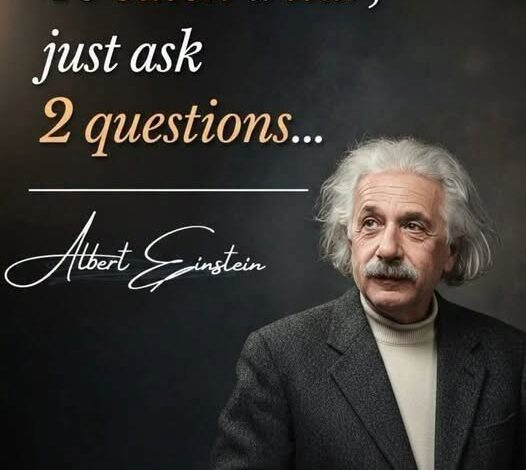
Clear thinking is often mistaken for intelligence.
People imagine it belongs only to philosophers, scientists, or those with extraordinary minds. In reality, clear thinking has far less to do with raw brilliance than with attention, discipline, and the willingness to slow down before reaching a conclusion.
It begins with something surprisingly simple.
A pause.
That brief moment between what happens and how you respond can shape nearly every important decision you make. Instead of reacting immediately, you give yourself space to ask another question, consider another perspective, or notice a detail that others may overlook.
In that small pause, you begin reclaiming control over your choices.
Modern life rarely encourages this habit.
News arrives instantly. Opinions spread before facts are confirmed. Social media rewards quick reactions, emotional responses, and absolute certainty. In that environment, thinking carefully can feel slower than everyone else.
Yet it is often the wiser path.
Independent thought is one of the strongest forms of personal freedom. It allows you to evaluate ideas instead of simply accepting them, to question claims instead of repeating them, and to recognize the difference between evidence and assumption.
Curiosity plays an equally important role.
People who continue asking questions throughout life tend to keep learning long after formal education ends. They read beyond headlines, seek different viewpoints, admit when they do not know something, and remain open to changing their minds when better information appears.
That flexibility is not weakness.
It is intellectual strength.
Reflection matters just as much.
Mistakes are unavoidable, but thoughtful people use them as teachers rather than permanent labels. Instead of asking, “Why did this happen to me?” they ask, “What can I learn from this?”
Over time, those lessons accumulate.
Reading a few pages each day.
Checking an unfamiliar source.
Questioning an assumption.
Listening before speaking.
Admitting uncertainty.
Each habit seems small on its own, yet together they gradually reshape the way you understand the world. They become a form of mental exercise, strengthening judgment just as regular movement strengthens the body.
One of the greatest benefits of clear thinking is resilience.
When you rely on careful reasoning instead of impulse, you become less vulnerable to manipulation, misinformation, and emotional pressure. Sensational headlines lose some of their power. Rumors become invitations to investigate rather than reasons to panic. Popular opinions become ideas to examine instead of beliefs to adopt automatically.
You become harder to mislead because you have learned to think before you decide.
At the same time, you become someone others trust more readily.
People often place greater confidence in those who listen carefully, consider multiple perspectives, and avoid rushing to conclusions. Clear thinkers do not need to have an opinion on everything immediately. They recognize that thoughtful uncertainty is often more valuable than confident guesswork.
Perhaps the greatest surprise is what happens to your confidence.
Many people believe confidence comes from always having the right answer.
In reality, lasting confidence comes from knowing you can adapt.
You trust your ability to learn.
To adjust.
To reconsider.
To grow.
You no longer fear changing your mind because you understand that learning is not evidence of weakness—it is evidence of progress.
In a world overflowing with information, opinions, and constant distractions, clear thinking has become increasingly valuable. It allows you to separate fact from emotion, signal from noise, and lasting truth from passing trends.
It is not about winning every argument.
It is about making better decisions.
Building stronger relationships.
Learning continuously.
Living intentionally.
Clear thinking is not a gift reserved for a fortunate few.
It is a daily practice built through patience, curiosity, humility, and careful attention.
Each thoughtful question you ask, each assumption you examine, and each lesson you carry forward quietly shapes the person you become.
In the end, the strongest mind is not the one that knows everything.
It is the one that never stops learning how to think.
And in a world that often profits from confusion, that may be one of the most powerful skills you can ever develop.