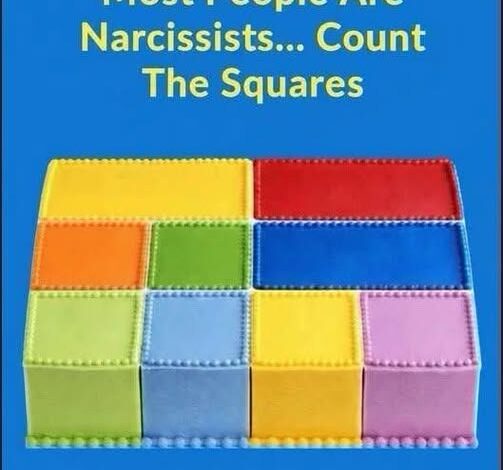
At first glance, the puzzle looks ridiculously simple.
How many shapes can you see?
You count quickly, choose an answer, and feel reasonably confident.
Then you look at the comments.
Someone says 12.
Another insists it’s 16.
Someone else confidently announces 24 and explains that everyone giving a smaller number “doesn’t understand geometry.”
Within minutes, a harmless picture has turned strangers into opposing camps.
And that may be the most interesting part of the puzzle.
Not the answer.
The certainty.
Visual counting puzzles are remarkably good at exposing how quickly the human mind moves from “I think” to “I know.”
We glance at an image, recognize an obvious pattern, count the objects that fit it, and stop.
Our answer feels complete because our brain has already decided what counts.
But then someone points out a larger shape formed by several smaller ones.
Suddenly the number changes.
You look again.
There’s another.
Then somebody counts overlapping shapes you hadn’t considered.
Now you’re wondering whether those should count at all.
And that’s when the real problem emerges:
What exactly are we counting?
Individual shapes?
Composite shapes?
Overlapping ones?
Rotated versions?
Shapes sharing sides?
Does the outer boundary count?
Before solving the puzzle, we need to define the rules.
That sounds obvious.
Yet it’s precisely the step people often skip.
Instead, we begin counting immediately and unconsciously invent the rules as we go.
That’s why two intelligent people can study the same image and reach different answers without either person being careless.
They may actually be solving different versions of the problem.
Once the rules are clearly established, the disagreement often becomes much easier to resolve.
Start with the smallest shapes.
Count them systematically.
Then examine combinations of two or more.
Look for larger shapes formed from smaller components.
Rotate your attention.
Check the boundaries.
Keep track of what you’ve already counted.
Suddenly, what seemed chaotic becomes methodical.
And somewhere during that process, something slightly uncomfortable may happen.
You realize your first answer was wrong.
That tiny moment is what makes these puzzles surprisingly revealing.
Because being wrong about a triangle or square shouldn’t matter.
Nothing important is at stake.
Your reputation isn’t going to collapse because you missed three hidden shapes.
Yet watch how strongly people defend their answers.
“Obviously it’s 18.”
“Anyone saying 22 is counting things twice.”
“How can you possibly not see it?”
A puzzle becomes an argument because our brains don’t always separate an answer from the feeling of having been correct.
Once we’ve publicly committed to something, changing our minds can feel strangely like losing.
So instead of examining the picture again, we defend the original count.
That tendency doesn’t remain inside puzzle books.
It follows us everywhere.
Someone tells us why they’re upset, and before they’ve finished speaking, we’ve already decided who’s responsible.
We hear one version of an argument and construct an entire story around it.
We make assumptions about coworkers, relatives, strangers, and partners based on incomplete information.
Then new information arrives.
And instead of asking, “Does this change what I think?” we sometimes ask, “How can I make this fit what I already believe?”
Real life is obviously far more complicated than counting geometric figures.
But the mental habit is recognizable.
We like fast answers.
Certainty feels comfortable.
Ambiguity doesn’t.
The puzzle offers something valuable precisely because the stakes are so low.
It gives us a safe place to practice saying:
Wait. Let me look again.
Maybe I missed something.
Maybe we’re using different definitions.
Maybe the other person isn’t foolish.
Maybe my first impression wasn’t the complete picture.
That’s not weakness.
It’s careful thinking.
In fact, one of the most useful intellectual habits is becoming comfortable enough with uncertainty to examine your own conclusions.
Before arguing over the answer, define the question.
Before assuming someone else is wrong, find out what they’re counting.
Before defending your first impression, check the image one more time.
Sometimes you’ll discover you were right from the beginning.
Sometimes you’ll find three shapes hiding in plain sight.
And sometimes you’ll realize there isn’t one defensible answer until everyone agrees on the rules.
That lesson extends surprisingly far beyond puzzles.
Arguments often become clearer when people define their terms.
Relationships improve when assumptions become questions.
Decisions become better when speed gives way to examination.
And conversations become considerably less hostile when changing your mind isn’t treated as humiliation.
So the next time a deceptively simple image asks you to count the shapes, resist the temptation to race toward the answer.
Slow down.
Decide what qualifies.
Count systematically.
Then check again.
Because the most revealing question may not be:
“How many shapes are there?”
It may be:
“How certain was I before I had actually looked?”
A puzzle can teach geometry.
But a good one can teach something more useful.
Sometimes clarity begins the moment we’re willing to admit that our first answer might not be our best one.