The moment the plane touched the runway, I understood something with a clarity that almost frightened me.
I was not going home to negotiate.
I was going home to end it.
For years, my family had built their lives around one dependable assumption: if something went wrong, I would absorb the damage.
A bill they couldn’t cover.
A payment that came due unexpectedly.
A “temporary” shortage.
A loan that would absolutely be returned next month.
There was always a reason.
Always an emergency.
Always a promise.
And somehow, there was always me.
At first, I told myself this was what families did.
You helped.
You didn’t keep score.
You didn’t humiliate people you loved by reminding them what they owed.
So when someone needed money, I transferred it.
When another crisis arrived, I transferred more.
When repayment dates passed without explanation, I pretended not to notice.
I became remarkably skilled at converting disappointment into understanding.
“They’re struggling.”
“They’ve had a difficult year.”
“They’ll make it right.”
“They’re family.”
That last sentence could excuse almost anything.
Every time I felt resentment rising, I pushed it down because anger seemed uglier than exploitation.
I wanted to be generous.
Patient.
Reliable.
I wanted to be the person everyone could count on.
I didn’t realize that somewhere along the way, being dependable had turned into being available for use.
The amounts grew.
So did the entitlement.
Requests stopped sounding like requests.
People began speaking about my money as though it already belonged to the family and merely happened to be stored in accounts bearing my name.
Then they started planning around my home.
That was different.
Money can become abstract.
Numbers move from one account to another and disappear into mortgages, repairs, debts, and promises.
A home is harder to abstract.
My home had walls I had chosen.
Rooms I had paid for.
A foyer I had walked through after some of the happiest and worst days of my life.
It contained the physical evidence of a life I had built.
And while I was away, they had begun treating it as though my ownership were merely an inconvenience waiting to be resolved.
They had plans.
Floor plans, actually.
That detail stayed with me.
Someone had sat down and imagined how my house could function for them.
Walls considered.
Rooms reassigned.
Space redistributed.
My future rearranged without my participation.
They hadn’t asked what I wanted.
They had planned around me.
Perhaps they expected the old version of me to return.
The woman who would be shocked, then hurt, then persuaded.
The woman who could be softened by phrases like:
“We thought you’d understand.”
“It’s best for everyone.”
“Why are you making this such a big deal?”
“We’re family.”
They knew exactly which buttons to press because I had spent years installing them.
Guilt.
Duty.
Fear of conflict.
Fear of loneliness.
The desperate need to remain the reasonable one.
But somewhere between the airport gate and the runway, something shifted.
Maybe it was exhaustion.
Maybe it was finally seeing the pattern as a pattern.
One request could be explained.
Two could be unfortunate.
Years of them were evidence.
So I stopped remembering selectively.
I opened my banking records.
There they were.
Transfers.
Dates.
Amounts.
Descriptions.
Promises preserved in electronic form.
Then I searched my messages.
“Just until next month.”
“I’ll pay you back.”
“I hate asking.”
“This is the last time.”
The language repeated so often it became almost embarrassing.
Not for them.
For me.
How many times had I accepted the same promise because admitting the truth would have required me to do something about it?
I saved everything.
Emails.
Messages.
Financial records.
Documents.
The floor plans.
I created folders.
Dates.
Timelines.
For once, I didn’t organize the evidence so I could convince them.
I organized it so they could no longer confuse me.
That distinction changed everything.
Manipulation thrives in fog.
It needs conversations nobody remembers quite the same way.
It needs:
“I never said that.”
“You misunderstood.”
“That’s not what happened.”
“You’re being emotional.”
Documents don’t become emotional.
A bank transfer doesn’t care whether the recipient thinks you’re selfish.
An email does not change its wording because somebody raises their voice.
A floor plan doesn’t suddenly become imaginary because its existence is inconvenient.
Paper has no loyalty.
That became my advantage.
When I walked through my front door, the house felt strangely unfamiliar.
Not because anything dramatic had changed.
Because I had.
I stood in the foyer and looked around.
My rooms.
My walls.
My life.
For years, I had behaved as though protecting those things from my own family would somehow make me cruel.
Now I understood the cruelty had been expecting me to surrender them quietly.
The confrontation came.
Of course it did.
They explained.
I listened.
They minimized.
I listened.
They reframed.
I listened.
At some point, someone suggested I was overreacting.
The old me would have taken the bait.
I would have raised my voice.
Listed sacrifices.
Demanded gratitude.
Begged them to admit what they had done.
Then the conversation would have become about my anger rather than their actions.
So I didn’t give them that escape.
I stayed calm.
“That’s not what happened,” someone said.
I opened the email.
“It’s temporary.”
I showed the dates.
“We discussed this.”
“No,” I said. “You discussed it. You didn’t get my agreement.”
That sentence changed the room.
For years, they had treated my silence as consent.
My reluctance to fight had been interpreted as permission.
My eventual surrender had been rewritten as generosity.
Not anymore.
The more they talked, the less I needed to.
Their own words were enough.
Every explanation collided with something already documented.
Every attempt to reshape the past met a timestamp.
And gradually, the balance shifted.
They were no longer explaining reality to me.
They were explaining themselves to a record.
I expected that moment to feel triumphant.
It didn’t.
It felt devastating.
Because boundaries are often described as empowering, and they are.
But nobody talks enough about the grief.
Sometimes saying no means admitting that people you love were comfortable benefiting from your inability to say it.
Sometimes protecting yourself requires destroying a version of your family you worked very hard to believe in.
I had imagined us differently.
I thought generosity created loyalty.
I thought years of showing up would eventually be reciprocated.
I thought if I gave enough, helped enough, forgave enough, everyone would eventually understand that what I wanted in return was not money.
It was consideration.
Respect.
A place in their decisions.
Instead, my giving had become ordinary to them.
Expected things rarely inspire gratitude.
They become infrastructure.
That was what I had become.
The foundation.
Everyone built upward while assuming I would remain underneath.
And foundations aren’t supposed to complain when people put more weight on them.
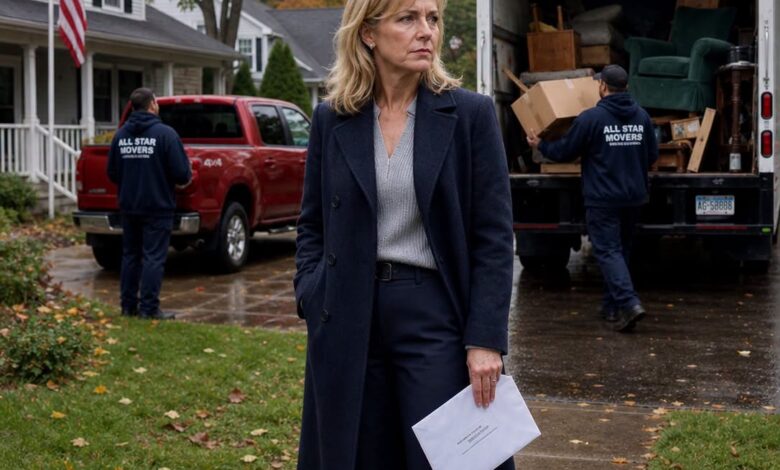
The boxes started leaving.
One by one.
That was when the finality became real.
Cardboard scraping across floors.
Tape tearing.
Footsteps moving through rooms.
Doors opening and closing.
Nobody was delivering a dramatic monologue.
There was no cinematic reconciliation.
Just possessions being carried out of a house that had finally become unquestionably mine again.
I watched without celebrating.
I wasn’t happy they were leaving.
I was relieved that I had stopped abandoning myself to make it easier for them to stay.
Those are not the same thing.
When the final box disappeared, I changed the locks.
The locksmith worked with the calm efficiency of someone performing an ordinary job.
To him, it probably was.
Remove this.
Install that.
Test the key.
Turn the deadbolt.
Click.
Such a small sound.
Yet I felt it in my chest.
For years, I had believed keeping family close meant leaving every door unlocked.
Emotional doors.
Financial doors.
Literal doors.
Now I understood that love without boundaries can become access without accountability.
The deadbolt clicked again.
And for the first time in a long time, the house became quiet without feeling occupied by somebody else’s expectations.
I walked through every room.
Nothing magical happened.
The hurt remained.
So did the anger.
But beneath both was something new.
Space.
Mine.
In the following days, I handled the practical pieces.
Passwords changed.
Access removed.
Documents secured.
Accounts reviewed.
Then I made an appointment to change my will.
That decision shocked them more than anything else.
Perhaps because inheritance had existed in their minds as another certainty.
Something waiting.
Something already factored into the future.
I sat across from the person handling the paperwork and realized how strange it was that even after death I had been expected to continue playing the same role.
Provide.
Absorb.
Leave something behind.
Make everyone comfortable.
I signed the documents.
My hand didn’t shake.
It wasn’t revenge.
Revenge would have required organizing my future around hurting them.
I was doing the opposite.
I was finally organizing it around myself.
They were free to keep whatever story they needed.
Maybe I became selfish in it.
Cold.
Ungrateful.
Unreasonable.
The difficult one.
Families are very good at protecting established systems by turning the person who disrupts them into the villain.
I couldn’t control that.
For most of my life, I had tried.
I had explained myself endlessly because I believed that if everyone understood my intentions, nobody could dislike me.
Age teaches you the absurdity of that bargain.
People can understand you perfectly and still resent your boundary because the boundary inconveniences them.
Understanding does not guarantee approval.
And approval is not the price of freedom.
They kept some of my money.
I accepted that.
Not because it didn’t matter.
Because pursuing every dollar would have kept me emotionally tied to the very thing I was trying to leave.
Some losses are tuition.
Expensive lessons paid to become someone wiser.
Mine taught me that generosity without limits eventually stops being generosity.
It becomes self-erasure.
Months passed.
The house changed.
Or perhaps I simply began noticing it again.
Morning light across the floor.
The sound of the kettle.
A chair positioned exactly where I wanted it.
Nobody discussing what should happen to the rooms.
Nobody calculating how much space I really needed.
Nobody treating my future as a resource.
At first, the quiet felt almost accusatory.
I had spent so long being needed that not being needed felt dangerously similar to not being loved.
That was another lie I had to unlearn.
Being useful is not the same as being cherished.
Being depended upon is not the same as being respected.
Being the person who always rescues everyone does not guarantee that anyone will notice when you’re drowning.
I had confused necessity with intimacy.
Once I saw the difference, I couldn’t unsee it.
There were lonely evenings.
Of course there were.
Freedom is often romanticized by people who don’t mention what happens after the door closes.
I missed people.
I missed who I thought they were.
Sometimes I almost reached for the phone.
Then I reminded myself that missing someone does not automatically mean inviting the old arrangement back into your life.
You can love people from a distance.
You can mourn them while they’re still alive.
You can wish them well without giving them a key.
That became my new definition of peace.
Not the absence of sadness.
The absence of surrender.
Eventually, I stopped checking the locks twice.
I stopped expecting another demand.
I stopped rehearsing arguments in the shower.
The house became a home again instead of evidence.
And when I thought about everything that had happened, I no longer pictured the confrontation first.
I pictured myself standing in the foyer after the last box had gone.
Alone.
Heartbroken.
Still standing.
That woman was different from the one who had boarded the plane.
The earlier version of me thought strength meant carrying everyone.
The woman who came home finally understood that strength could mean putting the weight down.
I had spent years saying yes because I feared what no might cost me.
In the end, yes cost far more.
Money.
Trust.
Time.
Pieces of myself I hadn’t realized I was giving away.
“No” cost me the fantasy.
And painful as that was, fantasies are not families.
They cannot hug you.
Respect you.
Protect you.
They can only keep you trapped inside the hope that reality will eventually become what you imagined.
I stopped waiting.
I documented what happened.
I reclaimed my home.
I changed my will.
I locked the door.
And then I did something nobody in that family had planned for.
I lived according to my own decisions.
There was no grand revenge.
No public humiliation.
No final screaming match.
Just a woman in her own house discovering that one syllable could hold more power than years of explanations.
No.
No more temporary loans that never returned.
No more decisions made with my money before anyone bothered to ask.
No more plans for my property.
No more treating my silence as permission.
No more sacrificing myself so other people could continue calling me generous.
Just no.
It arrived late.
Much later than I wish it had.
But courage does not become worthless because it blooms after years of fear.
Sometimes the bravest boundary is the one you finally draw after spending a lifetime without any.
They kept what they had already taken.
They kept their explanations.
They kept whatever version of me made their choices easier to live with.
I kept something better.
My name.
My home.
My rooms.
My future.
And when the deadbolt clicked behind the last person leaving, I finally understood that I had not closed the door on my family.
I had closed the door on the version of myself who believed love required leaving it permanently open.
For the first time, the silence on the other side belonged entirely to me.
And I wasn’t afraid of it anymore.