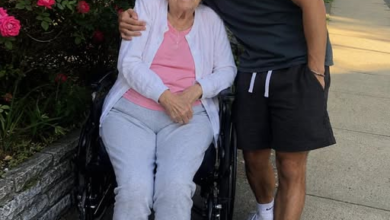
For three years, the elderly woman screamed every time a caregiver tried to bathe her: “Don’t touch my back!” Her son insisted she was losing her mind, pushing to lock her away in a psychiatric ward. But with only 72 hours left before she was taken away, one young caregiver finally earned her trust. Then, while gently washing her back, she froze.

“Don’t touch my back!”
Edith Ledbetter’s scream ripped through Oakridge Senior Living so sharply that the hallway seemed to stop breathing.
An aide pushing linens froze mid-step.
Someone in the dining room dropped a spoon.
I stood outside Room 7 with a stack of towels in my arms, listening as Edith shouted again.
“I said get away from me!”
Everyone at Oakridge knew about Edith’s one rule.
At seventy-six, she was sharper than half the staff. She did the Sunday crossword in pen, remembered everybody’s birthdays, and could spend twenty minutes explaining why instant coffee was an insult to humanity.
She could wash her own face, arms, and hair.
But nobody was allowed near her back.
Not nurses.
Not aides.
Nobody.
If someone tried, Edith panicked so violently that incident reports followed.
Most employees had stopped asking why.
The administration hadn’t.
I was twenty-four then, working at Oakridge after dropping out of nursing school when tuition became impossible. I needed the paycheck badly enough to tolerate a lot.
But what Director Higgins told me that morning made my stomach turn.
“The state inspection is Friday,” she said, tapping Edith’s file. “Her refusal is becoming a compliance issue.”
“She still bathes.”
“Not adequately.”
“She’s terrified.”
Higgins leaned back.
“Then help her stop being terrified.”
I stared at her.
“What happens if she refuses?”
Higgins closed the folder.
“Sunny Pines has a bed available Thursday.”
I knew that name.
Everybody did.
A psychiatric facility with locked units, understaffed floors, and a reputation for solving difficult behavior with medication.
“You’re transferring her over a bath?”
“She refuses necessary care and becomes aggressive when staff attempt it.”
“She’s not aggressive. She’s scared.”
Higgins gave me a tired look.
“Seventy-two hours, Hailey. Get her through one full bath willingly, or the transfer proceeds.”
I left angry.
Then I found Edith by the window.
“Can we talk?”
“No.”
That was classic Edith.
I smiled faintly.
“Good talk.”
I reached toward her shoulder without thinking.
My fingertips barely brushed her cardigan.
Edith shot out of the chair.
Her fingers closed around my wrist.
“Never.”
Her face had changed completely.
This wasn’t anger.
It was terror.
Old terror.
The kind that lives in the body long after the danger is gone.
I pulled my hand away.
“I’m sorry.”
She stared at me for several seconds.
Then she whispered again.
“Never touch my back.”
“I won’t.”
That was when Vanessa, the senior floor nurse, appeared.
She had never liked me.
Vanessa believed compassion was something inexperienced people used when they didn’t know what they were doing.
“Nice work,” she said. “Traumatizing a resident during inspection week.”
“I barely touched her.”
“She told you not to.”
“I didn’t know—”
“I’ll be documenting it.”
She walked away before I could finish.
I expected to be fired that afternoon.
Instead, something worse happened.
Edith’s son arrived.
Carter.
He came wearing an expensive suit and brought a lawyer named Vance with him.
I was changing sheets next door when I heard them talking in the hallway.
“The transfer helps us,” Vance said quietly.
“How much?”
“If she’s moved to psychiatric care and deemed incapable of managing herself, your petition becomes significantly stronger.”
“And the house?”
“Once authority is granted, you can manage the estate.”
Carter lowered his voice.
“I need it listed immediately.”
My skin went cold.
He wasn’t afraid for his mother.
He needed control of her money.
Later, he cornered me near the supply closet.
“You’re the caregiver she grabbed yesterday?”
“She panicked.”
He slid a business card into my scrub pocket.
There was folded cash beneath it.
“My attorney needs a statement explaining how unstable she’s become.”
I pulled the money out.
He smiled.
“There’ll be more.”
“What exactly do you want me to say?”
“The truth.”
He stepped closer.
“That she screams. Hits people. Refuses hygiene. Locks herself in rooms.”
“She’s scared.”
“That’s not your concern.”
His face hardened.
“Help me, and you keep working. Fight me, and I’ll make sure no care facility in this state hires you.”
He walked away.
I threw the money in the trash.
After that, I stopped trying to convince Edith to bathe.
I brought coffee instead.
Dark roast.
One sugar.
And crosswords.
“Capital of Norway,” I said.
“Oslo.”
“Show-off.”
The corner of her mouth moved.
The next day, I came back.
No sponge.
No paperwork.
No mention of Sunny Pines.
Eventually Edith asked, “What do you want?”
“Nothing.”
“That’s suspicious.”
“I want you to stop insulting my crossword ability.”
“Then improve.”
I laughed.
And slowly, she started talking.
She told me about teaching English for thirty years.
Her late husband.
Her hatred of carnations.
Her son, Carter.
“He doesn’t visit me,” she said once.
“He visits my paperwork.”
By Wednesday evening, the transfer was hours away.
At eight, Edith called me.
Her suitcase was open on the bed.
Three sweaters.
Two books.
A framed photograph.
She knew.
“They’re sending me away.”
I swallowed.
“Yes.”
She looked toward the bathroom.
“I heard them.”
“We can stop it.”
“How?”
“One documented bath. Voluntary.”
Her face closed.
“No.”
“Edith, please.”
“You don’t understand.”
“Then help me understand.”
She looked at me for a long time.
Then she said quietly,
“Lock the door.”
I did.
She unbuttoned her blouse herself.
Her hands shook so badly she had to try twice.
Then she turned.
I forgot how to breathe.
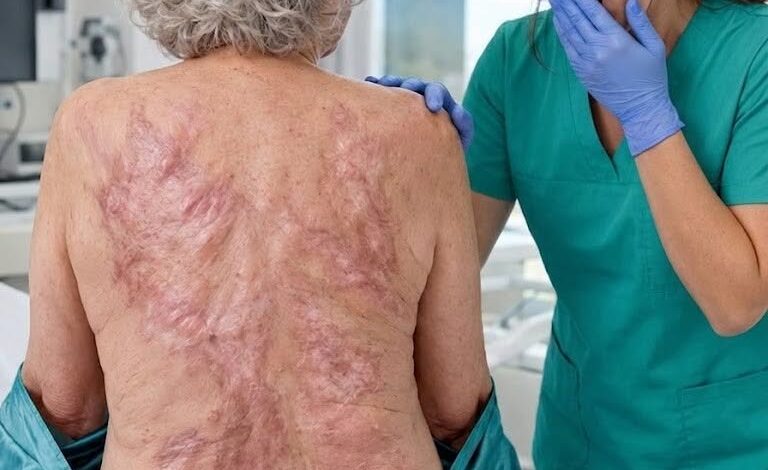
Her entire back was covered in scar tissue.
Thick bands.
Pale ridges.
Dark, twisted patches that crossed from shoulder to waist.
I covered my mouth.
“My God.”
Edith stiffened.
I lowered my hand immediately.
“No pity,” she said.
“I’m sorry.”
She closed her eyes.
“Nobody did this to me.”
I stared.
“What?”
“I chose it.”
Then she told me.
Indiana.
A neighbor’s house had caught fire.
A three-year-old girl named Nora was trapped inside.
Everyone told Edith to wait for firefighters.
She heard the child screaming.
So she went in.
She crawled through smoke.
Found Nora.
Tried to escape.
Then part of the burning structure collapsed.
“I covered her,” Edith whispered.
“A beam landed across my back.”
My eyes filled.
“How long?”
“About ten minutes.”
She gave a broken smile.
“I screamed into the floor so Nora wouldn’t lift her face.”
I was crying now.
Edith looked away.
“They called me a hero afterward.”
She laughed bitterly.
“Then everyone wanted the story. Reporters. Neighbors. Strangers. They wanted to see the scars. Touch them. Ask how much it hurt.”
She wrapped her arms around herself.
“So I stopped letting anyone see.”
I understood.
The scars weren’t what she feared.
Exposure was.
Being turned into a spectacle again.
“You can wash my back,” she whispered.
I picked up the sponge.
“Only if you still want me to.”
She nodded.
When the sponge touched her skin, Edith flinched.
I stopped.
She took a breath.
“Continue.”
So I did.
Slowly.
Quietly.
When it was over, Edith cried.
Not loudly.
She simply sat on the edge of the bed and covered her face.
I was gathering the basin when I opened the door and found Vanessa outside.
She looked furious.
Then I said something about the fire.
Indiana.
A girl named Nora.
Vanessa dropped her clipboard.
“What name?”
“Nora.”
Vanessa went white.
“My mother’s name is Nora.”
Everything changed.
She called her mother immediately.
Nora arrived before dawn.
She wasn’t the frightened child from Edith’s memory anymore.
She was Nora Sterling, senior partner at a major Chicago law firm.
And at 7:45 the next morning, Carter arrived with Vance, Director Higgins, and a notary.
They walked into Edith’s room expecting surrender.
Instead, Nora was waiting beside her.
Carter barely glanced at her.
“Mother, sign these papers.”
“No.”
He slapped the documents down.
“You’re going to Sunny Pines. This behavior ends today.”
Edith stayed calm.
“I’m not incompetent.”
“You scream when people touch you. You hide in bathrooms. You haven’t let anyone see your back in forty years.”
Nora stood.
“Would you like to know why?”
Carter turned.
“And you are?”
“Nora Sterling.”
Edith slowly opened the back of her robe.
Carter saw the scars.
His face twisted.
“What happened to you?”
Before Edith could answer, Nora stepped forward.
“She saved me.”
Silence.
Nora explained everything.
The burning house.
The collapsed beam.
The ten minutes Edith spent shielding a little girl with her own body.
Vanessa stood near the doorway crying.
Carter said nothing.
Nora looked at him.
“Those scars are the reason I am alive.”
Then she turned to Vance.
“And if you participate in any attempt to force this competent woman into psychiatric care for financial advantage, I will make your professional life extremely unpleasant.”
Vance stepped back.
Immediately.
Then Nora faced Higgins.
“The transfer is canceled.”
Higgins swallowed.
“Of course.”
“And Edith will be leaving Oakridge.”
Three days later, she did.
Nora moved her into a private guesthouse on her property and hired round-the-clock assistance.
She hired me too.
The pay allowed me to return to nursing school.
Vanessa and I became friends.
As for Carter, consequences were quieter.
He lost access to Edith’s finances.
His power-of-attorney attempt died.
Months later, he came to apologize.
Edith listened.
She did not forgive him immediately.
And nobody asked her to.
A year later, on her seventy-seventh birthday, we gathered in Nora’s garden.
After everyone went home, I checked on Edith before bed.
Her door was slightly open.
Moonlight stretched across the floor.
She was asleep.
Flat on her back.
No heavy cardigan.
No blanket clutched around her shoulders.
No locked bathroom door.
Just an old woman sleeping peacefully.
The fire had burned her in ten minutes.
Fear kept touching the wound for forty years.
But healing began the moment somebody finally looked at what she had hidden and asked the question everyone else had skipped.
Not, “What is wrong with you?”
But,
“What happened to you?”