A Rich Couple Refused to Pay My Grandpa $6,200—He Simply Smiled and Said, “Okay,” Then Made Them Regret It…

The wealthy couple thought my grandfather’s quiet “Okay” meant they had won.
By 8:00 the next morning, their real estate agent, my grandfather’s attorney, and one of the largest carpentry contractors in the county were standing in their driveway.
Suddenly, the $6,200 they couldn’t afford to pay mattered very much.
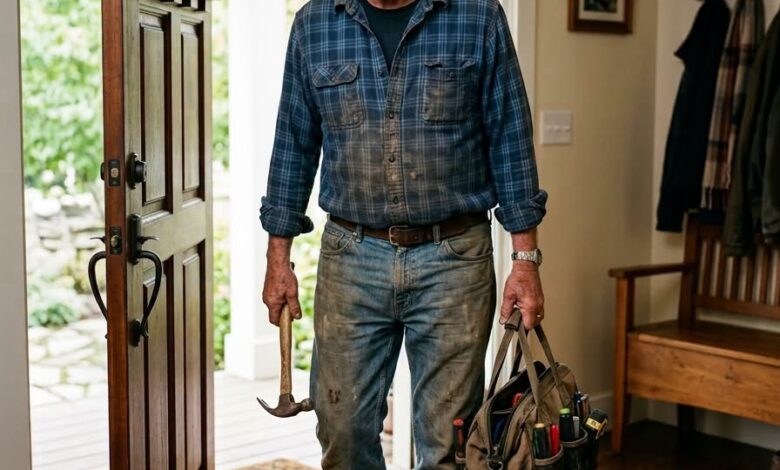
My grandfather Frank has been a finish carpenter for almost fifty years. He’s the kind of craftsman who will drive back to a finished job because he remembers a cabinet door might be hanging an eighth of an inch too low.
Most of his work comes from referrals.
A few months earlier, Grant and Melissa hired him to finish the downstairs of their expensive renovated home.
Custom cabinets.
Floor-to-ceiling shelving.
A huge window bench with built-in drawers.
They were also exhausting clients.
Handles changed twice. A finished shelf had to move three inches. They approved one stain, let Grandpa buy it, then changed their minds.
Grandpa complained occasionally over dinner, but always finished the same way.
“They’re paying for custom work. I’ll give them custom work.”
Fortunately, Frank documents everything.
Contracts.
Change orders.
Receipts.
Approvals.
Dates.
My grandmother used to joke that he kept better records for cabinet hinges than most people kept for their taxes.
By the end, the room was beautiful.
Melissa walked around photographing it.
“This is exactly what I wanted.”
Grant agreed.
“Looks great.”
Then, the following afternoon, Grant announced they wouldn’t pay the remaining $6,200.
Why?
Their renovation had exceeded its budget.
Grandpa reminded him that wasn’t their agreement.
Grant shrugged.
“You’re one old carpenter working by yourself. What are you really going to do about it?”
Melissa was drinking coffee nearby.
“Everything’s already installed,” she added. “It’s not like you can take it back.”
Grandpa looked around.
Cabinets.
Shelves.
Window bench.
Then he smiled.
“Okay.”
Grant actually laughed.
Grandpa packed his tools, swept the room and produced one final document.
It confirmed that the work was complete, the homeowners had inspected and accepted it, they had no workmanship complaint, and they were refusing the outstanding balance.
Both signed.
Melissa handed it back.
“See? Much easier than making this ugly.”
That evening Grandpa was almost cheerful.
“Why aren’t you furious?” I asked.
He opened a beer.
“Because tomorrow they’re going to understand why I wanted their signatures.”
At 7:46 the next morning, he called me.
“I’m in their driveway.”
“Why?”
“David’s here.”
David was his attorney.
“And Tommy.”
I was already grabbing my keys.
Tommy had apprenticed under Grandpa nearly twenty years earlier. Back then, he was nineteen and couldn’t install crown molding without swearing at it.
Now he owned one of the largest residential carpentry companies in the county.
When I arrived, four vehicles were outside.
Grandpa’s truck.
David’s sedan.
Tommy’s work van.
And a white SUV I didn’t recognize.
“What is happening?”
Tommy grinned.
“You’ll like this.”
He explained that Grant had contacted his company the previous day about additional work upstairs.
“They tried to stiff Grandpa and then called you?”
“They didn’t know he trained me.”
Grandpa smiled.
“I taught him everything except humility.”
Then another vehicle arrived.
A man climbed out carrying photography equipment.
The woman from the white SUV took a tablet from her vehicle and approached the house.
Grant opened the front door.
Melissa appeared behind him.
Then they saw Grandpa.
Grant froze.
“What are you doing here?”
The woman with the tablet brightened.
“You must be Frank!”
Grant turned toward her.
“You know him?”
“I’ve seen the built-ins. They’re gorgeous.”
That was when I understood.
She was their real estate agent.
The photographer was there to photograph the house.
They were preparing to sell.
And Grandpa knew.
Grant came down the steps.
“Frank, I thought we were done.”
“So did I.”
He noticed David.
“Who’s this?”
“My attorney.”
Melissa’s expression changed.
“Why do you need an attorney?”
David opened his folder.
“Because there’s an unpaid balance for completed work on this property.”
Grant immediately said, “We have a dispute.”
Grandpa tilted his head.
“About what?”
“The bill.”
“Not the work?”
Silence.
Grandpa continued.
“Because yesterday you signed that the work was completed, inspected and accepted without a workmanship complaint.”
Melissa stared at him.
“That isn’t what we signed.”
David handed her a copy.
She read it.
Then read it again.
Her expression collapsed.
Grant snatched the page.
“You tricked us.”
Grandpa shook his head.
“I handed it to you and told you to read it.”
“You called it paperwork.”
“It is paperwork.”
David then explained that Frank would pursue the formal remedies available to him for an unpaid construction balance, including, where applicable, securing a contractor claim against the property.
He didn’t make dramatic promises about what the law would automatically do.
He didn’t need to.
Grant understood the practical problem immediately.
“You’re talking about putting a claim against the house?”
Grandpa glanced toward the property.
“The house you’re about to sell.”
The real estate agent lowered her tablet.
“Grant?”
“This is nothing.”
She looked at David.
“How much?”
“Six thousand two hundred dollars for completed work.”
Her expression hardened.
“You told me the contractors were paid.”
“They are.”
Grandpa raised an eyebrow.
Grant snapped, “Except him.”
Nobody spoke.
Then the agent said, “That needs to be resolved.”
For the first time, Melissa looked nervous.
“You’re doing all this over $6,200?”
Grandpa looked directly at her.
“No. You did all this over $6,200.”
Yesterday, that amount had seemed small enough to steal from an old carpenter.
Today, when it threatened to complicate the sale of a multimillion-dollar home, it suddenly became significant.
Then Grant noticed Tommy.
“What are you doing here?”
“You called my company.”
“For the upstairs work.”
“Correct.”
“We had an appointment.”
“We did.”
Grant frowned.
“So?”
Tommy finished his coffee.
“I won’t be taking the job.”
“Why?”
Tommy looked toward Grandpa.
“He trained me.”
“What does that have to do with anything?”
“Quite a lot.”
Melissa crossed her arms.
“So you’re refusing our business because of him?”
Tommy shrugged.
“I prefer clients who pay carpenters.”
I nearly laughed.
Grandpa gave him a disapproving look.
“What?” Tommy said. “It’s accurate.”
Grant’s composure finally cracked.
“You people are trying to gang up on us!”
“No,” Grandpa said. “I’m trying to collect money you agreed you owe.”
Grant lowered his voice.
“Frank, come on. We can fix this.”
“We could’ve fixed it yesterday.”
“I’ll pay the $6,200.”
Grandpa nodded toward David.
By then, there were legitimate additional costs associated with addressing the refusal—attorney time, preparation and other recoverable collection expenses where permitted by the contract and applicable process.
David had itemized them.
No revenge penalty.
No invented fee.
The updated amount was $6,814.
Grant stared at it.
“That’s more than six hundred dollars extra!”
“Yesterday,” Grandpa said, “it was $6,200.”
Melissa turned toward the agent.
“Can they really do this?”
The agent wisely didn’t pretend to be their lawyer.
Instead, she asked David whether the documentation would be provided.
“Of course.”
Then she looked at Grant and Melissa.
“My recommendation is that you resolve this before we proceed.”
That ended the debate.
Grant disappeared inside.
A few minutes later, he returned.
“Fine.”
Grandpa remained still.
Payment arrangements were made.
David handled the documentation.
The photographer stood near his vehicle pretending his camera settings had suddenly become fascinating.
The agent made phone calls.
Tommy got another coffee.
Eventually, Grant looked at Grandpa.
“So we’re finished?”
“When everything is properly completed,” Grandpa said.
Melissa stood on the porch glaring.
“You could’ve told us yesterday you were planning this.”
Grandpa looked at her.
“I told you yesterday that you owed me $6,200.”
“You know that’s not what I mean.”
“I know.”
He turned toward his truck.
Grant called after him.
“You’d really cause trouble with our house sale over six thousand dollars?”
Grandpa stopped.
Then looked back.
“No. You caused trouble with your house sale over six thousand dollars.”
He climbed into his truck.
I went to breakfast with him afterward.
Halfway through his coffee, I finally asked the question that had been bothering me.
“When Melissa said the cabinets were already installed and you couldn’t take them back, why did you smile?”
“Because she was right.”
I stared at him.
“You weren’t going to remove anything?”
“Of course not.”
“Then what were you thinking?”
“I didn’t need the cabinets.”
He took another sip.
“I needed the house.”
I nearly choked.
“Grandpa, that sounds sinister.”
He burst out laughing.
“I’m not stealing their house.”
“Important distinction.”
“The point is that permanent work doesn’t become free because it’s installed. There are formal ways contractors can protect legitimate payment claims. And if the owners are trying to sell, unresolved paperwork can become something they suddenly care about.”
“So really, you needed the paperwork.”
“Exactly.”
That sounded much more like Frank.
He’d learned that lesson years earlier.
When he was younger, Grandpa sometimes let clients pay late.
Then later.
Then even later.
Once, a customer never paid at all.
My grandmother hated watching people exploit his reluctance to confront anyone.
She used to tell him:
“Frank, being kind doesn’t mean letting people steal from you.”
After she died, he became almost religious about documentation.
Not because he stopped trusting people.
Because he finally understood that kindness didn’t require helplessness.
Grant and Melissa saw an old man wearing a tool belt.
No corporate office.
No collections department.
No intimidating company logo.
One carpenter.
They assumed that meant he had no leverage.
A few months later, Grandpa called me from another job.
“You’ll appreciate this.”
“What happened?”
“New client.”
“That’s good.”
“Guess who recommended me?”
I couldn’t imagine.
“The real estate agent.”
I started laughing.
“From Grant and Melissa’s house?”
“Yep.”
“What did she tell them?”
Grandpa lowered his voice dramatically.
“Apparently I’m ‘the carpenter who doesn’t leave until the job is done right.’”
“She actually said that?”
“That’s what they told me.”
“Did she mention the payment dispute?”
Grandpa laughed.
“Apparently that wasn’t part of the sales pitch.”
Then he told me he had to go.
“What’s wrong?”
“Cabinet door.”
“How bad?”
“Maybe an eighth of an inch.”
Of course.
And that’s the part of the story I remember most.
Grant and Melissa didn’t discover some hidden ruthless side of my grandfather.
There isn’t one.
He’s still the man who apologizes when someone else brings him the wrong breakfast.
He’s still the carpenter who fixes imperfections clients would probably never notice.
He’s still more comfortable holding a level than arguing with another person.
Their mistake was believing kindness and weakness were the same thing.
They weren’t.
Grandpa didn’t threaten them.
He didn’t scream.
He didn’t rip cabinets from the walls.
He didn’t need revenge.
He finished the work.
He kept the records.
He asked them to confirm their decision in writing.
Then he let the consequences of that decision speak for themselves.
Because after fifty years in the trade, Frank had learned something more valuable than how to make two pieces of wood fit perfectly together.
A quiet person doesn’t have to become loud when someone crosses the line.
Sometimes all he needs is a signature.