Rachel’s father kept one finger pressed against Daniel’s signature at the bottom of the fire report.
On speakerphone, Daniel’s mother said nothing.
There was nothing ambiguous about the document.
The investigator had concluded that an electrical failure inside the wall started the fire.
Daniel had received the same report.
He had signed for it.
No investigator had blamed Rachel.
Daniel knew that.
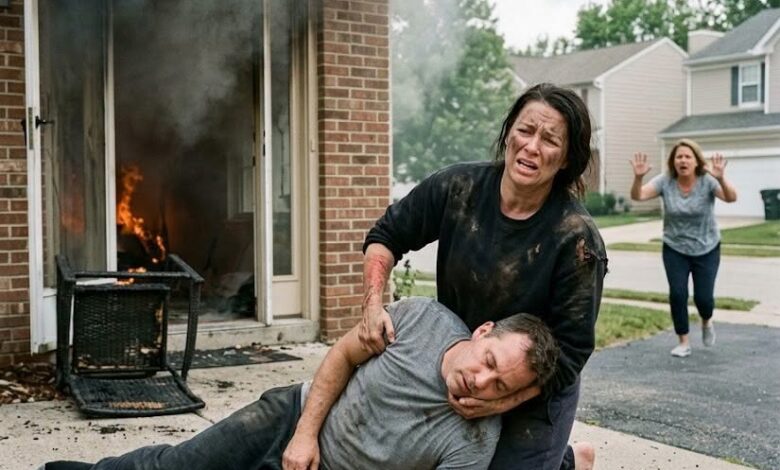
And yet, while Rachel recovered from burns suffered dragging him out of their burning home, he had been telling his family something entirely different.
His mother finally spoke.
“He told us there was another report.”
“There wasn’t,” Rachel’s father said.
Rachel sat on the sofa with her bandaged arm supported by a pillow.
An hour earlier, she had believed Daniel walking out days after her seven-hour reconstructive surgery was the deepest betrayal she would have to absorb.
She had been wrong.
“When did he start telling you I caused it?”
A long silence followed.
“About two months after the fire.”
Rachel closed her eyes.
That was when Daniel had stopped sleeping beside her.
His mother continued reluctantly.
Daniel claimed Rachel had overloaded an outlet. He said investigators privately believed her carelessness contributed to the fire. He complained that she refused to accept responsibility and became emotional whenever he discussed their marriage.
Most revealing of all, he said he felt trapped.
Everyone knew Rachel had saved his life.
How could he leave the woman who had walked back into a burning house for him without looking monstrous?
“What did you tell him?” Rachel asked.
“I told him to wait until you were stronger.”
Suddenly Rachel understood the mysterious calls Daniel had been silencing.
There wasn’t another woman.
His mother had been calling because Daniel had already announced his intention to leave, and she wanted him to tell Rachel himself.
Somehow, that hurt more.
There was no overwhelming romance pulling him away.
Daniel simply didn’t want the marriage anymore.
And instead of admitting that, he’d rewritten the fire until abandoning Rachel became something he could defend.
“Do you have his messages?”
“Yes.”
“Send them.”
Minutes later, Rachel’s phone began filling with screenshots.
One read:
She still won’t admit what she plugged into that outlet.
Another:
The investigator basically told me privately the wiring wouldn’t have failed without what Rachel did.
Then:
Everyone treats her like some hero because she dragged me outside. Nobody understands what living with her is like now.
Rachel read them twice.
Her father couldn’t finish the second reading.
“Could this be about insurance?”
For one frightening night, they wondered.
The next morning, Rachel’s father contacted the insurance representative listed on the fire documents.
It wasn’t.
No claim blamed Rachel. The official cause remained the electrical failure, and Daniel had never formally challenged it.
The lie existed somewhere else.
In conversations.
Messages.
Family opinions.
Daniel had apparently constructed it for the people whose judgment he feared.
That afternoon, he called six times.
Rachel ignored every call.
On the seventh, he left a voicemail.
“Whatever my mother told you, we need to discuss this before everybody turns it into something it isn’t.”
Rachel saved the recording.
For months, she had believed one unanswered call might be the moment her marriage finally disappeared.
Now silence felt different.
It felt like control.
Two days later, Daniel arrived at her parents’ house.
Her father stood.
“I’ll deal with him.”
“No.”
Rachel carefully pushed herself upright.
“I will.”
Daniel entered carrying the same overnight bag he’d taken when he abandoned their home.
His eyes moved toward the burned side of Rachel’s face.
Then away.
That tiny movement destroyed the last instinct she had to protect him.
“You called my mother.”
“She called me.”
“She misunderstood what I said.”
Rachel placed his printed messages on the table.
“Which part?”
Daniel stopped.
“The part where I caused the fire?”
“Rachel—”
“Or the part where an investigator supposedly confirmed it?”
“You’re taking things out of context.”
She slid the official report toward him.
His signature waited at the bottom.
“You knew.”
Daniel’s jaw tightened.
“That report doesn’t explain everything.”
“It explains what started the fire.”
“This isn’t about the fire.”
“Then what is it about?”
For once, Daniel had no prepared answer.
He stood.
“I can’t do this with your parents listening.”
“They aren’t the people who lied.”
He picked up his bag and left.
Rachel didn’t follow.
Afterward, she stopped communicating with him except when necessary.
Her father retrieved her remaining belongings.
She changed the emergency contact on her medical records.
Her mother learned how to help wash her hair without pulling the healing skin.
Nobody promised Daniel would come back.
Nobody suggested Rachel should want him to.
Then Daniel’s mother visited.
She brought flowers and an admission.
“I found older messages.”
One had been sent while Rachel was still hospitalized.
Daniel wrote that their marriage would never be normal again.
He complained that everyone praised Rachel for saving him.
That people expected him to spend the rest of his life caring for her.
That if he admitted he couldn’t live that way, nobody would understand.
Rachel stared at the message.
She had gone back into a burning building because Daniel was unconscious inside.
Daniel had apparently emerged from that fire thinking about the obligation created by being saved.
His mother began crying.
“I should’ve come to see you.”
“You believed him.”
“Yes.”
Rachel appreciated the answer because it wasn’t disguised as an excuse.
Weeks later, Daniel’s attorney proposed a formal separation.
The draft described their marriage as having deteriorated because of “the strain created by the fire and Rachel’s recovery.”
Months earlier, Rachel might have signed anything if it meant keeping Daniel.
Now she hired her own attorney.
She preserved every message.
And she rejected that wording.
Daniel called immediately.
“Why are you making this hostile?”
“I’m not.”
“You’re sending private messages to lawyers.”
“They’re messages about me.”
“My mother shouldn’t have given them to you.”
Rachel almost laughed.
Of everything he could regret, apparently being caught remained near the top.
“I’m not asking you to stay anymore,” she said. “I’m asking you to stop lying about why you left.”
He hung up.
But clarity didn’t magically make Rachel strong every morning.
Three days later, pain shot through her injured arm during a dressing change.
She became dizzy and ended up sitting on the bathroom floor while her mother called the clinic.
Nothing catastrophic had happened.
Still, Rachel cried that night.
Not because she wanted Daniel back.
Because she finally allowed herself to grieve the husband she’d believed he would be.
The next morning, her father drove her to therapy.
No speeches.
No declarations about starting over.
Just another appointment.
Recovery came that way.
Quietly.
She began walking farther.
Regained movement in her arm.
Accepted an offer from her former cosmetics company to conduct training sessions remotely.
The first time her camera switched on, Rachel nearly turned it back off.
Before the fire, part of her career had depended on beauty.
Now half her face carried evidence of the worst night of her life.
She kept the camera on.
She didn’t make an inspirational speech about her scars.
She simply did her job.
Months later, Rachel and Daniel met with their attorneys.
Daniel’s side again proposed language suggesting Rachel’s recovery had caused the marriage to collapse.
Rachel’s attorney placed two documents on the table.
The official fire report.
Daniel’s messages.
“We won’t agree to that characterization.”
Daniel sighed.
“I never said Rachel deserved what happened.”
Rachel finally spoke.
“No. You said I caused it.”
“That’s different.”
“It was useful.”
Daniel looked at her.
“If I caused the fire, then you weren’t the husband leaving the woman who burned herself saving you. You were the husband escaping the woman responsible for destroying your life.”
Nobody interrupted.
Then Daniel finally said what he’d spent months hiding beneath everything else.
“Do you know what it was like afterward? Everywhere I went, people told me how lucky I was to have you.”
Rachel listened.
“They kept talking about what you sacrificed. What you did for me. Every time I looked at you, I knew what everyone expected me to feel.”
There it was.
Not another report.
Not an outlet.
Not Rachel’s memory.
Daniel couldn’t live comfortably with what her injuries represented.
Rachel felt something settle inside her.
“If you’d told me you couldn’t stay,” she said, “you would’ve broken my heart.”
Daniel finally met her eyes.
“But you were allowed to leave.”
She pushed the messages toward him.
“You weren’t allowed to rewrite what happened so you could feel better about leaving.”
He started to respond.
Rachel shook her head.
“I don’t need another explanation.”
The disputed language was removed.
There was no spectacular courtroom victory.
No public humiliation.
No moment when Daniel suddenly understood everything he’d done.
There was simply one thing he could no longer control:
Rachel’s version of her own life.
Months later, she returned to the cosmetics office.
Some people stared too long.
One colleague hugged her carefully.
Another handed her the training materials and asked where she wanted to begin.
Rachel preferred that.
She still had procedures ahead.
Some mornings her arm moved better than others.
Mirrors could still surprise her.
But she was learning that recovery wasn’t returning to the woman she had been.
It was discovering who remained.
One evening after an appointment, Rachel opened her parents’ refrigerator.
She pulled out several ingredients.
Her father recognized them.
“Isn’t that Daniel’s favorite dinner?”
Rachel paused.
It was the meal she’d spent hours cooking with one hand after seven hours of surgery.
The meal Daniel hadn’t touched before packing his suitcase.
For months, the memory had belonged to him.
She set a pan on the stove.
“It was.”
Her mother smiled.
Rachel began cooking.
Slowly.
Her injured arm still couldn’t do everything she wanted.
Her father chopped what she couldn’t.
Her mother set the table.
Soon the same smell that had once filled a silent house followed by abandonment filled this kitchen with conversation.
Rachel looked around the table.
Then she looked at the food.
“Tonight,” she said, “it’s mine.”
And for the first time since the fire, so was the life waiting beyond it.