“Dad… my back hurts so bad I can’t sleep. Mom told me not to tell you.” I had just walked in from a business trip when my eight-year-old daughter quietly shared the secret her mother never wanted me to hear.

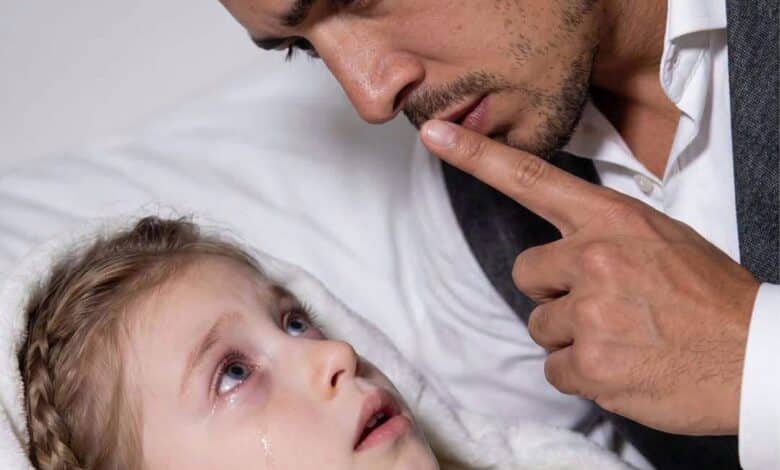
I had been home less than fifteen minutes when my eight-year-old daughter told me her mother had warned her not to tell me why her back hurt.
My suitcase was still beside the front door.
“Dad… please don’t be mad.”
Lily stood half-hidden behind her bedroom door, shoulders rigid, eyes fixed on the floor.
“Mom said things would get worse if I told you.”
I knelt several feet away.
“I’m not mad, sweetheart. Where does it hurt?”
“My back. I can’t sleep.”
When I moved instinctively to comfort her, Lily flinched before I even touched her.
That frightened me more than the words.
“What happened?”
She twisted her pajama shirt between her fingers.
“I spilled juice. Mom thought I did it on purpose.”
“And then?”
“She pushed me.”
Lily swallowed.
“My back hit the pantry door handle. I couldn’t breathe for a little bit.”
I forced myself to stay calm.
“You did the right thing telling me.”
“Mom said I was overreacting.”
“Can you show me where it hurts?”
She slowly lifted her shirt.
My stomach dropped.
A deep purple bruise spread across her lower back, the darkest area concentrated near the point where she said she had struck the handle.
But that wasn’t all.
Other discolorations were visible nearby.
Older marks.
Healing ones.
I looked at Lily.
“Did all of these happen yesterday?”
She immediately lowered her shirt.
“Please don’t yell.”
That nearly broke me.
Not because she was afraid of her mother hearing.
Because she was afraid of what the truth might make me do.
“I won’t yell.”
Her eyes finally met mine.
“And none of this is your fault.”
The front door opened.
Lily stiffened instantly.
High heels crossed the hardwood.
Sarah entered carrying groceries and humming.
When she saw me, surprise flashed across her face.
Then came a smile.
“Mark! You’re early.”
She leaned toward me for a kiss.
I stepped back.
“What happened to Lily?”
Sarah glanced toward our daughter.
“Oh. She told you?”
The casualness of those words made my hands cold.
“She has significant bruising.”
“She fell.”
“Lily says you pushed her.”
Sarah’s expression hardened.
“She spilled juice all over the rug and started throwing a fit. I tried moving her out of the way. She jerked back and lost her balance.”
Behind me came a tiny voice.
“No, I didn’t.”
Sarah’s eyes snapped toward Lily.
“Lily.”
One word.
But my daughter recoiled.
I stepped between them.
“Don’t.”
Sarah stared at me.
“You’ve been gone all week. You have no idea what I’ve been dealing with.”
“Then explain the older bruises.”
For the first time, Sarah had no immediate answer.
That was enough.
I took out my phone.
“What are you doing?”
“Taking Lily to the hospital.”
“Mark, don’t be ridiculous.”
“And I’m going to tell them exactly what she told me.”
Panic replaced anger.
“You’ll destroy this family.”
I looked at Lily.
She was standing behind me with her arms wrapped around herself.
“No. I’m getting our daughter medical care.”
Sarah reached toward my phone.
I moved away rather than letting the confrontation become physical.
“Do not touch me. Do not touch Lily.”
“She’s my daughter too!”
“Then you should want her injuries examined.”
Sarah stopped.
I turned toward Lily.
“Shoes, sweetheart.”
She hesitated.
Sarah immediately said, “Lily, stay here.”
My daughter froze between us.
That image stayed with me.
An eight-year-old trying to calculate which parent was more dangerous to disobey.
I crouched.
“You’re coming with me. You’re not in trouble.”
Lily nodded.
At the car, she asked, “Are we coming back?”
“I don’t know.”
Her face fell.
So I added, “But wherever you sleep tonight, I’ll be there.”
At the hospital, the medical team examined Lily carefully.
Imaging ruled out the fractures I had been terrified of, but the bruising still required treatment and documentation. Because some marks appeared to be in different stages of healing and Lily had described being pushed, the hospital followed its child-safety procedures.
A social worker spoke with Lily separately.
That mattered.
I wasn’t allowed to become her narrator.
She deserved to tell what happened in her own words.
I sat outside feeling useless.
For years, my job had required constant travel.
I had told myself I was providing for my family.
Now every missed dinner and hotel room replayed in my head.
When the social worker returned, I immediately said, “I should’ve known.”
She didn’t give me easy absolution.
Instead, she said something more useful.
“You know now. What matters next is what you do with what you know.”
My phone began vibrating.
Sarah.
Again.
Again.
Then messages.
Please come home.
I lost my temper.
You don’t understand what Lily has been like.
Then:
If you tell them everything, they’ll take her away from both of us.
I showed the messages to the people handling the case.
I stopped replying.
That became another lesson.
I didn’t need to win an argument with Sarah.
I needed to preserve information and let the appropriate professionals determine what mattered.
There was no instant courtroom victory that night.
No judge appeared at midnight and permanently settled our lives.
There were reports.
Interviews.
Temporary safety arrangements.
Medical records.
Lawyers.
Questions about where Lily could safely stay while everything was evaluated.
Slowly, a fuller picture emerged.
Lily described other incidents.
Not every bruise had a dramatic explanation.
Some were ordinary childhood marks.
Others raised concerns when considered alongside what Lily reported.
That distinction mattered to me.
I didn’t want anger turning suspicion into certainty.
The truth was serious enough without exaggeration.
Several days later, I returned to the house with arrangements in place to collect what Lily and I needed.
I wasn’t there to erase Sarah.
I was there for clothes, medication, school things, Lily’s stuffed rabbit, and the ordinary pieces of life children shouldn’t lose because adults have failed them.
While collecting documents from our bedroom, I found a small notebook in Sarah’s nightstand.
I almost opened it.
Then stopped.
The old version of me might have searched every page looking for confirmation of what I already believed.
Instead, I contacted my attorney and asked how potentially relevant material should be handled.
If it mattered, it could be preserved properly.
If it didn’t, I wasn’t going to manufacture evidence by treating every private sentence as a confession.
That was how the next months unfolded.
Carefully.
Painfully.
Lily began therapy.
So did I.
One afternoon, she asked me something I wasn’t prepared for.
“Do you hate Mom?”
I sat beside her.
“I hate what happened to you.”
“That’s not what I asked.”
Eight-year-olds can be inconveniently precise.
“I have a lot of feelings about your mother.”
“Do I have to hate her?”
“No.”
Her shoulders relaxed.
“You don’t have to feel anything because I feel it.”
That became one of the most important promises I made.
Protecting Lily did not mean recruiting her into my anger.
She could miss Sarah.
Love Sarah.
Be furious with Sarah.
Want answers.
Want distance.
Those feelings belonged to Lily.
My responsibility was safety.
Months later, I changed jobs.
Not because someone told me quitting travel would magically fix what had happened.
It wouldn’t.
But I realized I wanted a life with more ordinary afternoons in it.
I took a local management position.
Less money.
More dinners.
More school pickups.
More opportunities to know my daughter outside emergencies.
We eventually moved into a smaller single-story house.
Lily chose her bedroom because the window faced the backyard.
Then she spent three weeks begging for a dog.
I resisted.
She produced what she called a “presentation.”
It contained four handwritten pages, three photographs of golden retrievers, and a financial plan that somehow assigned me one hundred percent of the expenses.
I surrendered.
Buster arrived a month later.
One afternoon, I stood on the porch watching Lily chase him across the grass.
She tripped.
My heart stopped.
She rolled, jumped up and yelled, “I’m fine!”
Then she kept running.
I realized I had been holding my breath.
Recovery did strange things to both of us.
Lily had learned that pain could be dangerous to reveal.
I had learned that every bump might mean catastrophe.
Neither belief could become our permanent way of living.
So when she ran toward me ten minutes later, sweaty and laughing, I handed her lemonade.
“Buster is faster than you.”
“Traitor.”
“Objective observation.”
She threw her arms around me.
I noticed something only after it happened.
I had touched her back.
She hadn’t flinched.
Neither had I.
She released me and raced toward the yard again.
“Dad! Watch this!”
“I’m watching.”
She grinned.
And suddenly those two words meant more than they once had.
For years, I thought providing for my daughter meant working hard enough that she would never lack anything.
I still believed providing mattered.
But children need more than roofs, clothes and savings accounts.
They need adults who notice.
Adults who listen.
Adults who don’t make them responsible for preserving a marriage, protecting a parent’s reputation, or deciding what consequences another adult deserves.
I couldn’t promise Lily she would never be frightened again.
No parent can honestly make that promise.
What I could promise was something better.
If she was frightened, she could tell me.
If she was hurt, she would receive help.
If an adult told her to keep a dangerous secret, she was allowed to break it.
And telling the truth would never make what happened her fault.
That night after dinner, Lily left her backpack directly in the hallway.
I nearly tripped over it.
“Lily!”
She appeared around the corner.
“What?”
“Backpack.”
She groaned.
“I forgot.”
“Apparently.”
She dragged it toward her room.
Then she turned.
“Dad?”
“Yeah?”
“You’re not mad?”
I understood what she was really asking.
“I’m annoyed about the backpack.”
She waited.
“And?”
“And you’re still safe.”
A smile slowly appeared.
“Okay.”
She disappeared into her room.
I stood there looking at the empty hallway where months earlier I had found her hiding behind a door, afraid that telling me the truth would make everything worse.
She had been right about one thing.
The truth did change everything.
Our home changed.
Our family changed.
My life changed.
But telling me had not caused any of it.
It had simply brought what was already happening into the light.
And once I could finally see it, I could finally protect her from it.