Fisherman feels “something” bump against his leg – discovers tragic fate of missing 10-year-old boy

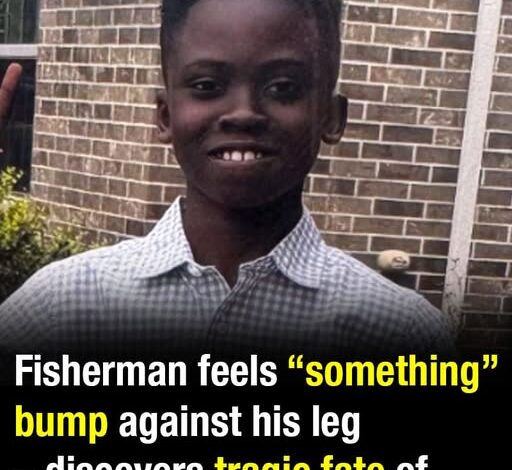
What should have been one of the happiest days of a young boy’s summer became a tragedy that would leave an entire community mourning, a family shattered, and countless questions lingering long after the ocean had given up its answer.
For twelve-year-old Joshua Lahai, Memorial Day weekend promised everything a child could hope for. School responsibilities were fading into the background, summer adventures were just beginning, and the day ahead was filled with friends, laughter, and the excitement that only a trip to the beach can bring.
It was supposed to be a day of sunshine and memories.
A day of running across warm sand.
A day of splashing through waves.
A day that would be remembered for joy.
Instead, it became the day his family’s world stopped.
Like countless families enjoying the holiday weekend, Joshua and his loved ones had gathered near the water to celebrate the unofficial start of summer. The beach was alive with activity. Children chased one another along the shoreline. Families spread blankets across the sand. Groups of friends tossed footballs, built sandcastles, and enjoyed the freedom that comes with a long holiday weekend.
The atmosphere was carefree.
Few people standing on the shore could have imagined how quickly everything would change.
The ocean, beautiful and inviting from a distance, often hides dangers that are impossible to see from land. Beneath the sparkling surface, currents shift constantly. Sandbars form and disappear. Conditions that seem safe one moment can become life-threatening the next.
For children, especially, those changes can happen faster than anyone expects.
At some point during the afternoon, Joshua and a friend made their way toward a sandbar located offshore. To them, it likely felt like an adventure. Sandbars often create shallow areas where children can stand, play, and enjoy the water away from the crowded shoreline.
But what appears stable in the ocean rarely remains so.
The sea is always moving.
Always changing.
Always demanding respect.
Without warning, a powerful wave swept through the area.
Witnesses would later describe how quickly the situation unfolded.
One moment, the boys were standing.
The next, the force of the water lifted them from the sandbar and carried them into deeper water.
Suddenly, their feet could no longer touch the bottom.
The familiar security of solid ground vanished.
What had been play instantly became survival.
For experienced swimmers, unexpected deep water can be frightening.
For children caught in rough surf, it can be overwhelming.
Panic often arrives before understanding.
The body fights against the water.
Breathing becomes difficult.
Every wave feels larger than the last.
Every second matters.
Relatives watching from shore immediately recognized the danger.
Their joy transformed into terror.
Shouts erupted across the beach.
People pointed toward the water.
Some attempted to help.
Others called emergency services.
Everyone understood the same horrifying reality.
Two children were struggling against forces far stronger than themselves.
The ocean showed no mercy.
Waves crashed relentlessly.
The distance between safety and danger seemed impossibly small, yet it might as well have been miles.
In those desperate moments, Joshua disappeared beneath the water.
Then he was gone.
For his family, time seemed to stop.
One second stretched into another.
Then another.
Everyone watched, hoping he would resurface.
Hoping to catch a glimpse of him.
Hoping for any sign at all.
But the ocean remained indifferent.
The realization that followed was devastating.
Joshua had vanished.
Emergency responders arrived quickly.
Search operations began immediately.
Rescue personnel entered the water.
Boats were deployed.
Drones scanned the shoreline.
Volunteers joined the effort.
Every available resource was directed toward finding the missing boy.
The mission initially focused on rescue.
No one wanted to think about any other possibility.
Not his parents.
Not his relatives.
Not the first responders.
Not the members of the community who followed the story with growing concern.
Hope became the only thing anyone could hold onto.
The first hours were critical.
Search teams worked tirelessly despite difficult conditions.
The ocean remained rough.
Visibility was limited.
Currents complicated every effort.
Yet no one wanted to stop.
Every passing minute increased the fear that time was running out.
Still, hope persisted.
Families in similar situations often describe a strange emotional state that develops during a search.
Logic and fear battle constantly.
Part of the mind prepares for the worst.
Another part refuses to surrender hope.
Every phone call feels significant.
Every update feels important.
Every rumor feels meaningful.
The waiting becomes its own kind of suffering.
Joshua’s family endured exactly that.
As day turned into night, they remained close to the search effort.
Watching.
Praying.
Hoping.
The darkness only intensified the uncertainty.
Out on the water, search crews continued their work.
Lights pierced the night.
Boats moved methodically through the waves.
Volunteers refused to give up.
Some had never met Joshua.
Yet they searched as though he were family.
Tragedies often reveal the best parts of communities.
Strangers become united by a common purpose.
People sacrifice sleep, comfort, and personal time simply because another family needs help.
That spirit carried the search forward.
Hour after hour.
Wave after wave.
Through exhaustion and heartbreak.
But the ocean continued to guard its secret.
Twenty-four hours passed.
Then more.
The hope that had sustained everyone began to fade beneath the weight of reality.
Still, no one wanted to say the words aloud.
As long as Joshua remained missing, possibility remained alive.
The uncertainty was agonizing.
Yet certainty, many feared, might be even worse.
Then came the moment no one could have predicted.
Not through sophisticated equipment.
Not through aerial surveillance.
Not through a specialized search operation.
But through an ordinary fisherman.
Somewhere in the dark water, amid conditions that made visibility difficult, the fisherman felt something unusual.
A bump.
A contact.
A sensation so unexpected and disturbing that it immediately demanded attention.
At first, there may have been confusion.
Then concern.
Then the dreadful realization that something significant had been found.
Authorities were notified.
Officer Christopher Redmond responded.
By then, everyone involved understood the gravity of the situation.
There are moments in public service that remain with a person forever.
Moments that transcend routine duties.
Moments that become impossible to forget.
For Officer Redmond, this was undoubtedly one of them.
He entered the water.
Carefully.
Deliberately.
With the knowledge that a grieving family was waiting for answers.
The waves that had hidden Joshua for so long no longer held their secret.
When Officer Redmond brought him back to shore, the search officially ended.
For his family, the moment was both devastating and necessary.
The uncertainty that had haunted them for more than a day was finally over.
The waiting was over.
The searching was over.
The desperate hope was over.
In its place came certainty.
And certainty can be unbearably painful.
Because while uncertainty leaves room for miracles, certainty forces acceptance.
The confirmation that Joshua had been found ended one chapter of suffering.
But it began another.
The chapter called grief.
Anyone who has experienced profound loss understands that grief does not arrive all at once.
It unfolds gradually.
Shock comes first.
Then disbelief.
Then sorrow.
Then questions.
So many questions.
What exactly happened?
Could anything have been done differently?
Were there warning signs?
Could someone have reached him in time?
Could conditions have been safer?
Could the tragedy have been prevented?
These questions often have no satisfying answers.
Yet they persist.
Long after the headlines disappear.
Long after the search teams leave.
Long after the public moves on.
For families, the questions remain.
Joshua’s death serves as a painful reminder of the power of nature and the unpredictable dangers that can exist even during moments that feel completely ordinary.
Millions of people visit beaches every year.
Most return home safely.
Yet the ocean remains a force that cannot be fully controlled or predicted.
Its beauty often exists alongside its danger.
Its calmness can conceal powerful currents.
Its inviting appearance can mask life-threatening conditions.
That reality makes tragedies like Joshua’s especially heartbreaking.
He was not seeking danger.
He was simply being a child.
Enjoying a holiday weekend.
Spending time with friends.
Creating memories that should have lasted a lifetime.
Instead, his life was cut tragically short.
Today, those who knew Joshua remember far more than the circumstances of his death.
They remember his laughter.
His personality.
His friendships.
His dreams.
The moments that made him unique.
Because while tragedies often become defined by how someone died, the people who loved him remember how he lived.
And that is where his story truly remains.
Not in the waves that took him.
Not in the headlines that followed.
Not in the search that captivated a community.
But in the countless memories carried by those who knew him best.
For his family, the pain of loss will never fully disappear.
Yet neither will the love.
And though the ocean eventually returned Joshua home, it could never return the future that was taken from him.
The search may have ended that day.
The waiting may have ended.
The uncertainty may have ended.
But for those who loved Joshua Lahai, the journey of remembrance, healing, and carrying his memory forward had only just begun.
In the end, what remains is not simply a story about a tragic accident. It is a story about a young life, a family’s unwavering hope, a community’s determination to help, and the profound bond that continues long after goodbye.
Because while the sea may have claimed its answer, the love left behind remains stronger than any wave.