Rose had been buried for less than an hour when her husband decided he was finished being a father.
Charles would remember that more clearly than the hymns, the flowers, or the sound of dirt falling onto his daughter’s coffin.
More than two hundred people had come to say goodbye to Rose. She was only thirty-five. Around her grave stood coworkers, cousins, neighbors, childhood friends, and people Charles barely recognized. Everywhere he looked, someone was crying.
Except Arthur.
Arthur stood several feet from his daughters, glancing at his phone.
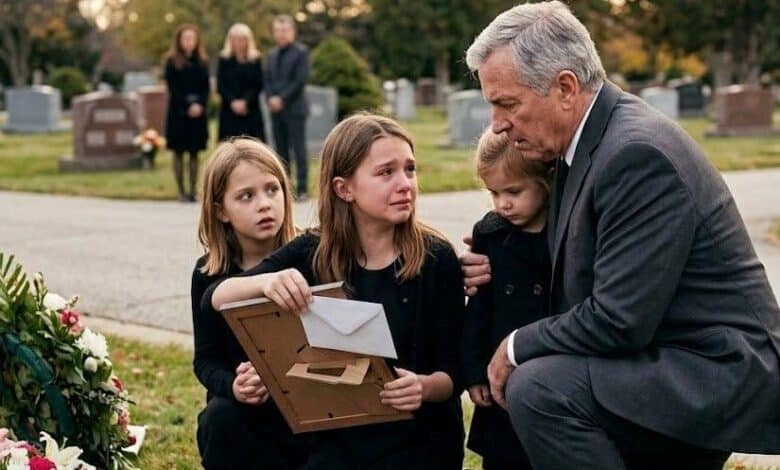
Lucy, the oldest, clutched a framed photograph of her mother against her black dress. Rachel stared at the fresh earth. Little April had wrapped both hands around Charles’s arm as though letting go might cause another person to disappear.
Then Arthur said, almost casually, “We need to decide what happens with the girls.”
Charles looked at him.
“What happens?”
Arthur sighed.
“My fiancée isn’t prepared to raise three children.”
For a moment, Charles genuinely wondered whether grief had distorted what he heard.
“Your daughters aren’t somebody else’s children.”
“I know that.”
“Then what are you saying?”
Arthur lowered his voice, apparently more concerned about being overheard than about the three girls standing nearby.
“If nobody in the family can take them, I’ll have to make other arrangements.”
Charles stared at his son-in-law.
“Other arrangements?”
“I need to move forward, Charles.”
His phone vibrated.
Arthur looked down.
And smiled.
That tiny smile frightened Charles more than anger would have.
“You’re talking about moving forward while your wife is lying ten feet away.”
Arthur’s expression hardened.
“I loved Rose. But she’s gone. Destroying the rest of my life won’t bring her back.”
“And your daughters?”
“You’re their grandfather. If you’re so worried about them, take them.”
Several relatives heard that.
Nobody spoke.
Charles looked around at people who suddenly found the grass fascinating.
Then April squeezed his hand.
He looked down.
She wasn’t crying.
None of the girls were.
That was when something struck him.
They weren’t shocked.
They had expected this.
Charles crouched carefully.
“You three are coming home with me.”
April immediately leaned against him.
Rachel nodded.
Lucy simply whispered, “Okay.”
Arthur’s shoulders actually relaxed.
There was no embrace. No promise to call. No father kneeling to tell three grieving daughters that he loved them.
He walked toward the cemetery gate.
A white van waited outside. A young woman wearing sunglasses sat in the passenger seat. Arthur climbed in beside her, and seconds later they disappeared down the road.
Charles remained beside Rose’s grave.
Then Lucy touched his sleeve.
“Grandpa?”
“Yes?”
“Mom left something.”
She looked at her sisters before continuing.
“She said we weren’t supposed to give it to anybody unless Dad left us.”
Charles felt cold.
“What did she leave?”
“An envelope.”
That evening, after the girls had eaten almost nothing and April had finally fallen asleep against him, Lucy brought Charles a thick envelope from her suitcase.
Inside were several pages in Rose’s handwriting.
The first sentence stopped him.
Dad, if you’re reading this, then Arthur did what I was afraid he would do.
Charles lowered the page.
Lucy was watching him.
“Keep reading,” she whispered.
So he did.
Rose explained that she had noticed Arthur withdrawing from the family long before her illness became severe. He was disappearing for unexplained stretches. He had begun talking about life “after all this” in ways that rarely included the girls. He had pressured Rose to make financial decisions while she was frightened and exhausted.
She had also discovered another relationship.
But Rose’s letter wasn’t written like revenge.
It was painfully practical.
Dates.
Conversations.
Promises Arthur had made and broken.
Financial questions she wanted reviewed.
Names of people who might know more.
She had kept a notebook and saved several recordings, not because she wanted her daughters dragged into a war, but because she feared Arthur might eventually rewrite what had happened.
One paragraph made Charles stop again.
Please don’t teach the girls that their father left because they were difficult to love. If Arthur chooses another life, that choice belongs to Arthur. It does not belong on their shoulders.
Charles removed his glasses.
Rachel began crying.
Not loudly.
Just silently, with both hands over her face.
“Mom knew,” she said.
Charles moved beside her.
“She suspected.”
“She knew Dad didn’t want us.”
“No.”
Charles shook his head.
“Your mother knew your father might make a terrible choice. That is not the same thing as there being something wrong with you.”
Lucy looked toward the hallway where April was sleeping.
“She made us promise not to tell.”
That part troubled Charles.
Children should never have been carrying this.
But Rose had been dying, frightened about what would happen after she was gone, trying to create protection with whatever time remained.
Charles could understand the desperation without pretending the burden had been fair.
“What else is there?” he asked.
Lucy brought him the notebook.
The entries were mundane individually.
Arthur missed Rachel’s school event.
Arthur didn’t come home.
Arthur told Rose they should consider selling the house.
Arthur became angry when she asked about an account.
Arthur said his new life couldn’t remain “on hold forever.”
Together, they formed something different.
Not proof of every fear Rose had carried.
A pattern worth examining.
The recordings were treated differently.
Charles did not play them casually in front of the children. The following morning, he contacted Rose’s attorney.
That decision became important.
Arthur apparently assumed that leaving the girls with Charles ended his responsibilities. But children were not furniture to be dropped at a relative’s house because a new relationship made parenting inconvenient.
There were custody questions.
Financial responsibilities.
Rose’s estate.
Documents requiring proper review.
Charles learned quickly not to turn grief into amateur investigation.
He preserved what Rose had left and handed it to people qualified to determine what mattered.
The girls needed something else.
Breakfast.
School arrangements.
Clean clothes.
Night-lights.
Someone who answered when April woke at two in the morning calling for her mother.
For weeks, Charles lived between paperwork and ordinary childhood.
Lucy became too responsible.
Rachel became quiet.
April repeatedly asked whether she was staying “for real.”
Every time, Charles gave the same answer.
“You have a home here.”
Arthur contacted them occasionally.
At first, most conversations were about logistics.
Then came defensiveness.
He insisted everyone was making him look cruel.
Charles eventually stopped arguing.
“You made your decision at the cemetery,” he told him. “The rest of us are dealing with what that decision did.”
Months passed.
The legal arrangements concerning the girls were handled through the appropriate process. Rose’s records also clarified several financial and estate questions Arthur had apparently expected to resolve differently.
But Charles discovered that the envelope’s greatest value had nothing to do with winning anything.
It gave the girls a record of their mother’s thinking.
Rose had written each daughter a separate letter.
To Lucy, she wrote:
You are their sister, not their replacement mother. Be seventeen. Let adults carry adult things.
To Rachel:
Being quiet doesn’t mean you’re hurting less. Make people listen when you need them to.
And to April:
If you forget the sound of my voice someday, that doesn’t mean you forgot me.
Those letters changed the house.
Lucy stopped trying to supervise everyone.
Rachel began talking.
April still missed her mother with the uncomplicated brutality only a small child can express, but eventually she stopped asking whether Charles might send her somewhere else.
Nearly a year after Rose died, the four of them returned to the cemetery.
April placed wildflowers beside the headstone.
Rachel sat in the grass.
Lucy stood beside Charles.
“Do you still have Mom’s envelope?”
“Yes.”
“Good.”
Charles looked at her.
“Why?”
She thought for a moment.
“Because sometimes I worry I imagined how Dad was acting before she died.”
“You didn’t.”
“I know.”
She looked at Rose’s name carved into stone.
“That’s why Mom wrote it down, isn’t it?”
Charles finally understood.
Rose had not left behind a weapon.
She had left an anchor.
Something solid for three children who might otherwise spend years wondering whether their memories were wrong, whether their father’s departure had somehow been their fault, whether they had failed to be lovable enough to make him stay.
Charles put an arm around Lucy.
The afternoon Arthur abandoned them, he had believed he was closing one chapter and walking freely into another.
But Rose had understood something he hadn’t.
Adults can leave.
Children remain with the meaning of that departure.
And so, knowing she might not be there to protect them herself, Rose had done the only thing she still could.
She left the truth behind.
Not so her daughters could spend their lives hating their father.
So they would never spend those lives blaming themselves.