“He Spent Years Quietly Caring for My Sister with Down Syndrome — Then One Sentence Made Me Realize I Never Really Knew Him at All”

The scream left my throat before I reached the bottom of the first page.
Ben didn’t try to stop me.
He simply sat against the hospital wall, crying, while behind two sets of doors doctors fought to save my sister Rosie and the twins she’d carried for thirty-four weeks.
In my hands was a contract bearing three signatures.
My mother’s.
My father’s.
And Ben’s.
Beside them was a payment schedule totaling six figures.
Money my parents had promised my best friend if he married my sister.
“You were paid to marry Rosie?”
The words barely came out.
Ben looked destroyed.
“Cathy, please—”
“She is in there fighting for her life, and you’re telling me our parents bought her a husband?”
“It wasn’t like that.”
“Then tell me what it was!”
To understand why the paper felt like such a betrayal, you have to understand Ben had been part of our lives almost as long as Rosie had.
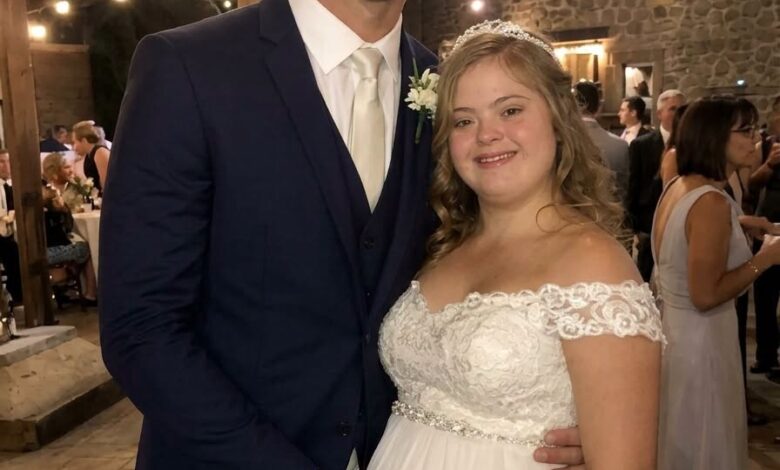
Rosie is one year younger than me and has Down syndrome.
I was seven when I first realized some people would treat that difference as permission to be cruel.
Children excluded her.
Some mocked the way she spoke.
I became her tiny self-appointed bodyguard.
“You’ll always have me and Ben,” I used to tell her.
Ben proved me right.
He chose Rosie for games when other children avoided her. In fourth grade, after some girls made her cry by saying nobody would ever take her to a dance, Ben crouched beside her.
“When we’re older, I’m taking you to prom.”
Rosie beamed.
“You promise?”
“Promise.”
Years later, he kept it.
The complicated part was that I spent much of my adolescence believing Ben would eventually marry me.
Everyone joked about it.
I secretly wanted it.
So when Ben arrived at our house when I was twenty-two carrying a velvet ring box, my heart leapt.
Then he asked:
“Is Rosie home?”
I watched through the kitchen window as he proposed among our mother’s tomato plants.
Rosie said yes.
That night I cried privately.
And I thought things I’m still ashamed of.
Why Rosie instead of me?
What does he really want?
I smiled the next morning and helped my sister plan her wedding.
Eventually, watching them together answered most of my questions.
Ben wasn’t performing.
He knew Rosie’s routines, her jokes, her stubborn streak and exactly how she liked her coffee.
Three years into their marriage, Rosie called me.
“We’re having twins.”
She was laughing so hard I could barely understand her.
Then the pregnancy became complicated.
At thirty-four weeks, Rosie was rushed to the hospital.
Near midnight, a doctor told us the babies had been stabilized but Rosie was in critical condition.
“We’re doing everything we can.”
After he disappeared through the doors, Ben grabbed my hands.
“Rosie made me promise something before surgery.”
“What?”
“She said if she didn’t wake up, I had to tell you everything.”
Then came the sentence that turned my stomach.
“It’s time you understood why I really married her.”
Every old suspicion returned.
Money.
Pity.
Me.
Ben handed me the contract.
I saw the payment schedule and screamed.
“You sold yourself to marry my sister?”
“I never kept the money.”
I stared at him.
“What?”
“Every payment they sent went into an account for Rosie. Every dollar.”
“Then why sign?”
His answer changed everything.
“Because of Willow Grove.”
I’d never heard the name.
Ben had.
Before he and Rosie became engaged, my parents had apparently been investigating long-term residential options for her.
They weren’t monsters for considering what support Rosie might someday need.
The betrayal was how they approached it.
According to Ben, they’d decided what Rosie’s future should look like without meaningfully including either daughter in the conversation.
“They said you deserved your own life,” he told me. “They didn’t want you becoming responsible for Rosie.”
“I would have helped her.”
“I know.”
“Rosie might not even have needed me to.”
“I know that too.”
My parents had approached Ben because they already knew he cared deeply for her.
They proposed a financial arrangement connected to the marriage and Rosie’s future support.
Ben signed.
That fact still hurt.
But the document didn’t tell the whole story.
“I was already in love with her,” he said. “I thought if signing their disgusting paper stopped them controlling where she lived, I’d sign it. I was young and thought I could solve everything myself.”
“You should’ve told me.”
“I should have.”
“Did Rosie know?”
Ben closed his eyes.
“I told her after we’d been married a year.”
My stomach dropped again.
“She knows?”
“She was furious.”
Despite everything, a tiny laugh escaped him.
“She threw a pillow at me.”
“That sounds like Rosie.”
“Then she made me show her everything. The contract. The account. Every payment.”
“And?”
“She told me never to make another decision about her life without her.”
That mattered.
Rosie hadn’t needed Ben to become another person deciding things on her behalf.
She needed honesty.
Choice.
Respect.
“And she stayed?”
Ben nodded.
“She said she loved me, but I had to understand something.”
“What?”
“That saving someone isn’t the same as respecting them.”
I looked down at the contract.
Suddenly the story wasn’t as simple as hero and villain.
My parents had made decisions about Rosie’s future without giving her the authority she deserved.
Ben had tried to protect her but had also kept something enormous from her for a year.
Then Rosie herself had discovered the truth, demanded accountability and chosen what happened next.
That sounded much more like my sister.
“Why didn’t she tell me?”
“She knew you’d confront your parents immediately.”
“She was right.”
“I told her that.”
We almost laughed.
Then footsteps came toward us.
We jumped up.
The doctor stopped in front of us.
“Rosie is stable.”
Ben’s knees nearly gave way.
“And the babies?”
“Both are alive and being closely monitored.”
I grabbed Ben.
He sobbed against my shoulder.
Then the elevator opened.
Our parents stepped out.
Mom hurried toward us.
“How is she?”
“Stable,” I said.
Relief flooded her face.
She reached for me.
I stepped away.
“Cathy?”
I held up the contract.
Everything changed.
Dad went pale.
Mom stopped moving.
“You were going to make decisions about Rosie’s entire future without telling us.”
“That’s not what happened,” Dad said.
“Then explain it.”
“This is a hospital,” Mom whispered.
“And Rosie’s in it.”
Ben remained silent.
I didn’t announce that my parents had wanted to “get rid” of Rosie, because the document couldn’t prove every motive my anger wanted to assign them.
But the arrangement itself was real.
“You treated her future like something to negotiate around her.”
Dad pointed toward Ben.
“He signed it.”
“Yes,” I said. “And he had to answer to Rosie for that.”
Ben looked down.
“So do you.”
Nobody applauded.
Nobody gathered around to shame them.
This wasn’t a courtroom or a public performance.
It was a family finally confronting something it had avoided for years.
Mom began crying.
“We were scared about what would happen to her.”
“Then you should’ve asked Rosie what she wanted.”
“She needs support.”
“Needing support doesn’t mean she stops getting a voice.”
That ended the argument.
Not because my parents suddenly agreed.
Because a nurse appeared.
“Rosie’s awake.”
Everything else became irrelevant.
Ben and I entered together.
Rosie looked exhausted.
There were machines everywhere.
The twins were receiving the care premature babies needed elsewhere in the unit.
But Rosie was alive.
Her eyes found Ben.
Then me.
Then the folded contract in my hand.
“Oh,” she whispered.
I laughed through my tears.
“Oh?”
“Ben told you.”
“You told him to.”
“I thought I might die.”
“That’s a terrible excuse.”
Rosie smiled weakly.
I kissed her forehead.
Then I asked the question everyone should have been asking from the beginning.
“What do you want us to do?”
Her expression changed.
Not dramatically.
Just enough.
Because it was her decision.
In the months that followed, the family’s financial and support arrangements were reviewed with Rosie directly involved. Any changes were handled through the appropriate professional channels rather than through angry hallway declarations.
My relationship with our parents became complicated.
So did Rosie’s.
Forgiveness wasn’t immediate, and reconciliation wasn’t guaranteed simply because everyone shared DNA.
Ben wasn’t transformed into a flawless hero either.
He had loved Rosie.
He had also hidden the contract from her during their first year of marriage.
He owned that mistake.
Rosie made sure he did.
One evening, months later, I visited their little yellow house.
Rosie was holding one twin.
Ben was trying unsuccessfully to soothe the other.
“Give her here,” Rosie said.
“I’ve got it.”
“No, you don’t.”
“I absolutely—”
The baby screamed.
Rosie raised an eyebrow.
Ben surrendered her.
The crying stopped almost immediately.
Rosie looked unbearably pleased with herself.
“See?”
Ben sighed.
“You’re enjoying this.”
“Very much.”
I watched them and finally understood why the old version of their story bothered me.
Ben hadn’t married Rosie to rescue her.
Rosie wasn’t a helpless woman waiting for a good man to save her from bad people.
She was my sister.
A wife.
A mother.
A woman capable of being furious with the people she loved and choosing whether they deserved another chance.
Years earlier, I’d promised Rosie she’d always have Ben and me.
I’d thought that meant we’d stand in front of her and protect her from the world.
We eventually learned something better.
Sometimes loving Rosie meant standing beside her, shutting up, and allowing her to decide what happened next.
The contract told me why Ben had once believed he needed to protect her.
Their marriage taught all of us something far more important.
Rosie had never needed a life chosen for her.
She needed the same thing every one of us did.
The right to choose it herself.