When Lauren first stood at the edge of the ruined pool, the damage seemed to reach far beyond broken concrete and shattered tile. It wasn’t simply a backyard that had been destroyed—it was a place filled with memories, a space her late husband, Marcus, had helped create with his own hands. Every crack and pile of debris felt like another reminder of everything she had already lost.
She could have reacted with anger.
She could have shouted, sought revenge, or allowed grief to become resentment.
Instead, she chose something far more difficult.
She chose restraint.
Rather than letting emotion dictate her next move, Lauren carefully documented every detail of the destruction. She photographed the broken walls, the damaged plumbing, the scattered debris, and every inch of the property before anyone touched it. Each image became more than evidence—it became a quiet declaration that truth would matter more than outrage.
Her decision was not weakness.
It was discipline.
She understood that lasting justice is rarely built on the loudest voice. It is built on patience, preparation, and the willingness to let facts speak where anger cannot. By trusting the legal process instead of seeking personal revenge, she honored Marcus in a way that reflected the values they had shared throughout their life together.
The damaged pool gradually became something unexpected.
At first, it was evidence.
Later, it became the center of construction plans and repair estimates.
Eventually, it transformed into something much larger—a symbol of resilience, reminding everyone involved that even deliberate destruction does not have to define the future.
Rebuilding was not easy.
There were insurance meetings, contractors, legal paperwork, inspections, and countless decisions that tested Lauren’s patience. Every stage required emotional energy she sometimes wasn’t sure she still possessed. Yet with each passing week, the backyard slowly began to change. Where rubble had once covered the ground, skilled hands carefully rebuilt what had been taken away.
As the work progressed, familiar details returned.
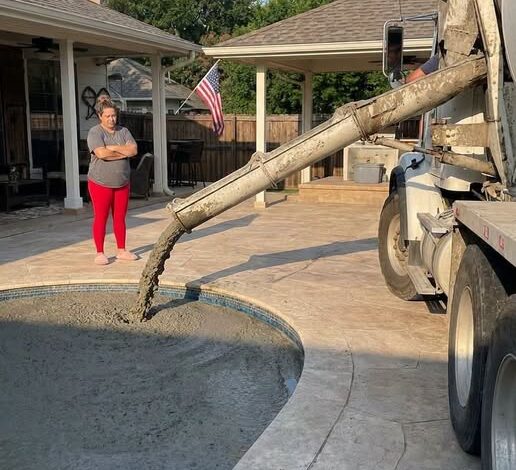
Fresh concrete replaced fractured foundations.
New plumbing disappeared beneath the surface.
Tile by tile, the pool regained the graceful shape Marcus had originally envisioned. The same ocean-blue colors he had chosen years before shimmered beneath the sunlight once again, preserving not only the design but also the memories attached to it.
When the pool was finally filled, Lauren stood quietly beside the water.
Its surface reflected the afternoon sky just as it always had.
For a moment, it felt as though Marcus’s presence lingered there—not in the structure itself, but in everything it represented. The restoration was never simply about replacing bricks, cement, or tile. It was about protecting a part of their family’s story and refusing to allow someone else’s actions to erase it.
Katherine’s apology came later.
It could not undo the damage.
It could not erase the fear, frustration, or months of uncertainty that had followed.
Some wounds remain even after repairs are complete.
Still, the apology mattered.
It represented an acknowledgment of responsibility, the first step toward accountability, and the possibility—however fragile—that understanding might someday replace conflict. Forgiveness, Lauren knew, was not the same as forgetting. It did not excuse what had happened or pretend the pain never existed. It simply meant refusing to let bitterness become the final chapter.
As the seasons changed, life gradually returned to its familiar rhythm.
One warm afternoon, Lauren sat outside while her children splashed through the water, their laughter echoing across the yard. The sound filled the same space that had once been marked by silence and loss. Watching them play, she realized the greatest victory was not that the pool had been rebuilt.
It was that joy had returned.
The people who loved that place most could once again fill it with life instead of sorrow.
In that quiet moment, Lauren understood something she would carry with her forever.
True strength is not measured by how fiercely we strike back when we are hurt.
It is measured by our ability to protect what matters without losing ourselves in anger.
It is found in choosing justice over revenge, dignity over bitterness, and hope over despair.
Because rebuilding is never only about restoring what was broken.
Sometimes it is about proving that compassion can survive cruelty, that peace can outlast conflict, and that love leaves foundations far stronger than destruction ever could.
Standing beside the water Marcus had once dreamed into existence, Lauren realized the pool represented more than a completed project.
It was proof that while others may damage what we cherish, they do not have the power to decide how our story ends.
That choice—and the strength to begin again—will always belong to us.