Only the Boy Matters, My MotherinLaw Whispered as She Pushed My Twin Daughter Away What My Nurse Did Silenced the Room

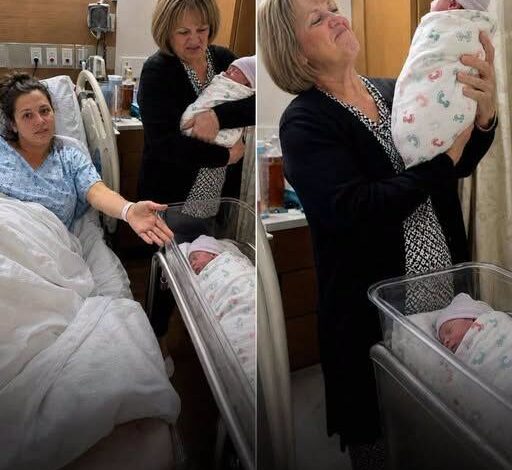
The first person to treat my newborn daughter like she didn’t matter was her own grandmother.
I had given birth to twins less than four hours earlier.
Mason weighed six pounds, two ounces. Ivy was smaller at five pounds, seven ounces. They were wrinkled, exhausted little miracles tucked against me while I tried to understand that after months of fear, appointments, and counting every kick, both of my babies were finally here.
Then my mother-in-law walked in.
Margot barely glanced at Ivy.
“There he is,” she whispered, moving straight toward Mason. “The little man who’ll carry everything forward.”
Tom stiffened beside me.
“Mom.”
“What?” She smiled. “I’m allowed to be excited about my grandson.”
“You have a granddaughter too.”
Margot finally looked toward Ivy.
Her expression changed almost imperceptibly.
“Oh, yes.”
Then she leaned toward me and lowered her voice.
“But you know what I mean. The boy is the important one.”
I stared at her.
“What did you just say?”
She reached toward Mason.
“Don’t make everything into an argument. I’m talking about family tradition.”
I pulled both babies closer.
Tom had warned me about Margot’s beliefs.
She’d grown up in a family where sons inherited significance and daughters were expected to accommodate it. Whenever she’d made comments during my pregnancy, Tom dismissed them as outdated nonsense.
“She doesn’t really mean it.”
Now I understood that she did.
Margot tried again to take Mason.
As she moved, her arm nudged the blanket near Ivy, pushing my daughter farther against my side as though she were something in the way.
“Stop.”
My voice was weak, but Margot heard it.
Then another voice cut through the room.
“Give me the baby.”
It was Sarah, our nurse.
She wasn’t looking at Margot.
She was looking at Ivy.
Something in Sarah’s expression terrified me.
“What?”
“Your daughter. I need her now.”
She lifted Ivy from my arms before I fully understood what was happening.
Sarah checked her color, repositioned her, then called sharply toward the doorway.
“I need assistance in here.”
The room transformed.
Another nurse entered.
Then another.
Ivy’s breathing looked wrong.
How had I not seen it?
Her tiny chest was working too hard. The pinkness I’d been admiring minutes earlier had faded around her mouth.
“What’s happening?”
Sarah didn’t waste time pretending everything was fine.
“She’s having trouble breathing.”
Margot stepped backward.
Tom moved beside Sarah.
“Is she okay?”
“We’re taking care of her.”
Then my daughter disappeared through the doorway surrounded by medical staff.
The room went silent.
Mason began crying.
I remember staring at the empty place where Ivy had been.
Minutes earlier, Margot had effectively declared her secondary.
Now every part of me wanted only one thing:
Bring my daughter back.
The peaceful hospital stay we’d imagined never happened.
Doctors discovered that Ivy’s breathing problems were connected to a serious heart issue requiring specialized care.
She was transferred to the NICU.
Machines replaced cuddles.
Wires crossed her tiny body.
Monitors tracked numbers I learned to fear before I understood them.
There were cardiologists, tests, medications, and eventually the word neither Tom nor I was prepared to hear.
“Surgery.”
I cried.
Tom cried.
Then we signed papers because parents sometimes have to authorize terrifying things while every instinct is screaming to grab their child and run.
Mason was healthy.
That should have been uncomplicated joy.
It wasn’t.
I would hold him and feel grateful, then immediately feel guilty because his sister was lying beneath hospital lights elsewhere.
One afternoon, Sarah found me crying.
“I didn’t notice,” I told her.
“Notice what?”
“Her breathing.”
“You had just delivered twins.”
“But you saw it.”
“Because that’s my job.”
Those words stayed with me.
Sarah hadn’t performed some grand heroic gesture.
She had simply looked carefully at the patient in front of her.
Ivy mattered equally, so Sarah assessed her equally.
That ordinary professionalism may have given doctors precious time.
Meanwhile, Margot kept trying to rewrite what had happened.
“I never said Ivy didn’t matter.”
Tom stared at her.
“We both heard you.”
“You’re twisting my words.”
“You called Mason the important one.”
“I meant traditionally.”
“You pushed Ivy aside to reach him.”
“That was an accident.”
“Maybe.”
Tom’s voice became quieter.
“But everything around it wasn’t.”
I watched my husband confront something he’d spent his entire life minimizing.
Margot’s comments weren’t harmless because they were familiar.
They were familiar because nobody had challenged them strongly enough.
Tom finally did.
“You will not teach my son that he’s worth more than his sister.”
Margot’s face hardened.
“I would never—”
“And you will not teach Ivy that she’s less valuable because she’s a girl.”
“Thomas, I’m your mother.”
“And they’re my children.”
That ended the conversation.
The boundary afterward was simple.
Margot would not be alone with either twin.
She wouldn’t receive special access to Mason.
There would be no separate gifts designed to establish him as the favored grandchild.
No comments about carrying the family name.
No jokes about boys being more important.
No treating Ivy as an accessory to her brother.
Relatives immediately began lobbying us.
“She’s from another generation.”
“She didn’t mean any harm.”
“Don’t break up the family over one comment.”
But it wasn’t one comment.
And even if it had been, protecting family peace by requiring a little girl to absorb discrimination wasn’t peace.
It was surrender.
We told everyone the same thing:
Margot wasn’t permanently banished.
But reconciliation required accountability.
Not “I’m sorry you misunderstood.”
Not “everyone is too sensitive.”
A real apology.
And changed behavior.
Until then, distance was safer.
Ivy underwent surgery.
Those hours were among the longest of my life.
When the surgeon finally told us she’d made it through, my knees nearly buckled.
Recovery was another journey entirely.
Medication schedules.
Special feeding instructions.
Cardiology appointments.
Weight checks.
Nights when I woke every twenty minutes and leaned over her crib just to watch her chest rise.
Meanwhile, Mason needed us too.
That became another lesson.
We couldn’t allow Ivy’s medical needs to reverse Margot’s mistake and make Mason invisible.
He wasn’t “the healthy twin.”
She wasn’t “the sick twin.”
They were Mason and Ivy.
Two children.
Different needs.
Equal worth.
Tom changed during that year.
Not overnight.
Not through one emotional speech.
Through repetition.
He attended appointments.
He learned medications.
He took night feedings.
When relatives made comments he’d once ignored, he corrected them immediately.
The first time someone joked that Mason would have to “protect his little sister,” Tom smiled and said, “They’ll protect each other.”
Small sentence.
Huge difference.
Their first birthday arrived faster than I thought possible.
We didn’t make the party about survival.
I didn’t want Ivy growing up believing illness was her entire identity.
So there were balloons, ridiculous hats, two cakes, and three exhausted parents—because Sarah came too.
She’d become part of our lives.
When she walked through the door, Ivy stared at her for several seconds before smiling.
Sarah immediately cried.
“Oh, don’t do that to me.”
Mason crawled toward Ivy’s cake and buried one hand in the frosting.
Ivy screamed with laughter.
Everyone laughed with her.
Not because she was the baby who’d nearly died.
Because she was Ivy.
Loud.
Stubborn.
Happy.
Here.
Margot wasn’t at the party.
By then she’d sent messages, but she still hadn’t truly acknowledged what she’d said or why it mattered.
Some people thought excluding her was cruel.
I didn’t.
Birthdays aren’t rehabilitation centers for adults who refuse accountability.
The children came first.
As I watched Mason and Ivy destroy their cakes, I thought about that hospital room.
Margot reaching for one baby.
Sarah suddenly reaching for the other.
Those gestures had looked superficially similar.
They couldn’t have meant more different things.
One hand reached because it had already decided which child mattered more.
The other reached because every child mattered.
Sarah hadn’t saved Ivy by proving Margot wrong.
She had seen a newborn showing signs of distress and responded exactly as a good nurse should.
But the timing left me with a lesson I would never forget.
People reveal what they value through attention.
Who gets noticed?
Who gets listened to?
Who gets protected?
Who gets dismissed?
Prejudice isn’t always loud.
Sometimes it looks like reaching past one child to embrace another.
Sometimes it survives because everyone calls it tradition.
Ivy taught our family to stop doing that.
At the end of the party, I found Sarah watching the twins together.
“You know,” I told her, “everything changed because you saw her.”
Sarah shook her head.
“I was doing my job.”
“I know.”
That was exactly the point.
She didn’t need Ivy to be a grandson.
An heir.
A symbol.
Or someone’s favorite.
Ivy was her patient.
That was enough.
And from the day we brought both twins home, it became enough for us too.
Anyone who wanted a place in our children’s lives would follow one rule:
Look at Mason.
Look at Ivy.
See two completely different children.
Love them as individuals.
But never, ever look at either one and decide the other matters more.