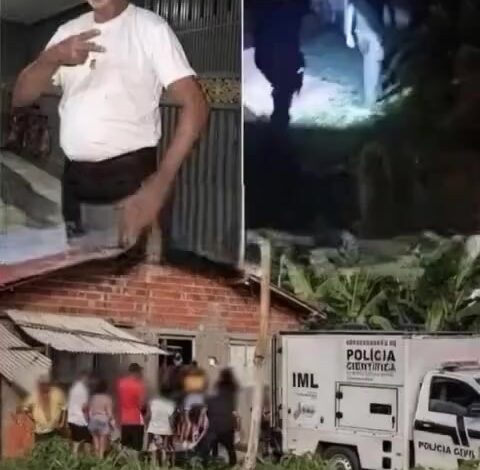
Seven months is a long time to live without answers.
Long enough for hope to change shape.
Long enough for certainty to erode.
Long enough for a family to replay the same final memories over and over, searching for details they might have missed.
At first, they believed he would come home.
An elderly man disappearing can create countless possibilities. Perhaps he had become disoriented. Perhaps he had wandered farther than intended. Perhaps someone had seen him and offered help. Every phone call carried potential. Every reported sighting sparked a new surge of hope.
Days became weeks.
Weeks became months.
Searches expanded and contracted.
Investigators followed leads that dissolved under scrutiny.
Volunteers combed fields, roadsides, wooded trails, and abandoned properties. Family members kept his photograph circulating online and in local businesses, refusing to let his name fade into the background noise of other unsolved cases.
Yet with every passing month, a difficult reality crept closer.
People stopped asking whether he had been found.
They began asking whether he would be.
Then came the discovery.
In a remote patch of ground far from public attention, investigators uncovered what no family ever wants to hear about a missing loved one.
The man was there.
Not lost.
Not wandering.
Not waiting to be rescued.
Buried.
The finding transformed the entire case in an instant.
What had once been a missing-person investigation now carried the unmistakable shadow of something darker.
Someone had not simply left him behind.
Someone, it appeared, had taken deliberate steps to hide him.
The implications were devastating.
Families spend months imagining possibilities, even painful ones. But there is a unique cruelty in discovering that a loved one may have been intentionally concealed from the people searching for him. The burial site suggested planning. It suggested effort. It suggested a desire to prevent discovery.
And that realization opened a new set of questions.
Questions far more troubling than the ones investigators had been asking before.
Who placed him there?
Why?
When?
Was he targeted?
Was he vulnerable?
Did he know the person responsible?
Or was his final encounter with another human being one of fear and betrayal?
For his family, grief suddenly became more complicated.
The discovery delivered a form of closure, but not peace.
They no longer had to wonder where he was.
Now they had to wonder what happened.
The difference is enormous.
Finding a loved one ends one kind of suffering and often begins another.
The uncertainty of absence is replaced by the uncertainty of motive.
The search for a person becomes a search for truth.
Meanwhile, investigators have entered a race against time.
Crime scenes are difficult enough when discovered immediately.
After seven months, every day becomes an obstacle.
Weather alters landscapes.
Rain erases traces.
Animals disturb evidence.
Memories fade.
Witnesses forget details they once considered insignificant.
Digital records disappear.
Surveillance footage is overwritten.
Opportunities narrow.
Yet detectives know that answers often survive in unexpected places.
Forensic teams carefully examine the soil, searching for clues invisible to the untrained eye. Investigators reconstruct timelines. They revisit interviews. They compare statements. They analyze phone records, financial activity, travel patterns, and every known movement from the days leading up to the disappearance.
What seemed irrelevant months ago may now carry enormous significance.
A conversation.
A disagreement.
A missed appointment.
A vehicle seen at the wrong place and time.
A seemingly ordinary interaction.
Many investigations are ultimately solved not by dramatic breakthroughs, but by small inconsistencies that refuse to fit.
Somewhere within the details of this man’s final days may be the piece that changes everything.
The possibility of betrayal looms especially large.
Violent crimes often challenge one of our deepest assumptions: that danger usually comes from strangers.
In reality, investigators frequently discover the opposite.
Victims often know the people who harm them.
Trust becomes the pathway through which vulnerability is exploited.
That possibility haunts cases like this because it forces families to reevaluate relationships they once considered safe.
People become uncertain about memories.
Conversations take on new meanings.
Questions arise where certainty once existed.
As the investigation continues, the community waits uneasily.
Small towns and close-knit neighborhoods often experience these tragedies collectively. Residents who never met the victim still feel the shock. Familiar streets seem different. Ordinary routines become reminders of how quickly normal life can fracture.
Rumors spread.
Speculation grows.
Theories multiply.
But investigators remain focused on evidence.
Because in the end, only facts can answer the questions that matter.
For the family, however, the case is no longer about headlines or police updates.
It is about dignity.
About ensuring that the final chapter of a man’s life is not defined solely by the way it ended.
About learning the truth, however painful that truth may be.
About restoring a voice to someone who can no longer speak for himself.
Every development now carries emotional weight.
Every recovered item.
Every witness interview.
Every forensic result.
Each represents another step toward understanding what happened during the months when his absence became a mystery.
The discovery of his body ended the search.
It did not end the story.
That story remains unfinished.
Somewhere between the last confirmed sighting and the lonely patch of earth where he was found lies a sequence of events that investigators are determined to uncover.
And while answers may take time, the family holds tightly to one remaining hope.
Not that the truth will be easy.
Not that it will erase their grief.
Not that justice can restore what has been lost.
Only that the truth will emerge.
Because whoever buried him may have believed they were hiding the evidence of a life.
Instead, they created a mystery that demands resolution.
And just as the ground eventually surrendered its secret, those who loved him continue to believe that the rest of the story will surface too.
The shadows may have concealed the truth for months.
But they do not get to keep it forever.