When I stepped away from my family, nobody understood the quietness of it.
They expected an explosion.
A dramatic confrontation. Accusations. Doors slammed hard enough to rattle the walls.
Instead, I canceled the transfers.
I booked a flight.
And I left.
It wasn’t a tantrum.
It was a resignation.
For years, I had occupied a role in my family that nobody had formally assigned me but everyone had learned to depend on.
I was the one who handled things.
When money ran short, I covered the difference.
When somebody made a bad decision, I helped contain the consequences.
When plans collapsed, I reorganized them.
When an emergency appeared, everyone somehow ended up looking in my direction.
At first, being needed felt like love.
Later, it became difficult to tell the difference.
I had become so accustomed to over-functioning that exhaustion felt normal. My own plans were flexible because somebody else’s crisis was always more urgent. My money was technically mine, yet part of it seemed permanently reserved for problems I had not created.
And whenever I considered saying no, guilt arrived before the sentence was finished.
Then something changed.
Not dramatically.
I simply reached the point where continuing felt more frightening than stopping.
So I stopped.
The automatic transfers were the first thing to go.
Seeing them disappear from my banking screen produced an emotion I wasn’t expecting.
Not triumph.
Relief.
For the first time in years, the money I earned was allowed to remain connected to the life I was actually living.
Then I went to Paris.
I had imagined travel there before, but always as something for later—after everyone was stable, after the next emergency, after I had accumulated enough permission to spend time and money on myself.
There was always another “after.”
This time, I went anyway.
Paris did not magically heal me.
What it gave me was distance.
I walked.
I watched strangers.
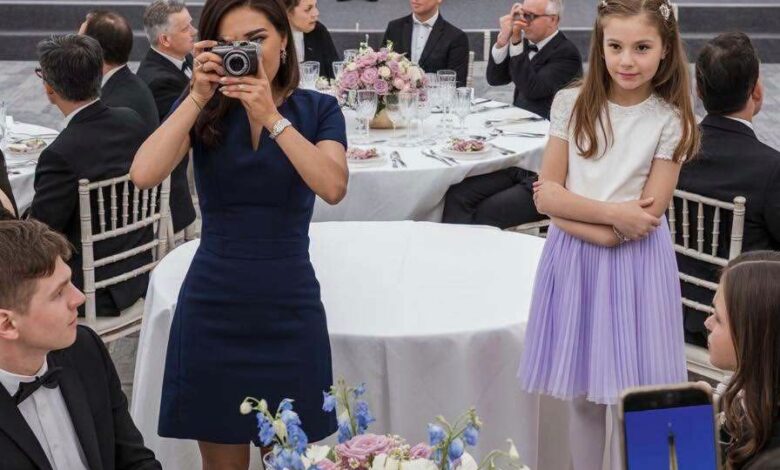
I photographed buildings, faces, shadows, windows, reflections in rain-darkened streets.
Hours passed without anyone needing me to solve something.
That felt almost unnatural.
At first, I checked my phone constantly.
The messages came.
Some were confused.
Some were angry.
Some carried that familiar mixture of affection and obligation that once would have pulled me immediately back into position.
How could I do this now?
What were they supposed to do?
Did I understand how difficult I was making things?
From thousands of miles away, the pattern became easier to see.
Their anger was not primarily about losing contact with me.
I had not disappeared.
I had simply stopped providing the same access to my money, time and labor.
What they were mourning was the service.
That realization hurt.
But it also freed me.
I began asking myself a question I had avoided for years:
If I stopped being useful, who would I be to these people?
Paris gave me enough silence to consider another question.
Who would I be to myself?
The camera helped.
Photography demanded attention without demanding self-erasure.
I began noticing light again.
A stranger’s silhouette beneath an awning.
Steam against a café window.
A bicycle leaning against old stone.
For years, my attention had been trained toward trouble.
Who needed help?
What had gone wrong?
What would it cost?
Now I was training it toward beauty.
When I returned home, I did not gather everyone for a confrontation.
I had no speech prepared.
I simply kept the boundaries.
That was harder than announcing them.
Anyone can say, “Things are going to change.”
The real test arrives when the phone rings and the old emergency appears.
I listened.
I cared.
But I stopped automatically solving.
Sometimes I said no.
Sometimes I offered information instead of money.
Sometimes I let adults sit with consequences they had previously handed to me.
Their discomfort was intense.
So was mine.
But discomfort was not disaster.
Eventually, something unexpected happened.
A few relatives began speaking quietly to me.
They had noticed.
They had seen how often I paid.
How frequently I rearranged my schedule.
How the family praised my reliability while treating that reliability as an unlimited resource.
Their acknowledgment mattered because it confirmed that I had not imagined the imbalance.
But I also realized I no longer needed a jury.
I knew what the old arrangement had cost me.
That was enough.
Meanwhile, I kept taking photographs.
The work accumulated.
Eventually, some of it became a gallery show.
Standing in that room surrounded by images I had made felt strangely vulnerable. These were not bills I had paid or disasters I had prevented.
There was no practical justification for them.
They existed because I had looked at something and decided it mattered.
Then my parents arrived.
I watched them move through the gallery.
For once, there was nothing for me to fix.
They were standing inside something I had created simply because I wanted to create it.
Maybe they understood then.
Maybe only partly.
But for the first time, I felt seen outside the category of usefulness.
I did not demand an apology.
Perfect apologies belong to cleaner stories than ours.
What I demanded was space.
Space around my finances.
Space around my time.
Space around decisions that belonged to me.
And gradually, the family adjusted.
Some relationships became better.
Others became thinner.
A few people drifted away when they discovered that closeness no longer came with unrestricted access.
That hurt too.
But loss can clarify what connection was built from.
The most important change happened inside me.
I stopped interpreting someone’s disappointment as evidence that I had done something wrong.
I stopped treating every family emergency as a summons.
I stopped calculating my worth according to how much inconvenience I could absorb without complaining.
For years, I had been invisible scaffolding.
Everyone noticed when something needed support.
Almost nobody noticed what supporting everything was doing to me.
Stepping away allowed the structure to reveal itself.
Some parts stood without me.
Some had to be rebuilt.
Some collapsed because perhaps they had never been sustainable.
None of that meant I had failed.
I had simply stopped holding up what was never mine to carry indefinitely.
I still love my family.
That may be the part people misunderstand most.
Boundaries did not require me to stop loving them.
They required me to stop confusing love with endless availability.
I can care without paying.
I can listen without fixing.
I can remain someone’s daughter, sister or relative without becoming their emergency fund.
And I can build a life whose value does not depend on how useful it is to everyone else.
Sometimes I think about Paris and those first long walks with my camera.
Nothing spectacular happened.
Nobody applauded when I chose myself.
I simply moved through the day without orbiting somebody else’s crisis.
That ordinary freedom changed me.
I had spent years believing my family’s needs were the gravity holding all of us together.
Distance taught me otherwise.
Love survived the boundaries.
Entitlement struggled with them.
And finally, I could tell the difference.
I did not leave my family behind.
I left behind the version of myself who believed she had to disappear in order to belong.
When I came home, I brought back photographs, clearer limits and a life that finally had room for its own author.
The bills no longer told my story.
Neither did the emergencies.
For once, I did.
And there was more to say than anyone had imagined.